
Can one small planter offer big, season-long impact without draining your time or wallet? This guide shows simple, designer-inspired mixes that bring bold color and texture to your porch or front entry.
Pre-made mixes from garden centers can save effort and still look custom. A ready combo—yellow and rust mums, purple fountain grass, ‘Black Pearl’ pepper, and flowering cabbage—gives instant drama. Add extra peppers or pansies to fill gaps.
Short planting tips make a big difference. Remove old roots, loosen the soil, and mix in granular fertilizer for stronger fall performance. Tight spacing builds instant fullness when days grow cool.
We’ll help you pick palettes—warm harvest hues, cool purples and silvers, or moody dark tones—and suggest focal plants for height and impact. For more ready-made ideas, see a trusted guide on garden-center planters.
Key Takeaways
- Designer looks, less work: Pre-made planters save time and money.
- Reliable choices: Mums, kale, asters, and cabbage stand up to cool nights.
- Instant fullness: Tight spacing gives immediate curb appeal.
- Prep matters: Refresh soil and add granular fertilizer for best results.
- Pick a focal point: Use grasses, peppers, or cabbage for height and drama.
How do you welcome fall with texture, color, and easy container gardens for patios and porches?
Use three plant roles—tall, bright, and textured—to make small pots read full and deliberate. Pack pots tightly now so displays look lush even before cooler nights slow new growth.
A simple trio—height, color, and texture—gives small pots big presence on a patio.
Start with one tall thriller for proportion. Add a mid-height dome of blooms for bold hue. Finish with a trailing spiller for soft edges.
Ornamental grasses add motion and scale. Pair them with chrysanthemums, pansies, flowering kale, or coral bells for resilience through light frosts.

What design basics make fall container gardens feel full and festive fast?
- Layer roles: thriller, filler, spiller for instant impact.
- Plant densely: generous spacing now gives instant fullness.
- Mix textures: glossy leaves, ruffled blooms, and strappy grass blades.
- Choose frost-tolerant combos: they extend your season and keep beauty after light freezes.
| Plant Role | Example | Benefit |
|---|---|---|
| Tall (Thriller) | Purple fountain grass | Adds height and movement |
| Mid (Filler) | Chrysanthemum or pansy | Provides bright, lasting color |
| Textured (Bold) | Flowering kale / coral bells | Gives strong leaf contrast |
| Trailing (Spiller) | Creeping Jenny or ivy | Softens the rim and frames the pot |
Quick tip: draw design inspiration from hardy stars and match palettes to your home trim. These small shifts boost curb appeal and make your gardens look planned, even on a tight schedule.
What are 5 stunning fall container recipes using mums?
Get a designer result on a budget with one reliable formula. Use a simple mix of bright domes, sculptural foliage, and a tall grass to achieve instant curb appeal without costly extras.
You can replant a pre-made garden-center basket into your own pots for a quick upgrade.
How do you get a designer look on a budget with mums, purple fountain grass, Black Pearl peppers, and flowering cabbage?
Start with a proven, wallet-friendly combo: one yellow mum, one rust mum, one purple fountain grass, a ‘Black Pearl’ ornamental pepper, and a flowering cabbage.
Slip the entire insert into a decorative planter on your porch for an instant, magazine-ready look. Tuck extra ‘Black Pearl’ peppers or pansies into gaps to raise contrast and fill space.
What color and texture keys help you balance bold blooms with structured foliage and airy grasses?
- Place grass at the center-back for height and movement.
- Frame mums at mid-level for bold, rounded color.
- Flank with cabbage near the rim for architectural leaf texture.
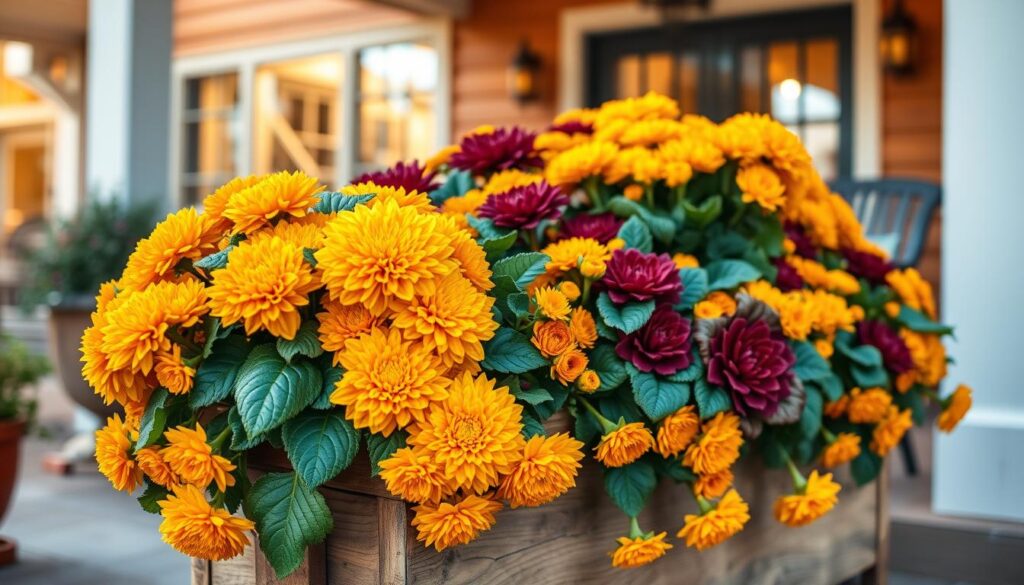
“Run rust on the right and yellow on the left for mirrored twin pots that guide the eye.”
Finish with a thin layer of decorative bark to hide soil and hold moisture. This mix thrives in cool weather and keeps many gardens looking full into late season. It’s a simple way to get a high-end feel from everyday nursery finds.
How do you create cool-toned elegance with kale and aster pairings plus dusty miller and pansies?
Use silver foliage and blue-lavender flowers for a calm, high-end entry that holds well as temperatures drop. This palette reads fresh on short days and stays tidy with minimal care.
A simple recipe delivers lasting effect: ornamental cabbage kale ‘Scarlet Bor’, aster ‘Dragon Blue’, dusty miller, and deep purple pansies create a soft silver-lavender scheme. Pack pots full since growth slows in autumn.

What plant list and pot sizes deliver long-lasting autumn blooms?
- Palette and texture: pair ornamental kale with blue asters, dusty miller, and purple pansies for crisp leaf texture and steady blooms.
- Pot sizes: use 12–16 inch diameter for single combos; choose 18–22 inch for layered mixes and larger entries.
- Planting tips: tight spacing (one knuckle between root balls), deep watering after planting, and a slow-release fertilizer mixed into potting media for consistent beauty.
- Extras: edge with violas for chill tolerance and rotate pots weekly so asters grow evenly toward light.
- Swap: trade dusty miller for licorice plant ‘Icicles’ to keep a soft silver spill if preferred.
What makes the classic porch planter of mums and ornamental grasses pop with layered heights?
Layered height gives a porch display instant structure and motion. Use a tall centerpiece, rounded mid-size blooms, and soft spillers to create depth that reads like a mini landscape.
A tall thriller anchors the scene. In a porch planter, set a purple fountaingrass or switchgrass ‘Northwind’ at the back for sway and scale.
How do you nail proportions with tall thrillers, mid fillers, and trailing spillers?
Place one grass at the center-back. Ring the middle with two to three chrysanthemums in gold or magenta for bold domes of hue.
Edge the rim with trailing sedum ‘Autumn Fire’ or creeping Jenny so foliage cascades and softens the pot edge.
Tip: add a cordyline or barberry for vertical leaf contrast. Pack the mix tightly for instant fullness in cooler weather.
Which warm harvest hues—golds, oranges, purples, bronzes—shine through frost?
Choose warm colors like burnt orange, bronze, deep purple, and gold. These tones stand out against gray skies and bring richness late in the season.
Use 18–24 inch pots on steps or flanking doors so scale feels right. Turn planters weekly to encourage even drape.

“A single tall thriller gives your porch instant height; the rest fills in the story.”
| Role | Plant | Benefit |
|---|---|---|
| Thriller | Purple fountaingrass / Northwind switchgrass | Height, movement, winter silhouette |
| Filler | Chrysanthemums (gold, magenta) | Bold color mass that holds through cool temps |
| Spiller | Sedum ‘Autumn Fire’ / Creeping Jenny | Soft cascade that frames the pot rim |
| Accent | Cordyline or barberry | Vertical foliage contrast and interest |
Care note: water every 2–3 days in mild spells, pinch spent heads to keep color, and finish with a light top-dress of compost to hide soil and boost resilience into late autumn.
How do you style a dark and moody autumn planter with ornamental millet, black pansies, coleus, and kale?
Choose a sculptural thriller and layer deep tones for a refined, architectural look that reads bold even in low light.

Make millet your statement: select ornamental millet ‘Jade Princess’ or ‘Purple Majesty’ as the tall focal plant. Its dark seedheads and arching leaves add dramatic texture and vertical movement.
Underplant with near-black pansies for inky blooms that echo the millet’s tone. These small flowers intensify the overall look and sit low in the composition to draw the eye down.
Add deep burgundy coleus and purple kale in the mid tier for lush volume and layered color. Trim coleus edges to keep a tidy silhouette and let kale provide architectural leaves.
- Best spot: shaded entries—this palette reads bold without bright sun.
- Feeding: use slow-release fertilizer; too much nitrogen will green coleus and dull contrast.
- Variety tips: weave in ‘Black Pearl’ pepper or black mondo grass for extra depth without breaking the tone.
“A single purple millet lifts a dark palette into something sculptural and modern.”
Mist leaves after dusty wind and rotate the pot toward the best light so millet stays upright. These small moves keep the display crisp and full of seasonal beauty.
How do trailing edges and natural accents like ivy, creeping Jenny, sedum, pumpkins, and gourds elevate fall planters?
Soft, live spillers frame a pot and add effortless polish. Grouped natural accents at the base make the whole vignette read intentional and full.
A small cascade of ivy or golden creeping Jenny instantly calms hard edges and ties layered plantings together. Trailing sedum adds drought-tough texture and late-season color that holds its shape.

How do you soften the rim with cascading plants that frame the container?
Tuck English ivy or golden creeping Jenny right at the lip so stems drape naturally down the side. Repeat the same rim plants on both sides for balance on steps or a patio.
How do you elevate the look by grouping pumpkins and gourds for a designer finish?
- Place small Cinderella pumpkins and mixed gourds at the pot base in odd numbers for visual balance.
- Mix sizes and colors—white, orange, and green pumpkins with striped gourds—to echo tones in your planting.
- Stage spillover containers on a mat or crate so the ensemble reads like one styled vignette.
- Rub pumpkins lightly with a vinegar solution if critters visit, and rotate gourds weekly to prevent soft spots.
At season’s end, compost the natural accents and root-prune trailers for easy overwintering at your home. Small edits keep the whole look tidy and lasting.
How do you repot pre-made fall planters into your own containers the easy way?
Clear old growth, loosen the mix, and nest the insert as a single unit for fast, professional results. This approach saves time and gives new plants a clean start.
Begin by emptying pots of tired summer growth. Pull old roots and loosen compacted soil so new roots can spread.
How should you prepare the soil and amend the mix?
Remove about 20–25% of the media. Mix in a quality slow-release granular fertilizer unless the insert is already charged. This balances nutrients for the season ahead.
How do you transfer the arrangement and tweak placement?
Lift the pre-made insert as a unit and set it into your planter. Align the tallest plant to the back or center based on viewing angle. Firm soil around root balls and fill gaps with asters, pansies, or ‘Black Pearl’ peppers for extra color.
How do you match light, water, and care needs?
Group pots by tags: mums and grasses like full sun; coleus and some peppers prefer bright partial shade. Water deeply until runoff, then check moisture every 2–3 days—containers dry faster than beds.
Reuse healthy coleus or ivy from summer pots as mid-level fillers. For more step-by-step visuals, see a helpful guide on repotting pre-made inserts.

| Step | Action | Why it matters |
|---|---|---|
| Clear out | Remove summer roots and old soil | Prevents disease and frees root space |
| Amend | Replace 20–25% media, add granular fertilizer | Balances nutrients for steady growth |
| Transfer | Set insert, align focal plants, fill gaps | Creates balanced composition and fullness |
| Care | Match sun, water deeply, monitor every 2–3 days | Keeps plants healthy in pots and gardens |
What’s the takeaway for planning your next fall container garden with mums, kale, and asters?
Keep the plan simple: pick tough performers, pack pots tight, and add one tall thriller plus a few soft spillers for balance. These choices extend color and form well into cooler nights.
Build around reliable plants like mums, asters, pansies, ornamental kale and cabbage. Add a purple fountaingrass or switchgrass for height and motion.
Use ivy, creeping Jenny, or sedum at the rim for spill and texture. Accent with ‘Black Pearl’ peppers, pumpkins, or gourds to finish the vignette at home.
Refresh soil, add slow-release fertilizer, and water deeply after planting. With the right variety and texture, your planters will hold rich color and structure into late autumn and early winter—use this as a quick checklist for future garden inspiration.
FAQ
How do you welcome autumn with texture, color, and easy container gardens for patios and porches?
Start with a bold focal plant like a chrysanthemum or ornamental kale, then add contrasting foliage and airy grasses for texture. Use three layers—tall thrillers, mid-height fillers, and trailing spillers—to create fullness. Choose a palette of two to three colors and repeat them across plants to keep the look cohesive and lively.
What design basics make fall planters feel full and festive fast?
Build with the “thriller, filler, spiller” rule. Place a taller plant such as purple fountain grass or millet in the center or back, surround it with midsize bloomers like asters or pansies, and let ivy or creeping Jenny trail over the edge. Use contrasting leaf shapes and textures—broad cabbage leaves, lacy grasses, glossy ivy—to add depth immediately.
How can you achieve a designer look on a budget with mums, purple fountain grass, black pearl peppers, and flowering cabbage?
Buy a few quality plants and repeat them across containers to create richness without many varieties. Group three to five pots together for impact. Use inexpensive accents—small pumpkins, gourds, or pinecones—to layer seasonal interest. Good soil and proper spacing make modest plants look lush and intentional.
What color and texture keys help balance bold blooms with structured foliage and airy grasses?
Pair large, bold flower heads (mums, asters) with structured foliage (ornamental cabbage, kale) for contrast. Add fine textures—purple fountain grass or millet—for movement. Stick to a limited palette: one dominant color, one accent, and neutrals to let textures show through without competing.
How do you create cool-toned elegance with kale and aster pairings plus dusty miller and pansies?
Choose silver, blue-green, and lavender hues to build a cool scheme. Use dusty miller for silvery texture, ornamental kale for sculptural leaves, and asters or pansies for delicate color. Place taller kale at the back, asters in the middle, and pansies up front to maximize sight lines and seasonal bloom time.
What plant list and pot sizes deliver long-lasting autumn blooms?
Pick longer-lasting plants like hardy mums, asters, pansies, ornamental kale, dusty miller, and grasses. Use containers at least 12–14 inches wide for a stable root zone; larger pots (16–20 inches) extend moisture stability and plant health. Good drainage and a quality potting mix with slow-release fertilizer keep blooms going.
What makes the classic porch planter of mums and ornamental grasses pop with layered heights?
Layer by height: place ornamental grass or millet as the thriller, mums as the fillers, and a trailing plant (ivy or creeping Jenny) at the rim. Vary bloom sizes and leaf shapes to create contrast. A neutral or complementary pot color helps the plants’ hues read brighter and more organized.
How do you nail proportions with tall thrillers, mid fillers, and trailing spillers?
Aim for a triangular composition: the thriller should be roughly 1.5–2 times the pot height, fillers at pot height, and spillers that softly cascade over the lip. Step back and adjust spacing so each plant has breathing room—crowding reduces visual impact and plant health.
Which warm harvest hues—golds, oranges, purples, bronzes—shine through first frost?
Deep oranges, warm golds, and rich purples remain vivid after cool nights. Bronze and burgundy foliage adds late-season depth. Combine warm tones with a cool neutral like silver dusty miller or blue-green kale to make colors pop as temperatures drop.
How do you style a dark and moody autumn planter with ornamental millet, black pansies, coleus, and kale?
Start with a dark container or paint an existing pot for immediate drama. Use black or deep purple pansies and dark-leaved coleus as focal points. Add ornamental millet for vertical interest and sculptural kale for structure. Balance dark tones with a few bright accents—gold mums or orange mini-pumpkins—to prevent the scheme from feeling heavy.
How do trailing edges and natural accents like ivy, creeping Jenny, sedum, pumpkins, and gourds elevate planters?
Trailing plants soften the rim and add movement, making the arrangement feel finished and lush. Groundcover sedums fill gaps and extend seasonal interest. Small pumpkins and gourds introduce texture and scale while tying the planter to harvest color and the garden landscape.
How do you soften the rim with cascading plants that frame the container?
Choose trailing species such as ivy, sweet potato vine, or creeping Jenny and position them at the pot edge. Allow ample root space and trim occasionally to encourage lush, even cascades. Plant them slightly higher than fillers so they spill naturally without being overwhelmed.
How do you elevate the look by grouping pumpkins and gourds for a designer finish?
Select varied sizes and shapes, then cluster them asymmetrically at the pot base or on one side. Use a repetition of color or texture—two small white pumpkins and one medium orange, for example—to create rhythm. Add moss, straw, or small twigs for a curated, rustic vignette.
How do you repot pre-made autumn arrangements into your own containers the easy way?
Gently lift the whole arrangement from its nursery tray, supporting root balls. Prepare your container with fresh potting mix and a layer of drainage material if needed. Position focal plants first, then adjust fillers and spillers. Fill gaps with soil and water thoroughly to settle roots.
How should you prepare the soil by removing summer roots, loosening mix, and amending with fertilizer?
Remove leftover summer plant roots and debris to prevent pests and disease. Loosen compacted soil and mix in a high-quality potting blend plus slow-release granular fertilizer or compost. This refresh gives new plants balanced nutrients and improved drainage for autumn growth.
How do you transfer and tweak—lift the arrangement, position focal plants, and fill gaps?
Lift the original planting gently and test-fit into your new container before adding soil. Center or offset the thriller, then place fillers around it and spillers at the rim. Step back, tweak spacing for visual balance, then firm soil and water so roots make contact with the new medium.
How do you match light and water needs—full sun vs. partial shade—and keep care consistent?
Group plants by similar light and moisture requirements. Full-sun mixes suit mums, ornamental peppers, and fountain grass; partial-shade plans favor pansies, dusty miller, and some asters. Water according to the most thirsty plant in the mix and monitor soil moisture daily during warm snaps.
How do you personalize the planter with asters, pansies, peppers, or seasonal decor?
Choose two or three favorite plants that fit the site and palette, then add small accents like ribbons, signs, or a few gourds. Rotate colors or swap a filler mid-season for variety. Personal touches should complement plant textures and seasonal colors without overcrowding the pot.
What are practical tips for extending the season of your autumn containers?
Keep containers well-watered but not waterlogged, deadhead spent blooms, and remove frost-damaged foliage promptly. Move planters to sheltered spots during cold snaps and add mulch or burlap wraps if nights dip near freezing. Replace tender plants with hardy alternatives to maintain color longer.
Which common mistakes should gardeners avoid when arranging mums, kale, and asters?
Avoid overcrowding roots, mismatching light requirements, and using poor drainage. Don’t rely on topsoil or garden soil—use a quality potting mix. Finally, resist the urge to plant everything at once; plan composition and spacing so each plant can thrive.