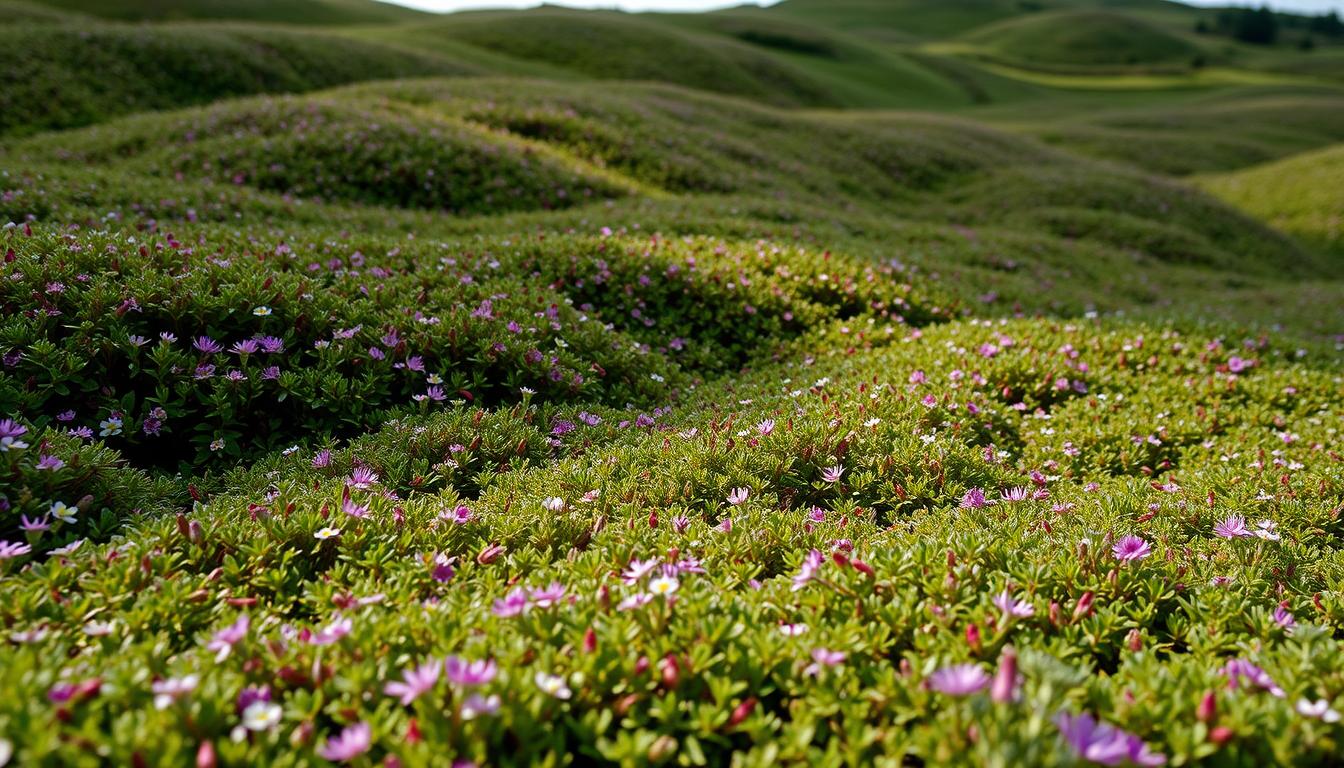
Can a fragrant, pollinator-friendly carpet really replace a traditional grass lawn and still hold up under daily life?
This project aims to show a resilient, beautiful alternative that blends low-growing thyme with upright yarrow to form a living ground cover that thrives in sunny U.S. areas.
Start with the right site: full sun, well-drained soil and neutral to alkaline pH help these plants succeed.
The result reads like a textured meadow: tiny aromatic leaves, small summer flowers that attract bees, and a low-maintenance feel once established. Expect a two- to three-year fill-in period and a higher upfront cost than seeding grass, but lower watering and mowing over time.
Light foot traffic is fine, but set stepping stones where people walk regularly to protect shallow roots. First-season care means steady watering, regular weeding, and light trimming to encourage dense mats.
Key Takeaways
- Site matters: choose sunny, well-drained spots for best results.
- Timeline: expect 2–3 years to form a dense carpet.
- Care: water consistently first season and weed often.
- Use: light foot traffic OK; add stepping stones for paths.
- Benefits: reduced mowing, more pollinators, and long-term water savings.
What a tapestry lawn is—and how ours looks right now
Our garden is a low, living carpet where small aromatic foliage forms tight cushions and taller blooms add movement and color.
This mixed planting blends ground-level mats with floral stakes to create an inviting, pollinator-friendly surface that needs little mowing once it settles in.
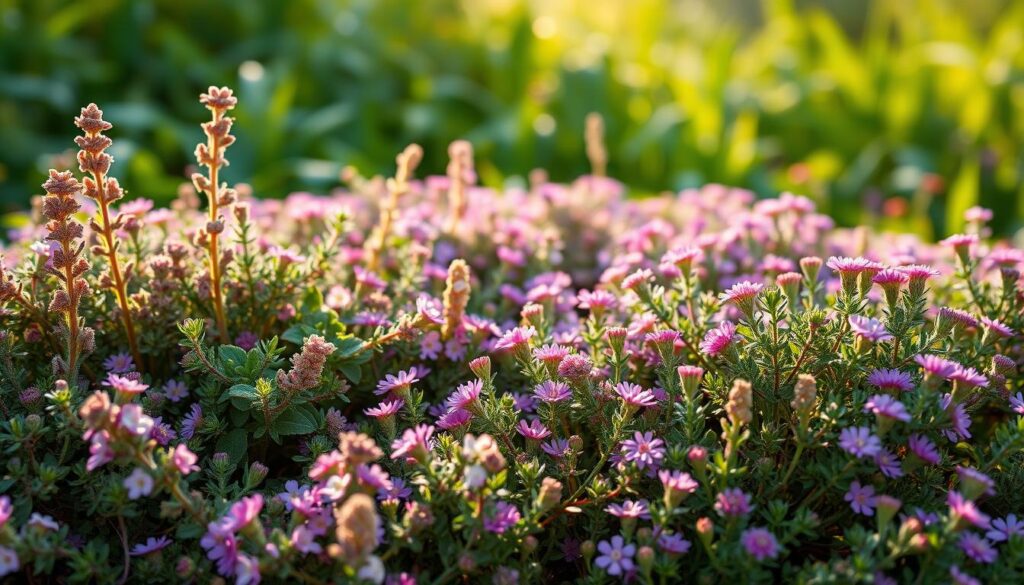
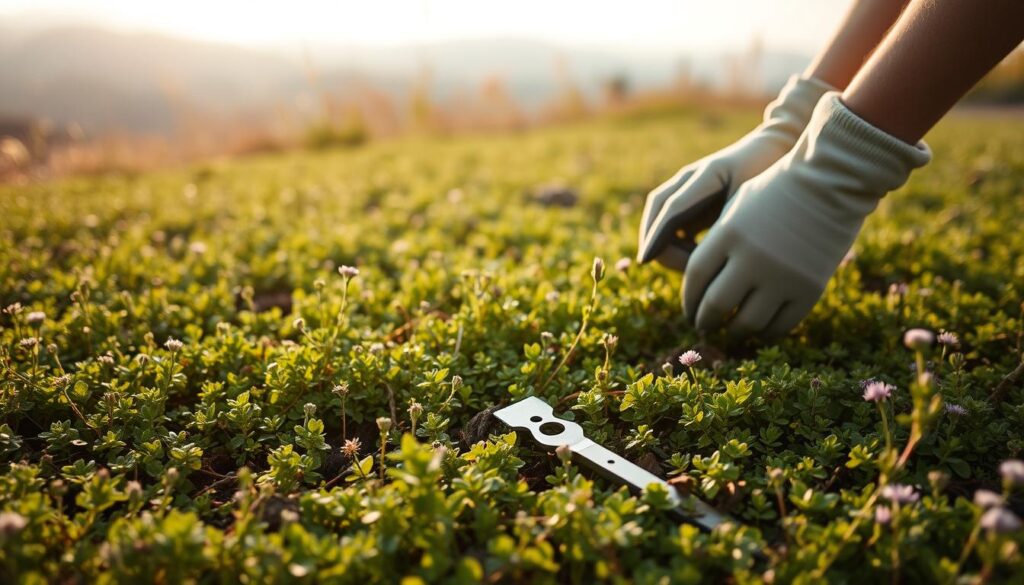
A close view shows dense, silvery-green thyme forming a near-continuous mat across sunny patches. Lavender to pink flowers appear on short stems, and yarrow rises in airy clusters for contrast. Bees and other pollinators visit freely during the main bloom window.
The structure is simple. The low thyme fills gaps at the soil surface while the taller plants add height and seasonal color. In full sun and well-drained conditions the thyme stays evergreen and releases a pleasant scent when walked on.
Expect the carpet effect to build over two to three seasons as plugs or plugs-and-pots knit together. This living surface differs from grass: it needs fewer trims, less water, and fewer inputs after establishment. Brief trims and spot weeding keep the mat tidy without heavy maintenance.
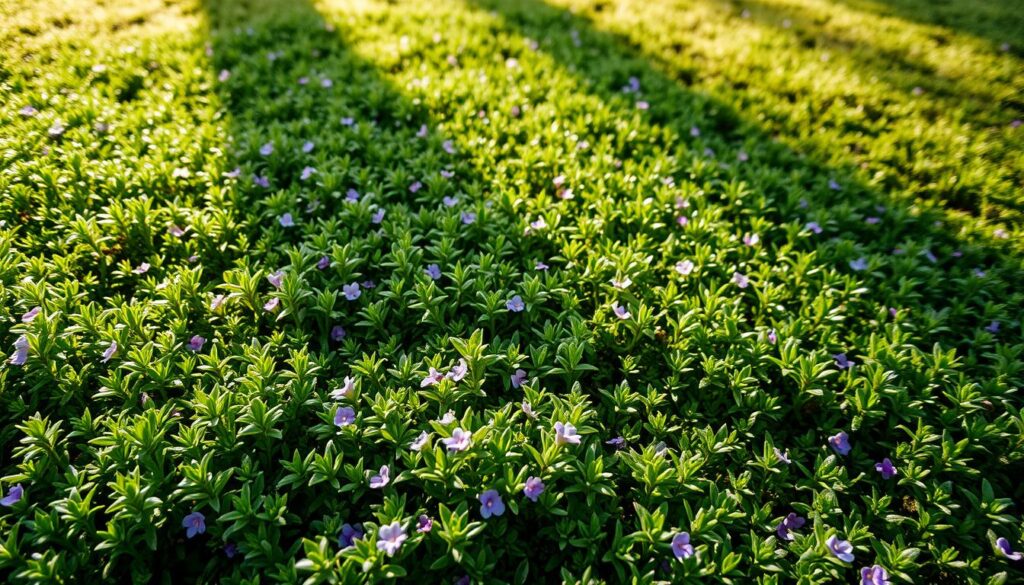
- Visual: patchwork greens and silvers with pink blooms.
- Performance: evergreen, aromatic, drought-wise in sunny areas.
- Care: light trims and occasional weeding as the mat thickens.
| Feature | Living carpet | Traditional grass |
|---|---|---|
| Maintenance | Low once established; occasional trims | Frequent mowing and fertilizing |
| Water | Drought-wise in good conditions | Higher, steady water needs |
| Wildlife | Attracts pollinators and beneficial insects | Fewer flowers, less habitat value |
| Texture | Herbaceous, fragrant underfoot | Uniform grass blades |
Is a tapestry lawn right for your site and lifestyle?
Quick check first: this option thrives with bright exposure and light daily wear. Follow a short checklist to decide if your yard and routine match the idea.
Full sun, soil, and pH
Creeping thyme needs at least six hours of full sun and favors well-drained soil to avoid root rot. Test soil pH with a simple kit; neutral to slightly alkaline results support stronger growth and vigor.

- Shaded or consistently soggy spots will struggle.
- Heavy clay without drainage fixes or standing water are poor conditions.
- Zones colder than USDA 4 sometimes risk winter loss.
Use and traffic
This cover tolerates light foot traffic but not daily heavy play. Add stepping stones on common routes to protect shallow roots and keep coverage even.
Practical fit
If you want less mowing and watering than grass, this is a strong match. Expect more early-season weeding and patience as plugs fill in. Start with a pilot area and add stone arcs where family traffic concentrates.
Planning your mix: creeping thyme and yarrow varieties that work
Pick a mix that gives steady color, texture, and nectar through the season. Build a low mat of Thymus species and add compact yarrow for height and extended bloom.
Start with a thyme backbone. Choose Thymus serpyllum for broad coverage; it forms mats that root at nodes and fills gaps fast. Add red creeping thyme ‘Coccineus’ for red flowers and visual pop. Use elfin thyme in tight joints and woolly thyme where light foot traffic may occur.
Matching yarrow for bloom and scale
Select compact Achillea varieties that rise just above the mat. Aim for soft yellows, whites, or pastels to blend with red and pink florals. Sturdier cultivars extend color into late summer without shading the ground cover.
Design tips for pollinators and season-long interest
- Intermix several Thymus types to stagger bloom and nectar.
- Space plants so mature crowns meet but don’t smother neighbors.
- Place woolly types on warm edges and elfin near pavers.
| Choice | Role | Height at bloom |
|---|---|---|
| Thymus serpyllum | Mat-forming ground cover | 0–2 in |
| Red creeping thyme ‘Coccineus’ | Color accent, spreads by rooting stems | 1–3 in |
| Woolly thyme / Elfin types | Textural edge and paver filler | 0–2 in |
| Compact yarrow | Pollinator magnet, extended bloom | 12–18 in |
Source plants early at local nurseries and plan spacing so each variety meets without crowding. For more planting guidance, see our creeping thyme lawn guide.
Site preparation that sets you up for success
Start with clean, workable soil and you’ll avoid many common setbacks down the road. Careful prep—removing unwanted grass, fixing drainage, and testing pH—saves time and effort as the planting mat forms.
Remove old turf and give the site a fresh start.
Removing existing lawn grass and smothering weeds
Lift and strip the top layer of lawn grass and roots to stop rhizomes from regrowing through young plugs. Dig or sod-cut the area and remove persistent perennial weeds now.
Consider a short smothering period with cardboard or black fabric if weeds are heavy; this reduces hand weeding while the plants fill in over two to three years.
Testing soil, adjusting pH, and ensuring drainage
Loosen the top ~6 inches (about 15 cm) so shallow roots can spread and the ground settles evenly.
Test pH and amend toward neutral to slightly alkaline for best thyme performance and nutrient uptake. If soil holds water, mix in coarse sand or gravel to improve drainage and avoid rot in wet conditions.

- Pre-place stepping stones to mark traffic areas before you plant to prevent compaction.
- Decide start method: seed for budget coverage or plugs for faster closure and predictability.
- Final check: rake to a fine tilth, remove clods, then water lightly to confirm the bed drains within hours.
How we planted in spring: step-by-step from ground to green
We began in early spring with a clear layout and simple spacing rules. That planning made installation faster and kept costs predictable.
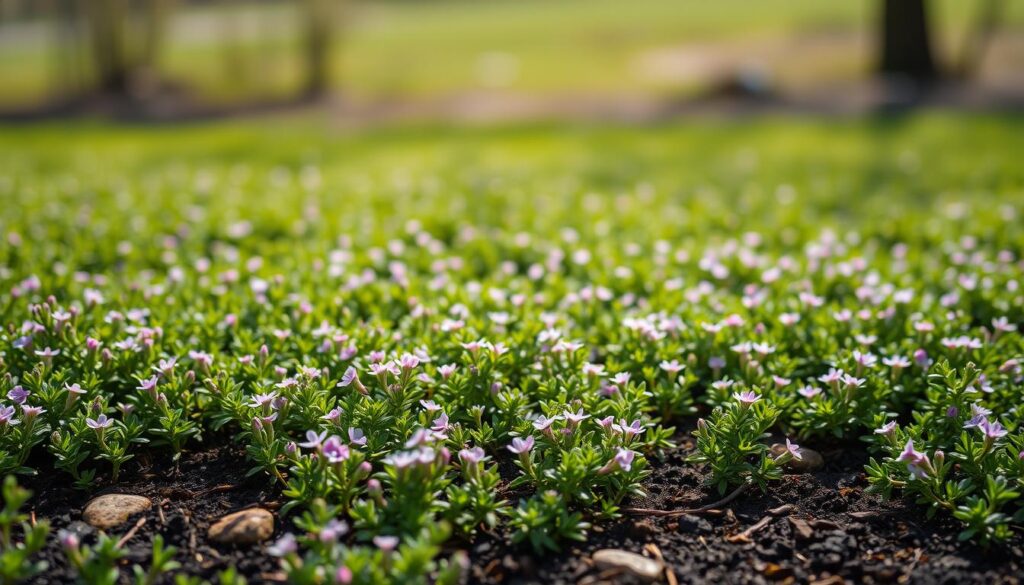
Layout and spacing: plugs, pots, or seed for coverage and cost
Start with a dry-fit: place stepping stones, then map plug or pot spacing to test sightlines and paths.
Plugs at ~10 cm give fast fill. Pots at ~15 cm cut cost but slow closure. Seed is cheapest yet takes longest.
Planting technique for shallow roots and establishing taller stems
Cultivate the top 15 cm of soil so shallow roots can spread. Set low mats slightly high so crowns sit above grade.
Sink yarrow to the same depth it grew in the container. Firm soil gently and water in to remove air pockets.
Mulch and early weed suppression
Use a thin mineral mulch or fine gravel around crowns, never cover them. This reduces weeds yet keeps airflow.
Keep a steady watering rhythm for the first few weeks, then taper. Add temporary flags or low fencing to protect young areas.
| Step | Action | Benefit |
|---|---|---|
| Layout | Dry-fit stones, mark plugs/pots | Protects paths, predicts coverage |
| Stock choice | Plugs (10 cm) / Pots (15 cm) / Seed | Tradeoff: speed vs cost |
| Planting | Cultivate 15 cm, set crowns slightly high | Prevents rot, helps root spread |
| Mulch & care | Thin mineral mulch, steady watering | Suppresses weeds, aids establishment |
Caring for a new tapestry lawn in the first year
Simple, steady habits in the first year set the bed up for a resilient, low-input future. Follow a short seasonal routine of sensible watering, weekly weeding, and light trims to build a dense, fragrant mat.
Watering and moisture routine
Keep soil evenly moist but not waterlogged during establishment. Water deeply when the surface dries, then reduce to deep, infrequent soakings as roots reach down.
Weeding cadence for the first three years
Hand-pull young weeds weekly at first. This prevents fast-spreading opportunists from setting seed.
As coverage grows, shift to monthly checks and remove sprouts at the edges before they root deeply.
When to trim, mow, or leave no-mow
Lightly shear after main bloom to encourage compact growth. If flowers become excessive, one careful low mow per season will reduce bloom without stressing plants.
Keep stepping stones for regular routes to protect crowns from compaction and damage.
| Task | Frequency (year 1) | Why it matters |
|---|---|---|
| Watering | Weekly or as surface dries | Supports root establishment without rot |
| Weeding | Weekly then monthly | Prevents competition and seed set |
| Light trim / mow | After bloom / once per season if needed | Refreshes foliage and controls flowers |
For a clear planting checklist and extra tips on a creeping thyme lawn, read this creeping thyme lawn guide.
Long-term maintenance: low-maintenance doesn’t mean no-maintenance
A small seasonal routine preserves the look and vigor without turning maintenance into a chore. Follow a few simple checks each year and you’ll keep this living surface healthy and inviting.
A quick monthly walk matters. Scan edges and gaps, hand-pull weeds before they set seed, and note any sparse patches that need plugs.
“Light, regular attention pays off more than heavy corrections later.”
- Seasonal checklist: spring edge touch-ups, early-summer light trimming after bloom, and fall debris removal to keep airflow high.
- Water smart: let the mix lean on drought tolerance; irrigate only in multi-week droughts.
- Feed lightly: skip routine fertilizer unless a soil test shows need—lean soil limits weeds and favors tight growth.
- Trim, don’t scalp: one light pass that is mowed or pruned keeps texture and avoids cutting crowns.
- Keep it airy: clear fallen leaves so moisture won’t linger and disease risk drops.
- Repair and infill: reset stepping stones if they shift and add plugs to older, woody patches to restore an even surface over the years.
Final note: Gentle, consistent care—monthly walks and a few seasonal tasks—keeps this alternative to grass performing with minimal effort.
Pros and cons vs traditional grass lawns in the United States
This comparison helps you weigh daily use, long-term care, and the sensory perks before you decide. Read on for clear trade-offs so you can choose confidently for your yard and routine.

What you gain: a creeping thyme lawn uses far less water than many grass lawns and rarely needs weekly mowing. Summer flowers draw bees and other pollinators, and aromatic foliage adds seasonal scent and color to sunny areas.
What to expect: initial costs and labor are higher than seeding grass. Establishment is slow the first year; plugs or pots speed closure but cost more. In Zones 4–10 it performs well, but shaded or waterlogged sites are poor fits.
- Water savings: drought-wise performance reduces irrigation compared with many grass options.
- Mowing reduction: trade weekly mowing for occasional trimming and light seasonal maintenance.
- Foot-traffic limits: light traffic is fine; use stepping stones for regular routes and heavy gatherings on patios.
- Long-term maintenance: expect infill and refresh of woody sections over years, not constant reseeding like some grass areas.
Decision tip: combine uses—place this groundcover in sunny beds and keep durable surfaces for play. That balance gives beauty, biodiversity, and smart use of space.
planted tapestry lawn creeping thyme yarrowhere’s how
Plant in spring on a sunny, fast-draining bed and you’ll set the stage for steady coverage and scent underfoot. Simple spacing, steady first-season moisture, and light trims after bloom are the keys to success.
A quick method summary: prepare sunny, well-drained soil, lay stepping stones for paths, then plant densely with plugs or seed for even coverage. Use plugs at about four inches (~10 cm) or small pots at six inches (~15 cm) so crowns can meet without smothering.
First-season care: keep moisture steady, weed early and often, and never bury crowns with mulch or soil. Check drainage—water should move through the ground within hours after irrigation to prevent rot.
- Mix red creeping selections for color accents and place compact types at edges for neat lines.
- Expect crushed leaves to release a pleasant aroma and repel some pests when stepped on.
- If you seed, prepare a fine seedbed and keep the surface moist until seedlings root.
- Keep extra plugs for infill and plan a light trim after flowering to refresh foliage without heavy mowing.
Expect a fuller, more cohesive look by the second season as plants knit together and the ground cover thickens.
Conclusion
Begin with patient spring work and expect steady rewards as the groundcover knits together over time. Small efforts in soil prep and steady early weeding pay off across the first year and beyond.
Expect slow first-year growth, then faster spread by year three—individual plants can reach about 12–18 inches wide. Keep watering light and regular during establishment and pull weeds early so the mat can thicken without competition.
Celebrate the benefits: flowers feed pollinators, leaves perfume warm days, and routine mowing becomes rare. Choose mixes like red creeping thyme and woolly thyme to balance color and texture.
Start with a pilot area, protect common routes with stepping stones, and plan small refreshes with plugs as woody patches appear. For practical planting tips, see our creeping thyme lawn guide.