
Which handful of gear truly carries a garden through every season, and which items only earn a spot on the shelf for a few months?
We tested drills, blowers, pressure washers, mowers, trimmers, and snow gear to see which models hold up to real work. Practical trials included hundreds of holes drilled, thousands of screws driven, and power checks across driveways, decks, and parking lots.
This intro lays out a simple plan: keep a short, high-quality core kit for daily care, then add seasonal picks for peak jobs like leaf clearing and winter prep.
Expect clear guidance on year essentials, seasonal standouts, smart storage, battery strategies, and how testing shaped our picks. The focus stays on plant health, safe operation, and matching power and ergonomics to yard size.
For a practical example and a related project idea, check this pallet herb garden guide to pair with core gear.
Key Takeaways
- Build a compact, high-quality kit that handles daily garden care through the year.
- One cordless platform often covers most jobs when matched for power and ergonomics.
- Seasonal buys should fill specific gaps, not replace core essentials.
- Hands-on testing guides recommendations, so picks reflect real use and durability.
- Simple maintenance and smart storage extend tool life and protect plants.
Year-round essentials: the tools you can use year-round for everyday gardening tasks
A handful of dependable items will handle planting, repairs, and cleanups with minimal fuss. Pick durable, multi-role pieces that save time and protect plants through routine maintenance.
A cordless drill/driver combo is the foundational tool for raised beds, trellis anchors, and fence fixes. Models that held up under heavy pressure in testing include the Milwaukee M18 Fuel and the DeWalt Atomic 20V Max. For lag screws or timber, step up to an impact driver such as the Kobalt XTR Max or Milwaukee M18 Fuel 2953.

Cleans and restores hard surfaces
A mid-duty pressure washer refreshes patios, rinses benches, and lifts algae from pavers without harsh scrubbing. Our picks that balanced cleaning and value were the Westinghouse WPX3200 and ePX3500.
Hand essentials and safety
Keep a sharp hand trowel, sturdy shovel, pruning shears, and a LENOX quick-change utility knife in a compact set so bits and blades live together. Add NoCry or SolidWork safety glasses and grippy gloves for protection during routine maintenance.
- Tip: Sharpen shears, wipe wet metal, and store chargers off damp floors.
- Quick fix: A garden bits pouch and spare trimmer line prevent mid-job delays.
Seasonal standouts by season: what to add to your kit in spring, summer, fall, and winter
A small roster of seasonal additions makes routine care more efficient across spring, summer, fall, and winter. Each season asks for one or two specialty items that save time and protect plants.
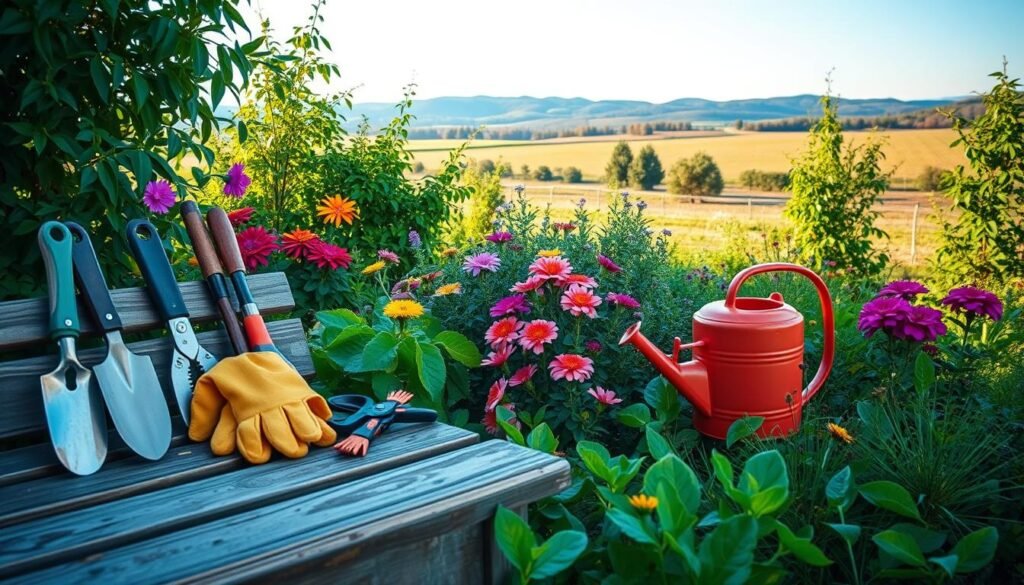
Spring prep
Spring focuses on soil and clean, healthy starts. A garden fork loosens compacted beds for better root growth.
Sharpen pruning shears for clean cuts that reduce disease. Run a soil testing kit early and adjust nutrients before planting to save time.
A string trimmer for edging tidies borders after the first mow of the season.
Summer care
Summer calls for steady moisture and light cleanup. A soaker hose paired with a hose and adjustable nozzle reduces evaporation during hot spells.
Lightweight garden scissors and breathable gloves make harvesting and deadheading quick. A tested cordless leaf blower on low power clears petals and small debris without disturbing mulch.
Fall clean-up
Fall is about clearing leaves and setting next spring up well. A rake or the Husqvarna Leaf Blaster 350iB (tested) gathers leaves fast.
Use a spade for dividing perennials, a bulb planter for spring blooms, and a compost bin plus shredder to speed decomposition and widen the material range.
Winter readiness
Winter means protection and prep. Keep a reliable snow shovel and frost plant covers on hand.
A bench tool sharpener keeps secateurs and spades ready, while greenhouse heat or a grow light supports seedlings through cold snaps.
| Season | Key additions | Primary benefit | Test note / model |
|---|---|---|---|
| Spring | Garden fork, pruning shears, soil test kit | Root aeration, clean cuts, nutrient balance | Improves early growth |
| Summer | Soaker hose, adjustable nozzle, garden scissors, leaf blower | Moisture control, fast harvest, debris clearing | Husqvarna Leaf Blaster 350iB recommended |
| Fall | Rake/blower, spade, bulb planter, compost bin, shredder | Efficient cleanup, proper bulb depth, better compost | Shredder reduces compost volume |
| Winter | Snow shovel, plant covers, tool sharpener, grow light | Frost protection, safe paths, maintained edges | Choose ergonomic snow shovel for long jobs |
Best-in-class picks from testing: proven garden tools for every season
Side-by-side testing revealed which powered picks handle the heavy lifting and which stay light for everyday yard work. These favorites blend usable power, clear controls, and solid quality for homeowners facing varied tasks.

Leaf blower and string trimmer for lawn edges and clearing fallen leaves
Husqvarna Leaf Blaster 350iB topped testing for raw power, while the Ego LB6151 offered top value. Pair either with the Ego ST1623T string trimmer with auto line IQ for crisp bed and lawn edges.
Variable-speed triggers help gather piles without damaging mulch; lighter models reduce fatigue near shrubs.
Battery chainsaw for pruning trees and storm cleanup
For pruning and safely clearing fallen limbs, the EGO CS2005 led testing and the CS1800 impressed as a budget-forward pick. Focus on chain brakes and tool-less tensioning for safer cuts.
Keep spare batteries charged to avoid mid-job pauses, especially during cold months.
Pressure washers that balance power and portability
Westinghouse WPX3200 delivered strongest cleaning performance. The ePX3500 proved compact for storage without sacrificing useful PSI and GPM on patios and fencing.
Lawn mowers that handle a wide range of grass and yard sizes
Toro SmartStow Recycler 20340 handled mixed grass types and varied terrain in testing. The Toro 60V Max 21″ Super Recycler is the best battery option for larger plots.
Adjustable cut-height and mulching/bagging broaden the range of season-long care.
Snow shovels for ergonomics and efficiency in winter
ErgieShovel rated highest for ergonomic comfort on long clears. Snow Joe Shovelution offered strong value and easy storage for light drives and steps.
| Category | Top Pick | Value Pick | Testing note |
|---|---|---|---|
| Leaf blower | Husqvarna Leaf Blaster 350iB | Ego LB6151 | Power vs. weight balance; variable speed useful |
| String trimmer | Ego ST1623T (auto line IQ) | Ego Power+ models | Auto line reduces reload time; crisp edges |
| Chainsaw (battery) | EGO CS2005 | Ego CS1800 | Strong cuts for pruning and clearing fallen limbs |
| Pressure washer | Westinghouse WPX3200 | ePX3500 | Best PSI/GPM mix and portability for cleaning jobs |
| Lawn mower | Toro SmartStow Recycler 20340 | Toro 60V Max 21″ Super Recycler | Handles mixed grass types; battery option for larger yards |
| Snow shovel | ErgieShovel | Snow Joe Shovelution | Ergonomics vs. value for winter clearing |
Build a smart shed: battery platforms, storage, and maintenance that save time
Smart storage and a shared battery platform turn a cluttered corner into a tidy, dependable staging area. A compact plan keeps chargers off cold floors, parts visible, and key packs ready for the next job.
Choose a cordless ecosystem
Pick one cordless brand so mower, blower, trimmer, and chainsaw share batteries and a charger. Shared packs mean fewer chargers, less clutter, and dependable power on demand. Typical runtimes—mowers 25–35 minutes on two 5.0 Ah packs, chainsaws about 60 cuts on twin packs—fit most suburban jobs without a mid-task swap.
Tip: Keep two pairs of batteries for active rotation. Warm packs indoors before frosty mornings; lithium-ion stays reliable down to roughly -10 °C.

Storage and space planning
Map the shed so fold-flat mowers and hung long-handled tools free floor aisles. Use wall racks for long pieces and a slim shelf for chargers and spare packs.
Keep a small set of bins for PPE, trimmer line, and fasteners to avoid last-minute runs. Vertical storage makes seasonal swaps quick and keeps space neat.
Maintenance rhythm
Adopt a simple maintenance schedule: touch up mower blades and chains monthly during peak seasons, replace trimmer line often, and rinse mud after heavy use.
- Lower pressure when rinsing finishes to prevent corrosion.
- Assemble a consumables kit—chain oil, spare spools, blades, detergent—to save time before big weekends.
- Run quick quality checks: tighten fasteners on long-handled heads and store serials for warranty service.
Environmental bonus: cordless gear cuts noise and fumes and trims lifetime CO₂ versus small petrol engines, while a neat shed extends kit life and protects quality across the platform range.
How we separate essentials from seasonal: tasks, climate, and testing criteria
Our method separates core kit from occasional gear by mapping task frequency, local climate, and hands-on testing results. That mix helps gardeners pick what earns shelf space and what’s best rented or borrowed.
We define “essential” as items that handle a wide range of everyday tasks across the year—drills, hand pruners, and pressure washers are examples. Seasonal pieces shine in a single season or on specific jobs like snow clearing or heavy leaf runs.
Climate and yard type shape recommendations. Hot summer irrigation needs differ from snowy winter demands. Windy fall neighborhoods need leaf clearing more often than sheltered plots.
Our testing approach is hands-on and repeatable. We ran drills through 400+ holes and 1,000+ screws, logged saw cuts in the thousands, and measured power and runtime across surfaces. Results show which models deliver consistent power, low vibration, and durable build quality.
- Safety and durability: secure grips, blade guards, and quality materials reduce risk and last longer outdoors.
- Storage and portability: compact bodies, foldable handles, and balanced weight ease shed organization.
- Ease of use: fast starts, intuitive controls, and low vibration keep gardening comfortable and efficient.
- Plant-first results: sharp edges and adjustable spray protect plants and reduce disease risk.
We also weigh brand ecosystems and price-to-performance. Cross-compatible batteries widen range and simplify expansion. The goal is pragmatic: match the right tool to spring, summer, fall, and winter tasks so gardeners get reliable results without overbuying.

Conclusion
Wrap your plan around a short set of reliable garden tools for weekly care, then add one or two seasonal upgrades for spring, summer, fall, and winter.Smart storage, warm battery packs in cold months, and a small maintenance rhythm keep gear ready and plants healthy.
Pick a cordless platform and a durable mower for a healthy lawn and grass. Add a nimble leaf blower, a sharp chainsaw for clearing fallen limbs, a pressure washer, and solid pruners with a sharp edge.
Store fold-flat equipment and wall racks to free space. Keep a labeled set of consumables and key hand items near the door.
In winter, grab an ergonomic snow shovel, warm battery packs before use, and layer PPE to reduce fatigue in heavy snow.
Whether you’re tending containers or a quarter-acre garden, choose well, maintain simply, and enjoy more time with thriving plants and clear paths all year.