![How to Stop Moldy Smell from Stagnant Drip Lines [Troubleshooting Tips]](https://thegardenhaven.com/wp-content/uploads/2026/02/how-to-stop-moldy-smell-from-stagnant-drip-lines-troubleshooting.jpeg)
I remember the first time a musty odor met me at the door — that tight, uneasy feeling that something in the HVAC needed care. You’re not alone if the scent hits strongest when the unit starts. That fade at runtime often tricks us, but moisture and microbes can lurk on.
In this guide, we’ll track the source of the musty smell—usually water sitting in the condensate drain pan and drain line—and clear it so the problem does not return. You’ll learn simple checks, safe unclog steps, and maintenance habits that keep water flowing and air fresh.
If a pan overflows, you suspect heavy mold, or backups keep coming back, pause DIY and call a pro. For more on routine care and cleaning, see this helpful guide on AC drip line maintenance.
Key Takeaways
- Musty odors often mean trapped moisture in the condensate path.
- Start with simple inspections: pan, drain, and vents.
- Clearing clogs and routine flushing prevents regrowth.
- Use safety limits: call pros for heavy mold or repeated backups.
- Small, regular checks keep indoor air comfortable and safe.
Why does a moldy, musty smell from your HVAC system happen in the first place?
Moisture trapped inside the system creates the right recipe for microbial growth. Dust, warm surfaces and a little standing water let mold, mildew and bacteria take hold in hidden corners.
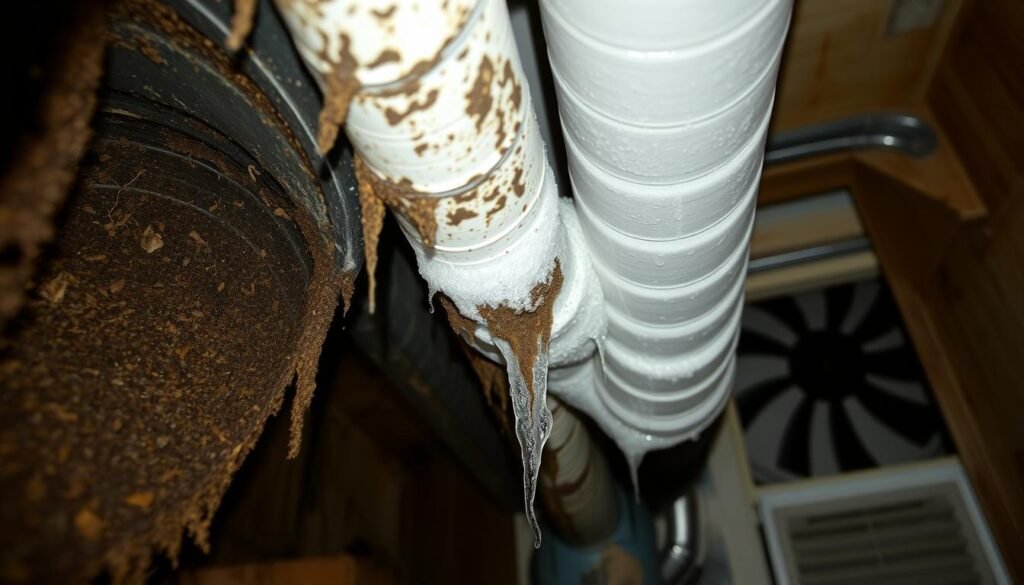
Moisture trapped where it shouldn’t be fuels microbial growth
Cooling pulls water from the air and that condensate must drain away. When water lingers in drip pans, coils, ducts or drain lines, surfaces stay damp and microbes grow.
Why the odor can fade after startup but the problem remains
Brief airflow can push a pocket of odor out, so the scent fades after a few minutes. That momentary relief doesn’t clear the colony or the slimy film feeding it.
- Recipe for odors: moisture + dust + time = mold growth.
- High humidity keeps surfaces wet longer and speeds mildew and bacteria buildup.
- If the smells return each run, treat the unit’s drainage and cleanliness as the likely source.
What are the health and indoor air quality risks of mold spores and musty odors?
That faint, persistent musty hint in your rooms can indicate mold spores moving through your HVAC air pathways. This is more than a nuisance; it can affect household health—especially for people with allergies or asthma.

Common reactions including allergy and asthma flare-ups
A musty smell often arrives with physical symptoms. People report irritated throats, headaches, sneezing and worsened allergy symptoms when the odor is present during cycles.
Children and older adults usually react more strongly. Asthma sufferers can experience flare-ups tied to these airborne particles.
Why persistent smells can mean your system is circulating more than cool air
Once microbes or mold spores enter the system, moving air can carry them into several rooms. A lingering odor may mean spores or bacterial byproducts are traveling with conditioned airflow.
If symptoms ease when the unit is off, that’s a clear clue the HVAC is part of the problem. Prioritize source removal—cleaning the drain, pan and ducts—over masking sprays, which only hide odors without reducing exposure.
Quick checklist: note symptoms, watch for pattern linked to runtime, protect vulnerable household members, and address the drainage and cleaning issue promptly. For broader indoor humidity and mold guidance, see this short guide on growing gourmet mushrooms for related moisture-management tips in a home setting.
What are the common sources of stagnant water and odors around drip pans and drain lines?
A trapped pool of condensate often starts the problem, and a few simple checks reveal the cause. Follow the drip path: air cools, water collects, the pan catches it, and the drain line carries it away.
A clogged or poorly sloped drain keeps water sitting in the pan. That standing water becomes a warm, damp environment where mold and mildew thrive.

Common plugs form from algae, dust and other debris that build up inside the line. Over time the slimy plug blocks flow and creates persistent odors and a damp unit.
Watch for signs: visible pooling near the indoor unit, a pan that never dries, or damp patches around the air handler. High humidity makes the problem worse by keeping surfaces wet longer and feeding microbial growth.
- Quick checklist: trace the drip path, look for slope or blockages, note pooling near the unit.
- If the pan acts like a garden saucer left under a pot, the cleaning fix is simple: clear the clog, flush the drain, and keep a regular maintenance rhythm.
For extra guidance on causes and professional options, see this short note on AC musty smell causes.
How do you stop moldy smell from stagnant drip lines (troubleshooting)?
Pinpoint the source before you wrench open the unit. Start by noting which vents or rooms carry the worst smell. A concentrated scent in one room often points at the ductwork. A strong odor at the air handler means the pan or drain line is likely the source.
Confirm the source by tracing vents and rooms
Walk the home while the system runs. Check vents and grills. Mark where the smell is strongest. This quick map guides your next steps.
Inspect the drip pan and drain line for buildup
Open the access panel and look for standing water, slime or dark spots in the pan. If the pan stays wet, that trapping of water feeds mold and mildew growth.
Clear clogs with a wet/dry vacuum and vinegar flush
Create a tight seal at the drain outlet with the vacuum and pull out algae and debris. Follow with a vinegar-water flush and let it sit for 10–15 minutes, then run water until the drain clears.
Ongoing maintenance
Replace filters, keep the pan dry, and pour about a cup of white vinegar down the drain line every few months. If odors return quickly or backups persist, the system may need professional service for slope or internal cleaning.
Can air filter issues cause musty smells and poor airflow?
Dirty filters often start a chain reaction: restricted airflow, trapped moisture, and lingering odors. A clogged air filter forces the system to work harder and reduces fresh air flow through the unit.
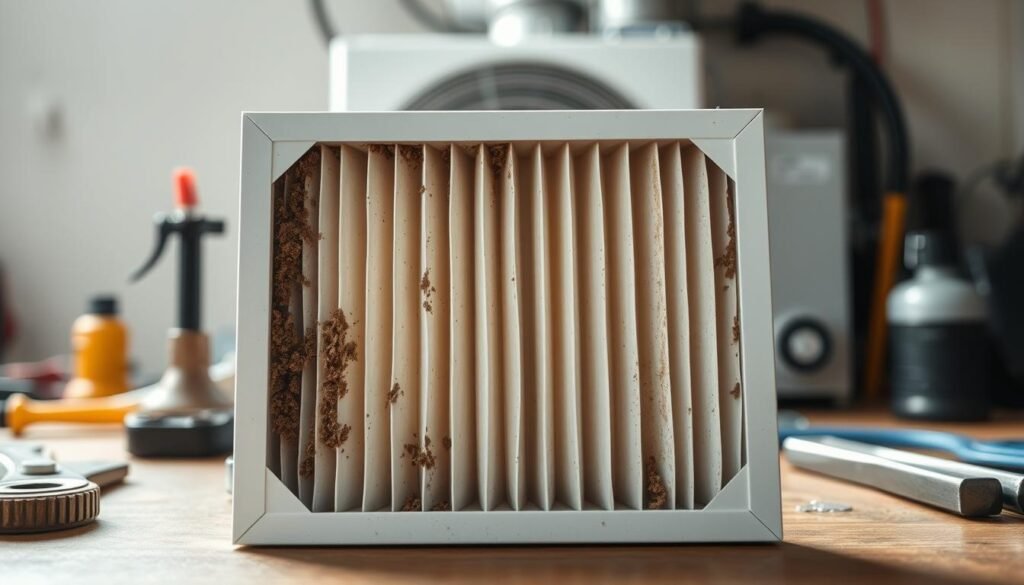
How dirty air filters trap moisture and contribute to odors
When a filter fills with dust, it holds humidity longer. That damp surface becomes a breeding spot for bacteria and mildew, which create a faint musty smell.
Choosing the right filter type and replacement cadence for your home
Most homes do well with a schedule of changing filters every 1–3 months. Replace more often if you have pets, smoke, allergies, or heavy run time.
- Fiberglass: cheap, lower resistance, but traps larger particles only.
- Pleated: better capture with balanced airflow for many homes.
- HEPA-level: highest filtration but may reduce airflow unless the system supports it.
If you cannot remember the last change, swap the air filter now and set a reminder. That small bit of routine maintenance often clears odors quickly, though persistent moisture sources like a wet pan or clogged drain still need attention.
Could the evaporator coil and internal buildup be what smells like mold?
Dirt on evaporator surfaces can hold moisture and invite microbial growth, and that condition often sends a musty note through your home. Check coils early—this simple step can reveal whether the unit itself is the culprit.
Dirt-clotted coils act like a sponge. They trap humidity, dust and organic matter. That damp film lets bacteria, mold and mildew thrive and release an unpleasant odor into the circulating air.

What to look for in a quick visual inspection
- Discoloration or black, green or white spotting on the coils or nearby panels.
- Fuzzy buildup or a slimy film on metal fins and inside the pan.
- Musty staining or dust patterns on supply vents that match the airflow path.
When freezing or heavy grime points to deeper issues
If coils freeze repeatedly, ice traps contaminants and dries into a wet mess when it melts. That often signals airflow restriction, dirty filters, or other system issues needing professional service.
Light inspections and simple cleaning are fine for homeowners, but deep coil cleaning, refrigerant checks and airflow diagnostics are best left to HVAC pros. Regular maintenance keeps the evaporator dry and reduces mold growth over time.
Are ductwork and vents acting like hidden odor highways?
Ductwork can carry contaminants from one room to another, turning a local issue into a whole-house problem. When ducts leak or lack insulation, cool interior surfaces meet warm, humid spaces and condensation forms. That moisture invites mold and mildew, and the moving air spreads those particles through the system.
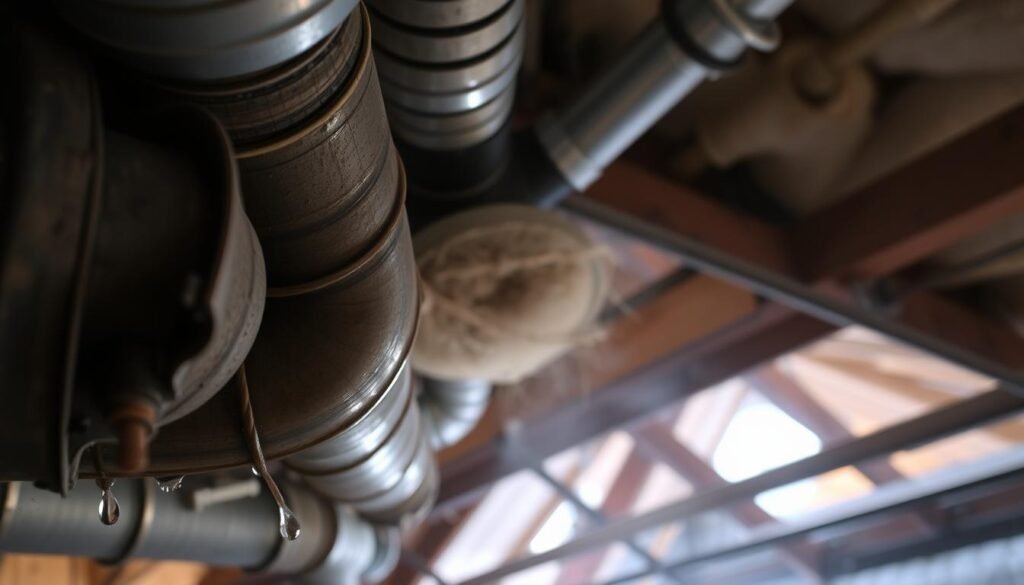
Why ducts become odor highways
Once spores or dusty grime enter the ductwork, airflow carries them room to room. That turns vents into distribution points rather than fresh-air outlets.
Condensation, leaks and a mold-friendly environment
Leaky or poorly insulated ductwork sweats when warm attic or crawlspace humidity meets cold ducts. Surface moisture stays long enough for mold growth and increased odor.
Clues that point to ductwork problems
If certain rooms—often those farthest from the handler—have stronger smells, suspect duct leakage, gaps in insulation, or localized contamination. Check supply and return vents for odd staining or dampness.
Cleaning versus repair
Cleaning helps when dust and surface mold are present. Use professional duct cleaning if you see visible buildup. Repair is needed when ducts leak, sweat, or are physically damaged; sealing and insulating stops the moisture source so problems don’t return.
- Practical first step: seal visible gaps and add insulation where ducts cross hot spaces.
- Maintenance tip: vacuum vents periodically and keep return areas clear to support airflow and system health.
- When in doubt: a qualified tech can inspect for leaks and recommend cleaning versus repair.
For a local perspective on persistent odors and professional service options, see this helpful note on HVAC musty smell causes.
How can you prevent future mildew smell problems with humidity control and routine HVAC maintenance?
Keep your HVAC like a well-tended garden: small, regular actions prevent big problems. Aim for steady indoor humidity and simple seasonal checks so mold and mildew never find a lasting home.

Use dehumidifiers and manage indoor humidity
Place a dehumidifier in damp basements or rooms. Lowering spikes in humidity slows mold growth and reduces lingering odor.
Keep vents open and unobstructed
Clear furniture and rugs from registers. Good air flow keeps surfaces dry and prevents condensation that leads to mold.
Seasonal inspections and drain-line upkeep
Schedule checks each spring and fall. Inspect the drain line, pan and coils, and flush the drain line with vinegar periodically. This simple maintenance stops water from sitting over time.
Outdoor unit housekeeping and system sizing
Keep vegetation and debris away from the outdoor unit. An oversized system that short cycles will cool fast but not remove enough moisture, leaving the home clammy even with cool air.
“Small, consistent care prevents big fixes later.”
For a deeper guide on musty concerns, see this practical musty smell solutions.
Conclusion
A lingering musty note often points to moisture hiding where you can’t see it. Quick checks and simple fixes stop water from feeding mold and keep indoor air fresh.
Summary: Confirm the source, clear the condensate path, refresh filters, and control humidity. These steps let the hvac system move clean air and cut recurring odors.
Keep a short maintenance rhythm for your home. If backups recur, visible mold appears, or vents still smell, call a pro for duct or handler inspection. Acting early saves time and bigger issues.
With steady care, your rooms can feel comfortable and smell clean every time the unit runs.