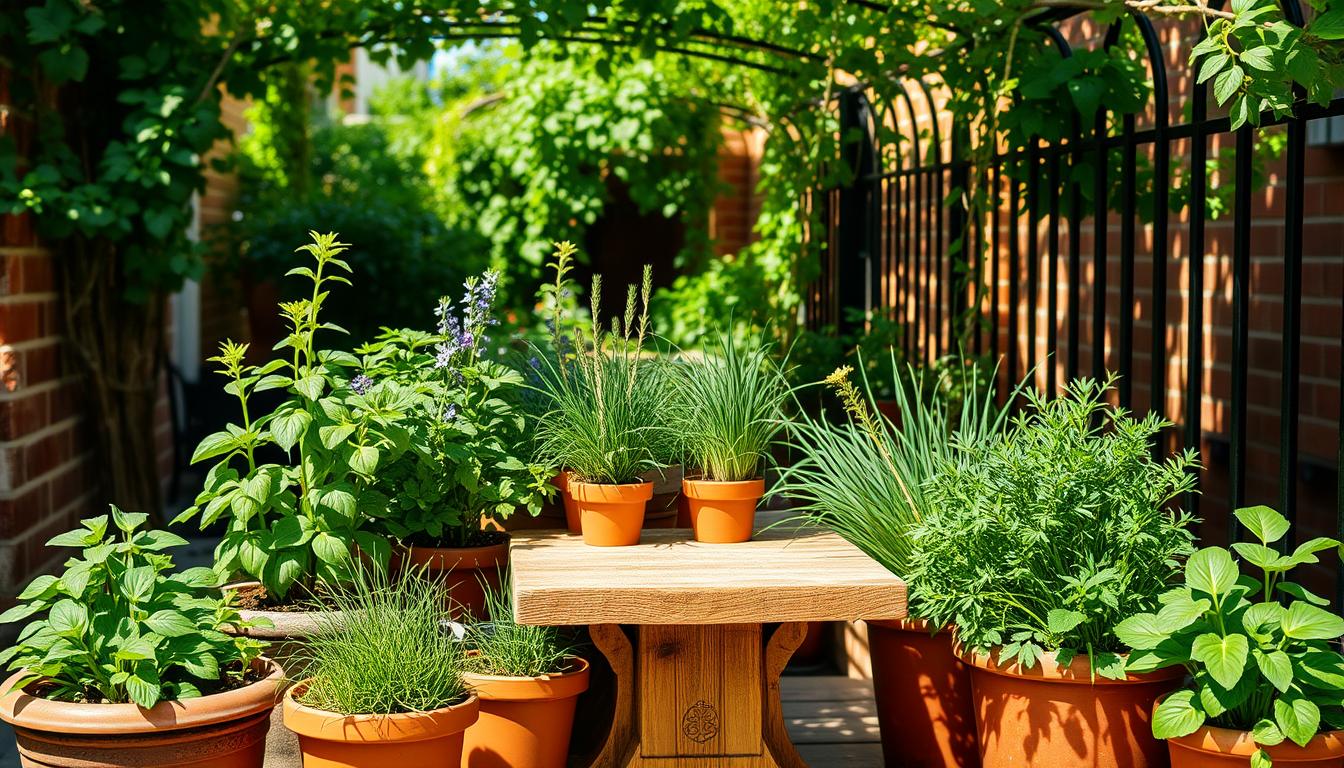
Can a tiny balcony truly feed your kitchen with fresh flavor all summer? The short answer is yes — with a few smart choices you can harvest fragrant leaves within steps of your stove.
Start simple: pick sunny nooks, use pots with good drainage, and learn a basic water-and-dry rhythm. Herbs like basil, thyme, rosemary, parsley, and mint respond well to frequent snips and light monthly feeding.
Mint prefers its own pot because of spreading roots. Basil needs warmth and about six hours of sun. Thyme likes drier soil, while parsley enjoys steady moisture. These easy rules prevent common problems before they begin.
In short, tiny plots can become productive mini gardens with little time and steady care. For practical setups and pot ideas, see our herb garden in pots for inspiration.
Key Takeaways
- Place pots where they get bright sun and map microclimates first.
- Use good drainage, right pot size, and quality soil to avoid problems.
- Water deeply, then let soil dry slightly; feed monthly for steady growth.
- Grow mint alone; give basil warmth and thyme dry feet.
- Frequent harvesting encourages fuller, more productive plants.
Assess Your Small Space and Sun Before You Plant
Log direct light over several days and label full-sun and part-sun zones. Use walls and railings to buffer wind and store heat for the season.
Before you set pots in place, log direct light hours in each corner of your outdoor space. Spend three to five days noting the exact hours of direct sun each spot receives. Full sun equals about six or more hours; part sun is often around four to six.
How should I map light and shade?
Mark shifting shade from buildings, fences, and trees. These features can lower midday heat and also protect plants from harsh winter winds.
How do microclimates affect placement?
Use thermal mass like brick or stone to hold warmth. In cool months, tuck rosemary or sage near a wall to capture residual heat and shelter from wind.
“Small moves matter: sliding a pot a few feet often doubles useful light time.”
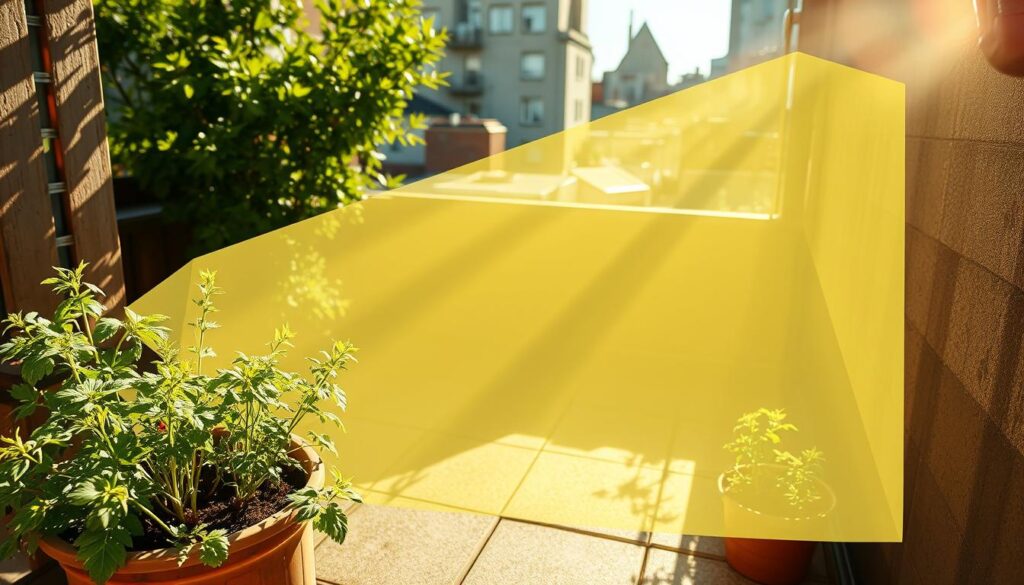
| Zone | Direct sun (hours) | Best for |
|---|---|---|
| Full sun | 6+ | Basil, rosemary |
| Part sun | 4–6 | Parsley, chives |
| Shade | 0–4 | Seedlings or transplants |
Test mobility: put a container on a rolling caddy and move it if growth stalls. Make sure tall railings don’t shadow low pots; elevate small ones on risers to reclaim light. Track the sun angle through the season and rotate pots so your herbs keep getting enough light.
For practical setups and further tips on starting an herb patch in tight outdoor spaces, see starting an herb garden in small outdoor.
Choose the Right Containers, Drainage, and Soil for Healthy Herbs
Match pot depth and material to each plant’s root habits and moisture needs. A deeper pot suits basil or rosemary, while thyme and oregano thrive in shallower, wider vessels that let air move around stems.
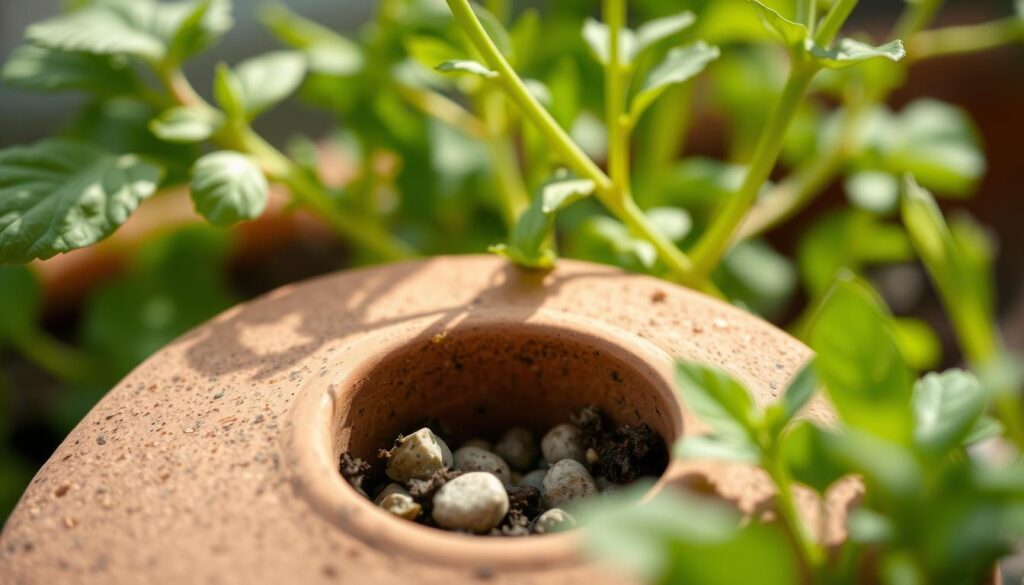
Drainage matters. Always use pots with drainage holes so excess water can escape and roots don’t sit in moisture. If a pot lacks holes, water with care and never leave a saucer full beneath it for long.
- Soil mix: Use high-quality potting soil (not garden soil) blended with perlite or coarse sand for light, airy texture and reliable drainage.
- Dry feet: For dry-loving herbs like thyme, add extra pumice or perlite so the soil drains quickly and the plant’s feet stay dry.
- Materials: Terracotta breathes and speeds evaporation; glazed ceramic and plastic hold moisture longer—choose by each herb’s thirst.
Practical care tips: Water deeply until liquid runs from the holes, then let the top inch dry before watering again. Group plants with similar drainage and water needs to simplify care. For a practical how-to on growing herbs in pots, see growing herbs in containers.
Container herb gardening what works best small: top herbs for tight urban spots
Pick a handful of reliable favorites to fill tight outdoor spots with steady flavor. These picks suit limited space and give fast returns in the kitchen.
Start by grouping plants by light and soil needs.
Mint in a single pot
Mint spreads fast. Keep it in its own pot and snip tips often to stay compact. It tolerates part sun and prefers slightly damp soil.
Basil for peak summer flavor
Basil needs heat and at least six hours of full sun. Pinch above a node to stop flowers and encourage bushy growth.
Dry-loving thyme and oregano
Thyme and oregano thrive in lean mixes. Water deeply, then let soil dry. Pinch oregano to keep it from flowering and to boost flavor when dried.
Sun-loving rosemary; parsley and chives for the kitchen
Rosemary wants bright light and good air flow—avoid soggy soil. Parsley and chives handle part sun and rebound quickly after cutting.
“A tiny cluster of the right plants gives more fresh flavor than a scattered collection.”
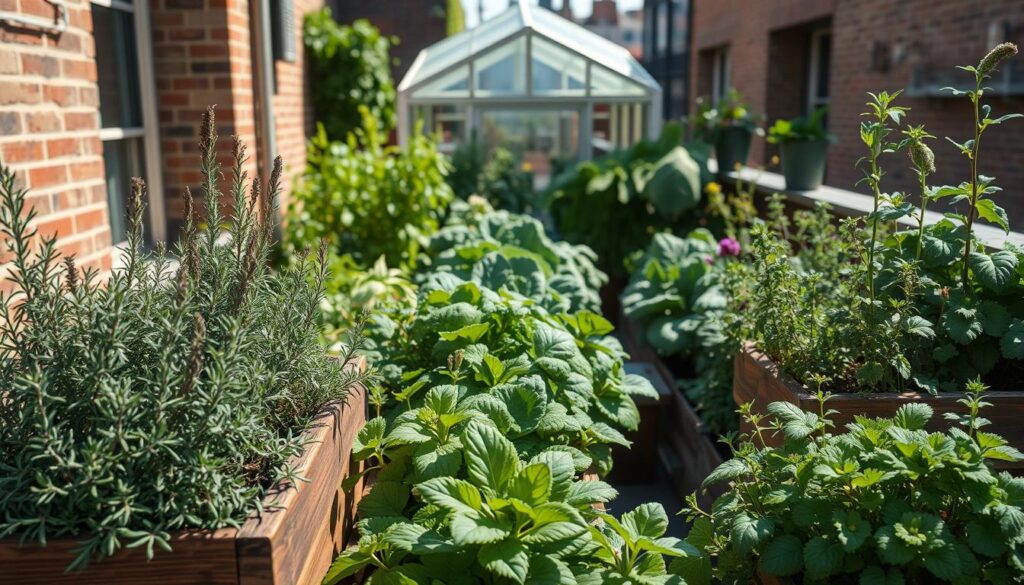
| Herb | Sun | Soil | Quick tip |
|---|---|---|---|
| Mint | Part sun | Moist, rich | Grow alone; trim tips often |
| Basil | Full sun | Rich, well-drained | Pinch to prevent flowers |
| Thyme / Oregano | Full sun | Lean, fast-draining | Deep water, then dry; pinch back |
| Rosemary / Parsley / Chives | Sun / Part sun | Well-drained / Moist | Rotate for light; plant parsley in multiples |
Planting and Daily Care: water, sun, pruning, and harvesting
Keep a simple daily routine: soak deeply, give bright light, and snip often. These habits preserve tender leaves and steady flavor through the summer.
Start by planting with good soil and a deep first soak. After planting, water thoroughly until excess drains, then let the top inch of soil dry a bit before you water again. Droopy basil or mint usually means they need a drink; parsley’s leaves curl when thirsty.
Establish a cadence: check soil each day in heat, water in the cool of the day, and feed monthly with a gentle fertilizer. Watch moisture rather than the clock — thyme and rosemary prefer deep soaks and dry cycles, while parsley likes steady moisture.
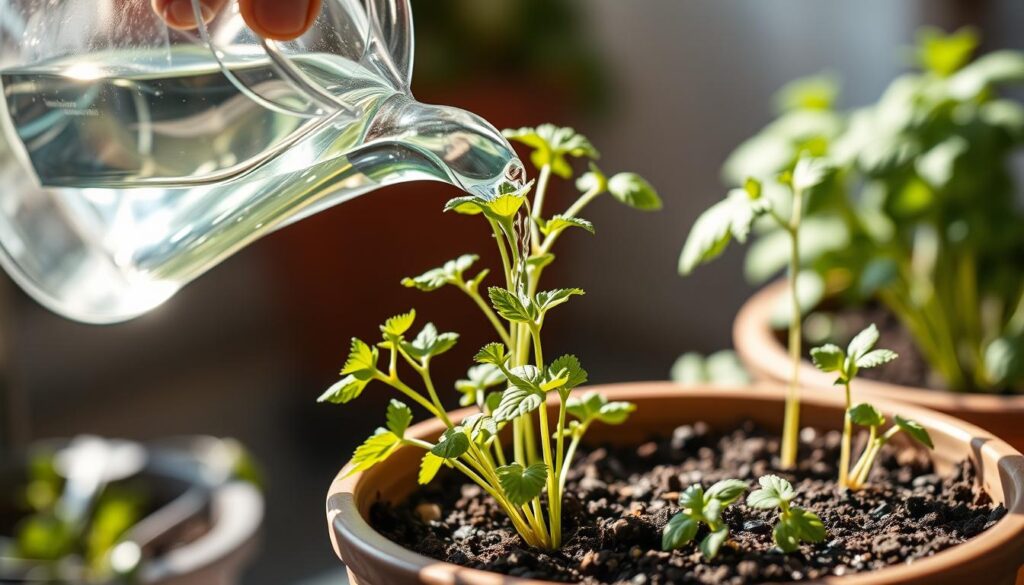
Prune and harvest to encourage growth. Pinch basil above a node to stop flowers and keep leaves tender. Remove flower spikes on most plants to protect leaf flavor. Harvest little and often; clean shears cut above a leaf pair to spur quick branching.
“More snips equal fuller plants — rotate harvests to keep every pot productive.”
- Water deeply, then let soil dry slightly before rewatering.
- Feed monthly and refresh the soil surface mid-season with a light top-dress of compost.
- Tie small bundles of oregano or sage to dry when peak flavor arrives for later kitchen use.
For detailed watering and soil guidance, see watering and soil tips from extension resources.
| Action | When | Signal | Quick fix |
|---|---|---|---|
| Deep soak | After planting / weekly in heat | Soil dry 1″ / droop | Water until draining |
| Feed | Monthly | Slower growth | Balanced liquid feed |
| Pinch/prune | Weekly | Flower spikes / leggy stems | Cut above node |
| Top-dress | Mid-season | Soil tired | Thin compost layer, water in |
Seasonal Strategy for Small Containers: spring to winter
Plan your seasonal moves now so each plant gets the right light and shelter through the year. This short plan shows spring starts, summer routines, fall seed steps, and winter protections for common kitchen herbs.
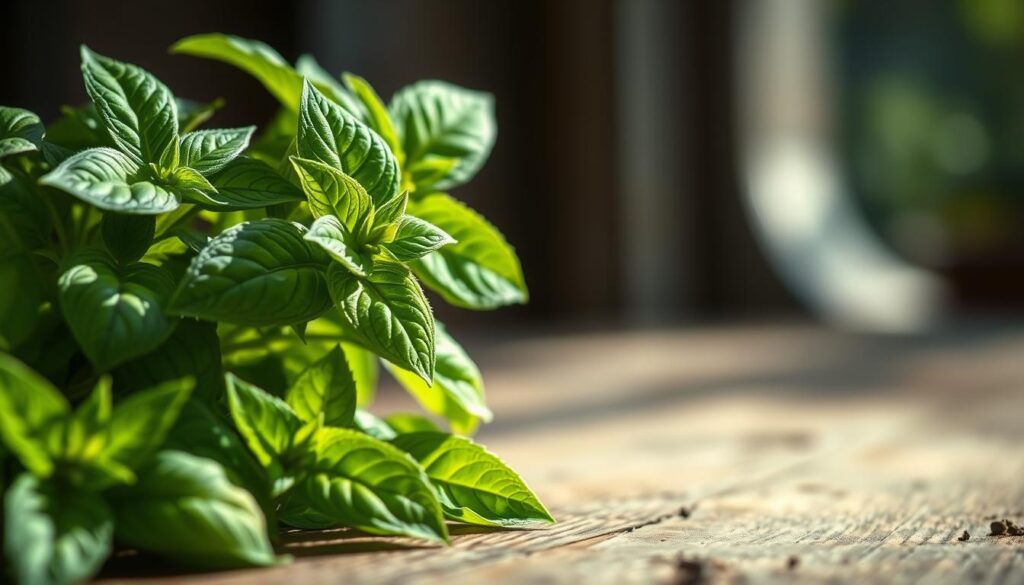
Spring start
Start basil indoors in early April using trays with drainage and a strong light on a 16/8 schedule. Thin to the strongest seedling and pinch at about four sets of leaves.
Harden off for 10–14 days before transplanting outdoors mid- to late-May when nights stay warm.
Summer routines
Move large pots like rosemary and sage into the brightest patio spots to add crucial hours of light. Check soil daily in heat, water deeply in the morning, and keep pots slightly elevated for quick drainage.
Fall decisions
Decide whether to let basil and parsley flower to save seed. When stalks brown, dry and crumble them over paper to collect seeds for next year.
Winter game plan
Tuck rosemary, thyme, and sage near brick walls to capture solar heat and block wind. Divide mint and chives in late winter or very early spring to refresh vigor.
“Layering stems to root new plants is an easy way to multiply your best varieties.”
| Season | Key action | Focus plants |
|---|---|---|
| Spring | Start basil indoors; harden off | Basil, parsley |
| Summer | Rotate pots for more light; daily checks | Rosemary, sage |
| Fall | Save seeds; renew oregano and thyme | Basil, parsley, oregano |
| Winter | Shelter hardy herbs; divide mint/chives | Mint, chives, thyme |
Refresh each spring: top off potting mix, inspect roots, and note which varieties thrived in your garden. For more ideas on setup and season care, see this herb container guide.
Conclusion
Small plots can yield big flavor when you match light, soil, and simple care routines.With steady watering, monthly feeding, and frequent snips, your plants will repay you with lush leaves for the kitchen.
Start a focused herb garden by placing pots where they get sun, using well-draining soil, and separating fast spreaders like mint. Pinch basil to keep leaves tender and remove flower spikes that steal energy.
Rotate and refresh pots each season, divide clumps, and layer stems to multiply favorite varieties. These small steps make growing herbs forgiving, practical, and richly rewarding.
Enjoy the routine: check sun and soil, harvest often, and let your garden add fresh flavor to weeknight meals.