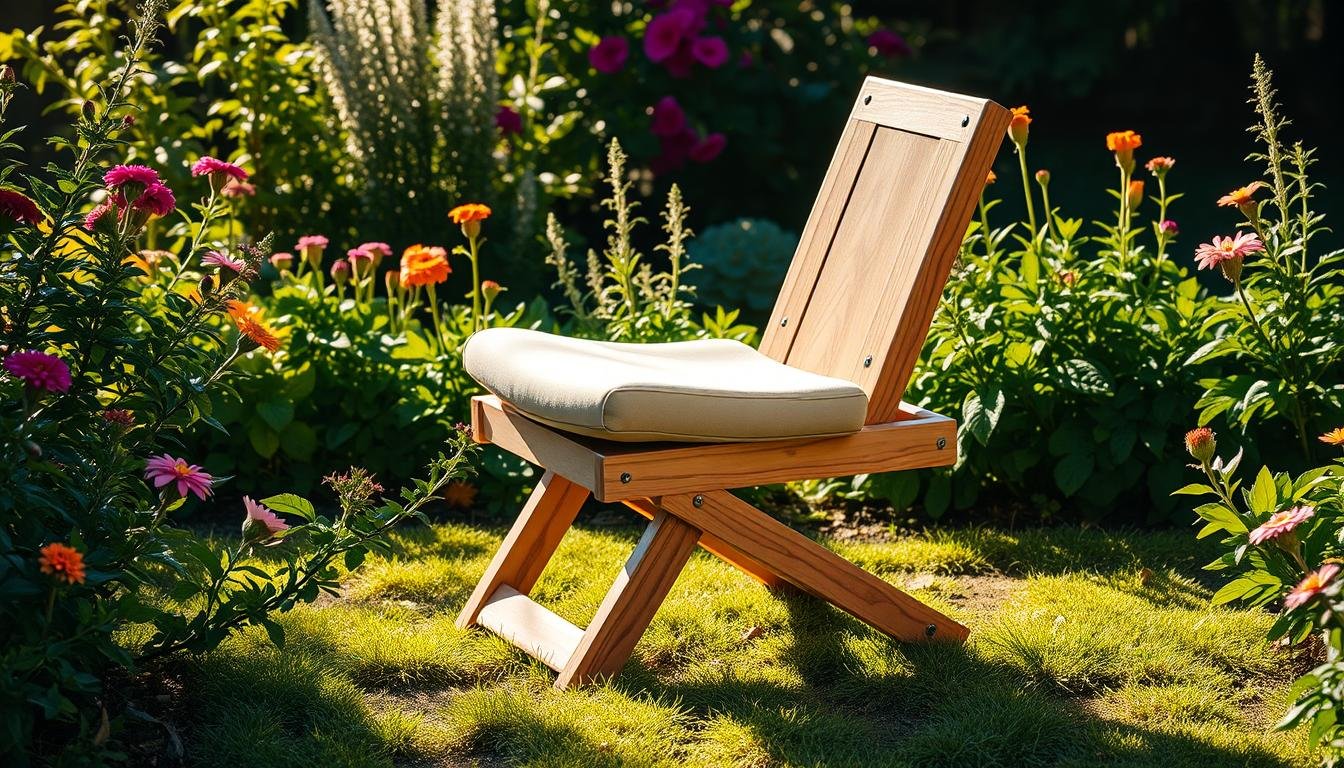
Imagine spending an afternoon pruning, planting, or mulching and feeling energised instead of sore. With the right setup and a cushioned combination kneeler that flips into a seat, it’s possible to reduce strain on the back and knees and enjoy more time outdoors.
Good posture spreads effort across muscles and joints. Stand tall, bend at the knees, and keep shoulders relaxed to avoid fatigue. For low tasks, use a cushion or a low seat rather than bending from the waist.
Choose long-handled, lightweight tools and raised beds to keep work within reach. Move heavy loads with a cart and switch positions often to prevent repetitive stress. A quick ice pack, short rest, and gentle stretches ease soreness after a session.
For a practical review of a comfortable kneeler-seat that helps with posture and comfort, see this helpful combination kneeler review.
Key Takeaways
- Posture matters: keep the back straight and work close to the body.
- Flip-style kneelers let you switch positions before discomfort builds.
- Use long-handled tools, raised beds, and carts to limit strain.
- Time-box sessions, hydrate, and alternate tasks to avoid repetitive stress.
- Short rests, ice, and gentle stretches help soreness recover faster.
Why Gardening Hurts—and How Smart Positioning Changes Everything
Smart positioning cuts the load on your spine and muscles by keeping your back straight and moving from hips and knees, not the waist. It prevents repetitive stress from bending, twisting, and reaching that causes back pain. Adopt neutral posture and shift position often to lower risk.
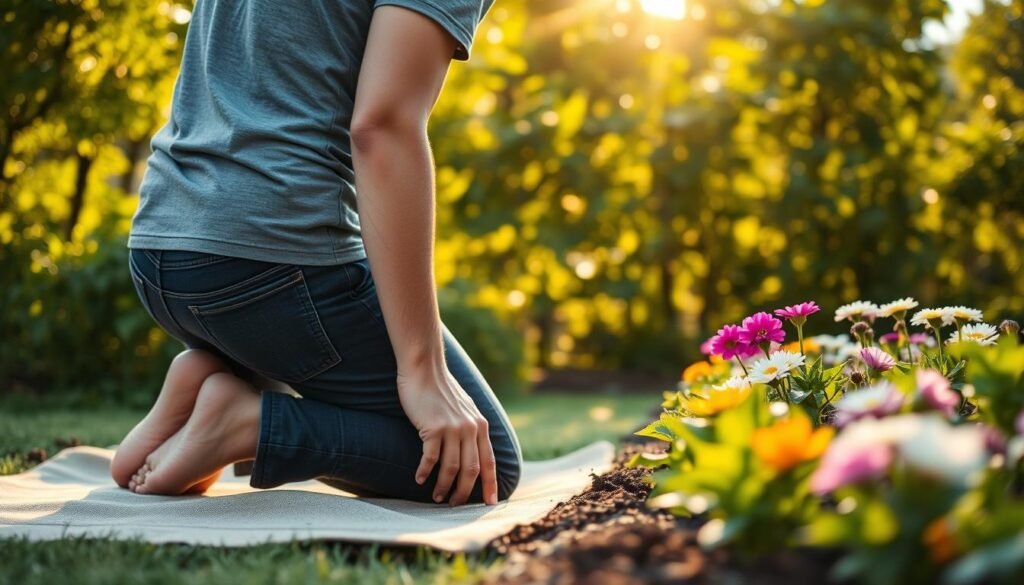
Most soreness comes from doing the same small motions over and over near the ground. Repeated bending, twisting while weeding, and reaching fatigue stabilizers and overload the spine.
Stand tall with a neutral pelvis, soft knees, and relaxed shoulders so large muscles take the load. Avoid waist-bending for low tasks—squat or kneel with a long torso instead.
Move your whole body when pulling or pruning: pivot feet and turn the hips rather than twisting the back. Set a timer to change position every 10–15 minutes.
If soreness starts, rest briefly without staying still, apply 15–20 minutes of ice, and do gentle stretches to stop early back pain from escalating.
| Common Action | Why it Hurts | Safer Position |
|---|---|---|
| Repeated bending | Loads small stabilizers, strains back | Squat or kneel with long torso |
| Twisting to pull weeds | Torsion stresses the spine | Pivot feet and use hips |
| Reaching far | Overloads shoulders and lower back | Bring work closer or use tools |
The Simple Upgrade: i can garden hours pain-free, all thanks
A combination kneeler and seat brings low work up to a friendlier level and protects posture. These flip seats reduce pressure on knees and hips while keeping your torso long and aligned.
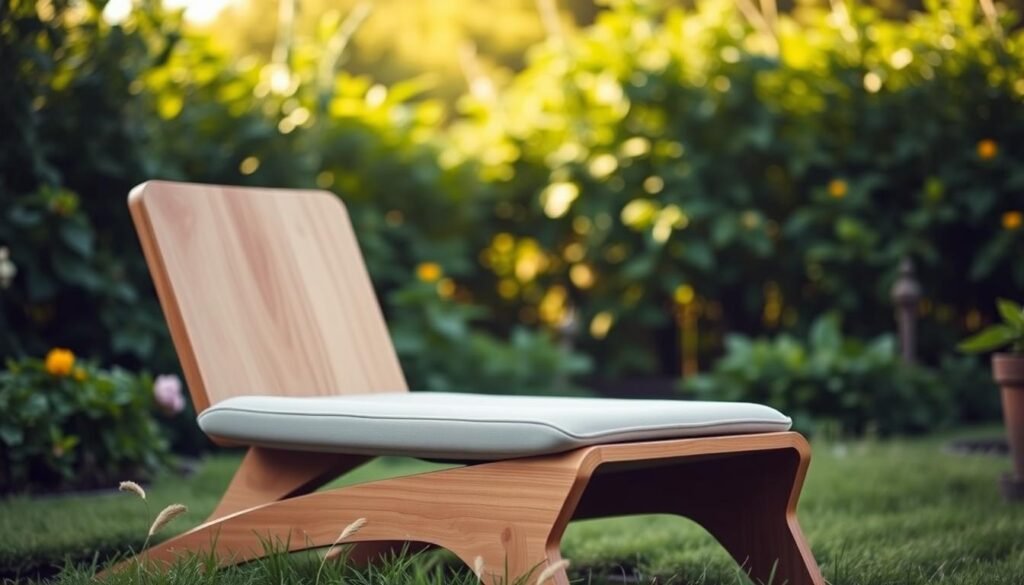
Why a combination kneeler and seat reduces knee, back, and joint strain
A cushioned kneeler creates a comfy surface at the ground and flips into a low seat for seated tasks. Thick foam cushions lessen contact pain and the stable frame gives solid support for tasks close to plants.
Using side rails and handles for safer lowering and standing
Models with side rails act like parallel bars. Grip the handles, engage core muscles, and push up with legs to keep your back straight. That simple move helps protect back and builds confidence when rising.
When to kneel vs. when to sit to protect your spine
Choose kneeling for precise work at the ground, like planting or edging. Sit when trimming pots, potting, or laying out seedlings.
- Tip: Pair the seat with long-handled tools to limit bending.
- Flip positions every 10–15 minutes to ease load on knees and hips.
- Pick the right tools and a kneeler rated for load and non-slip feet for safe use on grass or patio.
Set Up Your Space to Reduce Strain Before You Start
Elevate your work and plan simple routes so steady movement replaces awkward reaching. A few layout changes cut strain and make tasks quicker and safer.
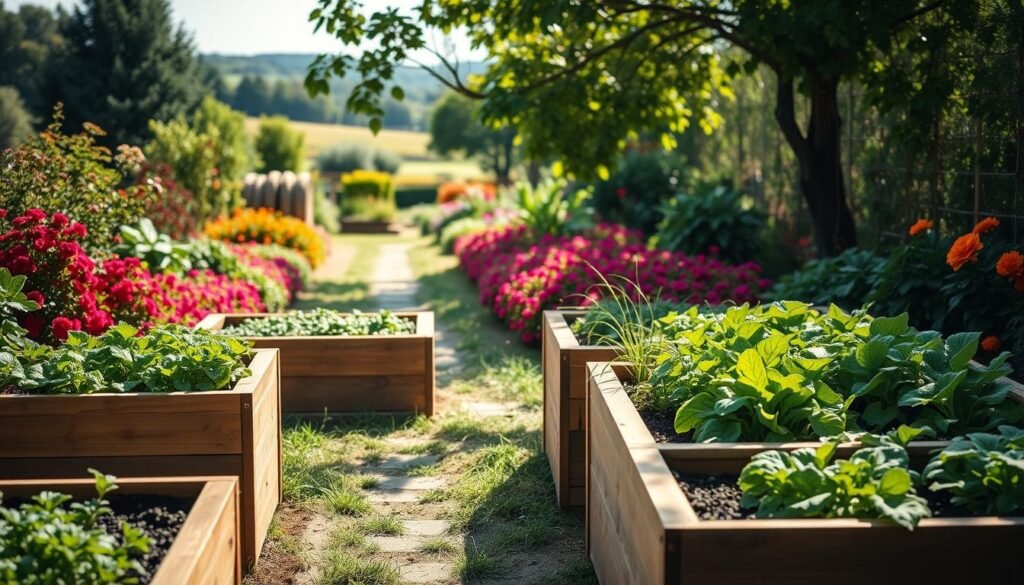
Raise the work: bed height, low-hanging baskets, and tabletop gardens
Raised beds lift planting zones to your comfort level and improve drainage. Aim for raised beds 10–24 inches high to bring plants within easy reach and limit bending.
Tabletop planters and low-hanging baskets further reduce kneeling by placing green work at waist or elbow height.
Pathways, handholds, and accessible tool storage to minimize risky movements
Make wide, firm paths with gravel, brick, or pavers so you can turn and step confidently. Add rails or handholds near slopes and bed edges for steady balance.
Mount pegboards and shelves at hip-to-chest height so your body avoids overhead reaching and deep stooping. That keeps tools ready without risky motions.
Right-size the loads: smaller soil bags, carts, and wheelbarrows
Right-size hauling by choosing 1–1.5 cubic foot soil bags when possible; smaller bags are easier to lift and stack on a cart.
Use carts or wheelbarrows with pneumatic tires and ergonomic handles so wheels do the heavy lifting over time. Stage bags and pots near the bed edge to cut long carries across the garden.
- Quick tip: Elevate your work with raised beds, low-hanging baskets, and tabletop planters to cut strain before it starts.
- Stable paths, handholds, and reachable storage lower risk and keep movement smooth.
- Smaller bags and wheeled carriers make soil moves safer and faster.
For layout ideas that bring beds and planters to life, explore herb layouts and vertical options in this helpful guide: best herb garden designs.
Choose Tools That Keep Your Back Straight and Your Hands Happy
A few smart tool swaps let you stay upright and reduce effort with every reach and prune. These choices protect your joints and make routine gardening feel easier.
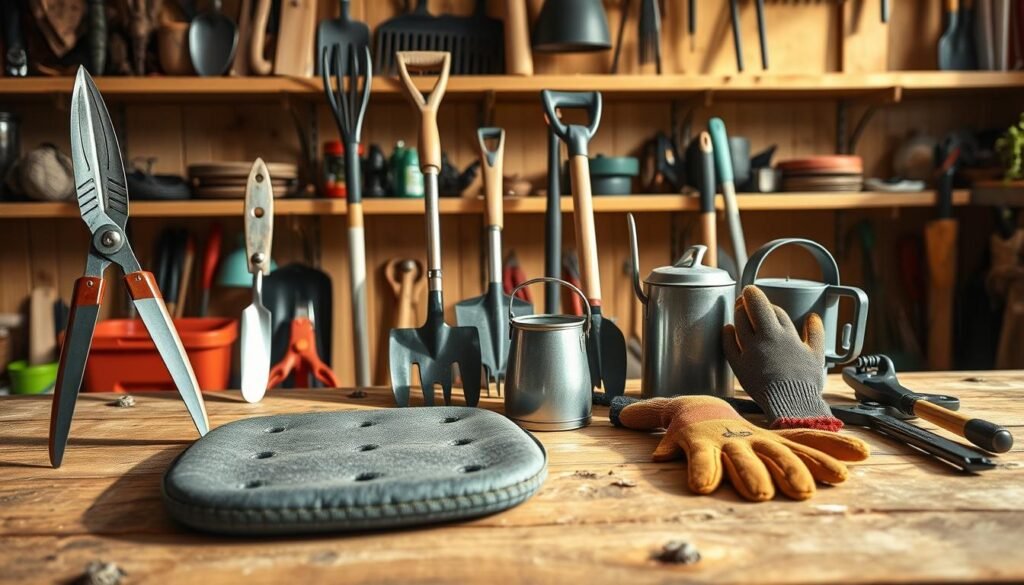
Which long-handled options help you stand taller?
Pick long-handled rakes, hoes, and pruners to keep your torso vertical and avoid bending. Adjustable handles let you fine-tune reach so your body stays balanced.
How do grips and curved designs ease wrist work?
Choose ergonomic grips and curved-handled hand tools to align wrists. Soft, contoured grips cut fatigue and improve control during repetitive cuts and digs.
What protects knees and makes switching positions simple?
Dense-foam kneeling pads, knee pads, and flip-style seats guard sensitive joints. Seats with side rails help you stand safely and alternate tasks without stress.
Is a hose better than a watering can?
Yes. A lightweight hose with a shutoff near the handles beats lugging heavy cans. It keeps water work low-effort and reduces awkward lifting that adds strain.
- Quick pick: Choose long-handled and lightweight tools for upright posture.
- Go for aluminum or fiberglass shafts to lighten loads.
- Buy the right tools: replaceable blades, user-friendly locks, and balanced weight.
Technique Matters: Safer Ways to Kneel, Lift, Weed, and Move
Smart body habits cut the load on your spine while you lift, weed, or move pots. These simple techniques keep the back neutral, protect knees, and reduce repetitive strain.
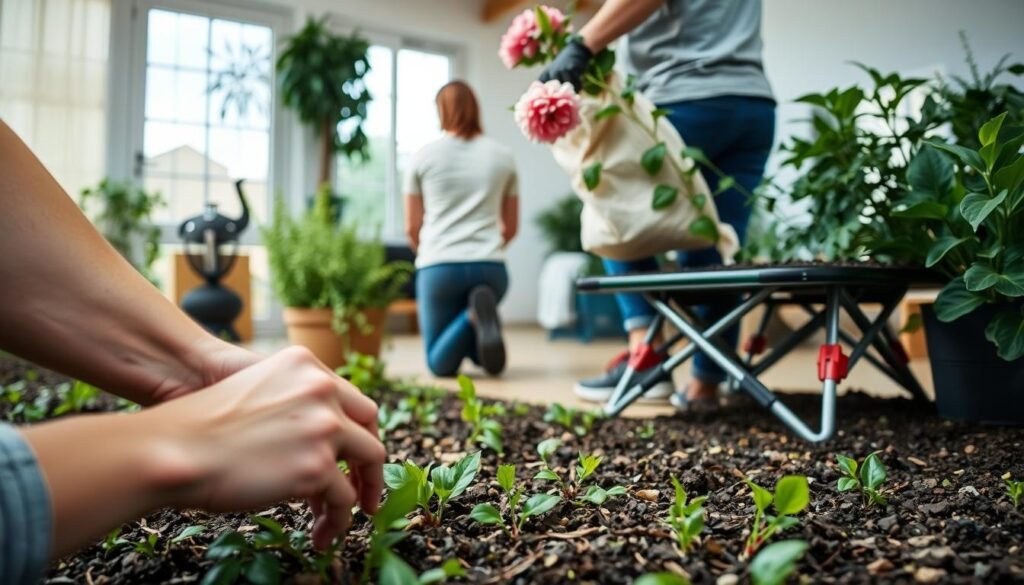
How should you kneel or squat without rounding?
Keep a long torso and a braced core. Squat or kneel with hips back and chest up instead of bending at the waist. That protects the spine and lets your large muscles do the work.
What is the safest way to lift heavy objects?
Bring loads close to your body. Slide or roll bulky items first, then squat, hug the pot or bag, and drive up with legs. This transfers effort into the hips and knees, not the lower back.
How can you weed without twisting your back?
Use long-handled tools and grip low on the root for leverage. Pull in line with the stem and pivot your feet instead of rotating the spine. Switch between kneeling and sitting to keep positions varied while working at the ground.
Why rotate tasks and micro-shift often?
Alternate digging, pruning, and planting in short sets to spread load across tissues. Change your position at the ground every few minutes. If your lower back tugs, stop, reset stance, and try a different way to finish the task.
- Quick rule: Safer technique protects your spine and prevents strain back. Keep loads close body, bend at hips and knees, and drive with legs when lifting.
For more on posture and tool choices that reduce strain, see gardening and ergonomics.
Pace, Recover, and Protect: What to Do During and After Gardening
Warm up briefly, rest often, and follow a simple recovery routine to protect joints and cut the risk of lingering pain.
Gentle warm-ups prime joints and reduce stiffness before you start tasks outside.
How should you warm up and hydrate for joint comfort?
Begin with 3–5 minutes of shoulder rolls, hip hinges, and ankle circles. These loosen major joints and improve motion.
Keep a water bottle nearby and sip throughout the day. Hydration helps joint lubrication and low-level recovery after effort.

What is a quick recovery protocol after soreness appears?
Rest without staying still: recline for a few minutes, then move gently to keep fluids flowing.
Apply ice for 15–20 minutes to reduce inflammation. Follow that with gentle stretches—knees-to-chest or a child’s pose ease lower back tension.
When should you seek professional support?
If soreness lasts more than a couple of days, worsens, or limits daily tasks, seek clinician support.
Targeted joint and spine physical therapy uses guided movement, soft-tissue techniques, and strengthening to reduce stress and restore function.
Build short breaks into your gardening to stay comfortable and steady through the day. For soreness, rest without going still, use ice 15–20 minutes, and stretch gently to calm back pain. Persistent pain or recurring flares are a cue to consider therapy and follow-up care.
- Start with a warm-up: 3–5 minutes of shoulder rolls and hip hinges.
- Schedule micro-breaks every 15–20 minutes and change position.
- Keep moving lightly through the day—a short walk reduces stiffness more than full rest.
- Limit heavy loads while sore to avoid worsening an injury or back pain.
- Track which motions trigger pain and adjust technique next time.
- If you need further help, seek clinical support and consider therapy for structured care.
| Moment | Action | Why it helps |
|---|---|---|
| Before work | 3–5 min warm-up | Reduces stiffness and primes joints |
| Every 15–20 min | Micro-break, change position | Prevents repetitive strain |
| After soreness | Recline, ice 15–20 min, gentle stretches | Lowers inflammation and eases tension |
| Persistent symptoms | Seek clinician, consider therapy | Targets cause and restores function |
For older gardeners or anyone looking for age-friendly benefits and safety tips, see this guide to the benefits for older gardeners.
Conclusion
Small, targeted changes to posture and tools let gardening feel easier and safer.
Good posture, ergonomic tools, and raised work surfaces cut strain on the back and joints. Kneel or sit instead of bending, lift heavy objects close to the body, and use carts or smaller soil bags to manage loads.
Rotate tasks, set short time-boxed sessions, and hydrate to protect tissue and reduce stiffness. After tough work, ice 15–20 minutes and do gentle stretches to support recovery.
If back pain or recurring injury keeps returning, consider professional therapy and follow-up care to address movement patterns and build resilience. For extra tips on easing soreness during tasks, see these gardening hacks for pain.