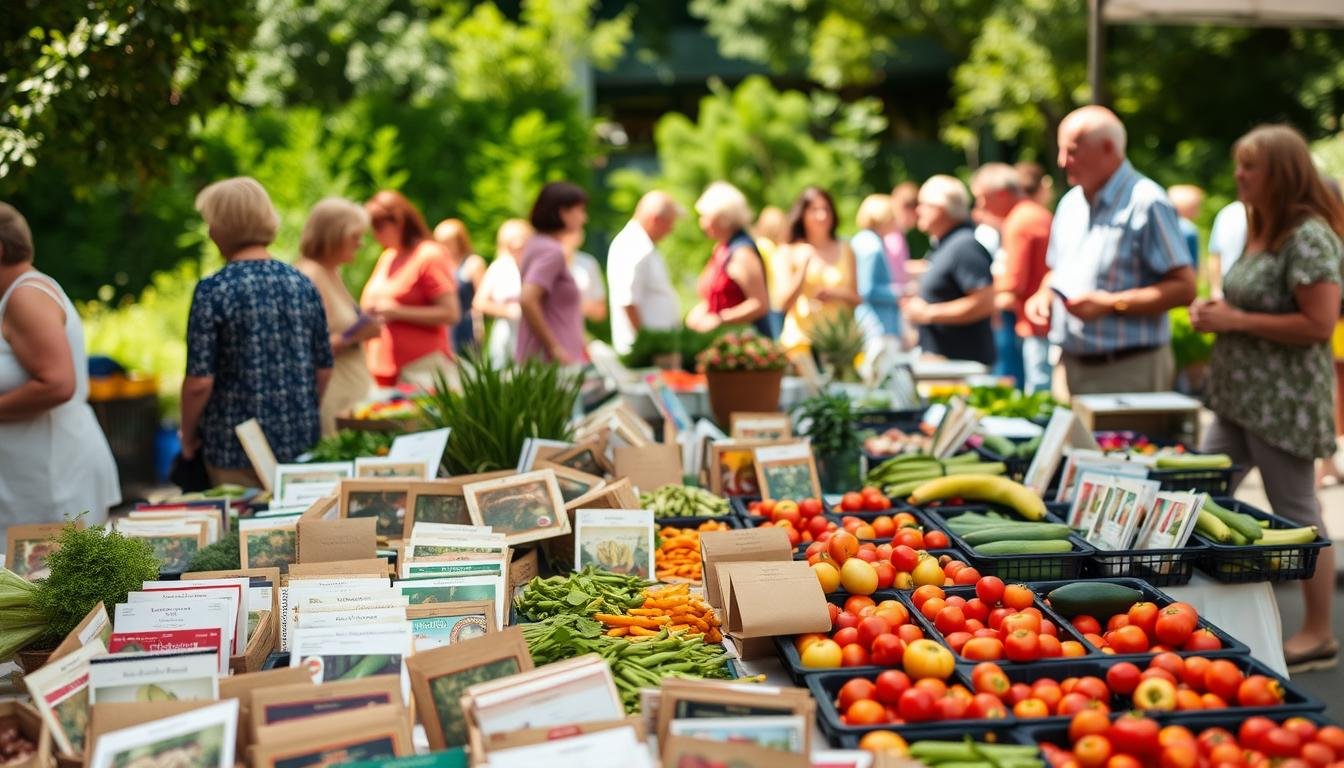
You can grow your library fast without spending money by tapping into local seed swaps. With a clear plan and fair-trade etiquette, an afternoon of trading brings home more packs and better variety.
Local swaps let home gardeners trade seeds directly, share stories, and discover rare heirloom varieties that spark new food and flower ideas.
I prepared simple labels with variety, year, and source, portioned fair amounts, and wrote a short request list to keep trades focused. That care helped me bring home twice the number of packs—herbs, greens, and an heirloom tomato I would like to grow next year.
Swaps favor access and fairness. Focus on variety over volume so everyone gets a chance at special selections. Be transparent about harvest year and storage method to build trust and avoid surprises at sowing time.
Inside this guide you’ll find how swaps compound choices over the year, where to find a swap, what to pack, fair-trade rules, smart pickup strategy, donation programs that send seeds through mail, and an intro to USDA NPGS for research use.
Key Takeaways
- Plan and label. Clear labeling and a request list speed trades and reduce confusion.
- Share fairly. Portioning and polite requests help everyone find something special.
- Seek variety. Aim for diverse types over bulk to expand growing options.
- Be transparent. Year and storage notes guide viable choices for planting.
- Use multiple methods. Combine swaps, donation programs, and research orders to get seeds the right way.
Why Local Seed Swaps Are the Easiest Way to Grow Your Variety for Free
Seed swaps multiply options season after season as neighbors return with saved packets and new finds. Expect modest amounts per pack, but prioritize well-labeled, viable seeds for the best results.
Attend the same swap over years and you’ll watch regionally adapted varieties multiply on the tables. That steady flow creates more chances to try heirloom picks that suit your garden.
How swaps compound choices year over year
Each season, people bring seed saved from what performed well. Over time, local-adapted lines and rare heirloom gems accumulate, giving you more interesting options without paying shipping or ordering from a catalog.
Realistic expectations: amount vs. quality of seed
Most fair packs hold just enough for a trial row or a few containers. That is perfect for testing a new variety before committing a whole bed.
Quality signals: clear variety names, harvest year, and storage notes matter most. Open-pollinated sources and packets noting color or size help you choose wisely.
- Be fair: take modest amounts so others get a chance.
- Bring backups: list substitutes in your request plan to keep your garden goals on track.
- Know the limits: reputable seed companies still matter for disease-tested, consistent lots.
Swaps lower costs, spark conversation, and help home gardeners discover resilient choices they would like to grow again.
Plan Your How-To: The Simple Method I Used to Prepare for a Seed Swap
A simple checklist saves time at the table and helps you trade confidently. Label clearly, sort by type, and portion fairly so more people benefit from what you share.
A short checklist and neat labels turned a hectic swap table into a quick, confident trading session.
Audit what you have and label with variety, year, and source
Spread all packs on a table and group by crop type. Check the harvest year and storage notes to judge viability.
Label every pack with variety, year, and source. Add tags like “open-pollinated,” “heirloom,” or “local save” so others can decide quickly.
Create a “request” list and “send seeds” list to streamline trades
Write a concise request list of priority varieties you would like and a send list showing counts offered. Keep both on a small card at your table.
“A visible wish list speeds decisions and cuts repeated questions when the table gets busy.”
Pack by portion: fair amounts per pack to help more people
Use coin sleeves or small envelopes and note the number of seeds or approximate amount. Offer trial-sized portions for popular crops and larger packs for items you can spare.
- Quick codes: add color dots for crop type to reduce decision time.
- Pack backups: list substitutes on your request card to keep your plan intact.
- Bring tools: pencil, extra labels, and a small sign with your wish list.
As a final note, clear portions and honest notes build trust and often lead to better trades over years. For more ways to get seeds, check a trusted guide on how to get seeds.

Find a Seed Swap Near You in the United States
Local libraries, garden clubs, and Extension events are the most reliable places to find nearby swaps and ongoing seed programs. These venues often host annual exchanges and maintain ongoing seed libraries that help home gardeners get seeds suited to local conditions.
Where home gardeners look: libraries, garden clubs, Extension events
Start with library calendars and community bulletin boards. Many libraries run seed-library programs or list seasonal swaps on their event pages.
Master Gardener and county Extension events also host formal exchanges and workshops. Garden clubs and neighborhood social groups post meetups and RSVP pages that estimate attendance and set table rules.
Seasonal timing: the best time of year to swap by region
In colder zones, swaps peak from January through March — just before sowing time. Warmer regions often favor fall exchanges aligned with cool-season crops.
- Request schedules early: ask organizers for the event date so you can plan labels and a wish list.
- Search tips: use terms like “seed swap near me,” “seed library,” or “Extension seed exchange” on your favorite site or event platform.
- On event day: arrive early, know your top three picks, and carry a small sign with your wish list to increase your chance of finding a specific variety.
Seed Swap Etiquette: How to Trade Fairly and Avoid Common Pitfalls
Clear labeling and realistic expectations make swaps smooth for everyone. Avoid taking multiples of the same pack so more people have a chance to try each variety.

Be transparent about harvest year and storage. Note the year, list storage conditions (cool, dry, dark), and add any quick viability checks you ran. That honesty helps others judge what they will plant this season.
Share fairly. Take one pack of a given item where possible. Leaving extras on the table preserves diversity and spreads chance for discovery among home gardeners.
If a line is uncertain, label it as such. Add short notes about cross-pollination risk or mixed batches so people can make informed requests. Bring a small notebook to log trades and follow up later if you want more information about performance.
“Thanks for following the rules — it keeps swaps generous and fun for everyone.”
- Bring extras: labels, envelopes, and a few dollar-change items to help organizers save time.
- Use a gentle script: explain the one-pack rule and why it helps others find new plants.
- Quality over quantity: a few well-labeled, open-pollinated items beat a stack of unlabeled packs.
| Item | What to note | Suggested amount | Why it matters |
|---|---|---|---|
| Heirloom tomato | Variety, year, storage | 1 trial pack | Preserves rare lines and spreads testing |
| Herbs | Color/leaf notes, viability test | 2–5 seeds | Good for containers and quick trials |
| Greens | Harvest year, open-pollinated | Small sample | Encourages diversity and fair sharing |
Labeling Like a Pro: Variety, Year, and Notes Win Better Trades
Clear labels help your packets stand out and win better swaps. Add a few simple descriptors—color, habit, and origin—to guide quick decisions at a busy table.
Good tags answer the usual questions before anyone asks. That saves time and builds trust with other gardeners.
What to include on every pack
Essentials: variety name, harvest year, and source. Add a short trait like dark purple basil or plum lemon tomato so traders immediately see what makes the pack special.
List days to maturity, growth habit (bush or vining), and notable tolerance (heat, bolt, drought). Note if the item is open-pollinated or heirloom and whether isolation was used.
Example label: “Basil—Dark Opal, 2024, saved cool/dry; open-pollinated; rich color; 20 seeds (approx); surface sow.” Use legible, water-resistant pens and one consistent format so packs scan at a glance.
Better labels mean fewer follow-up requests and more people would like to trade with you again.
Smart Trading Strategy: Maximize the Number and Diversity of Packs You Take Home
A tight list of must-haves and ready substitutes keeps decisions quick and helps you leave with more variety. Prioritize open-pollinated and resilient lines so what you bring home can be saved and returned next season.
Start with five to seven primary picks that suit your beds, climate, and cooking habits. Keep that request list visible at your table so you move fast when a pack appears.
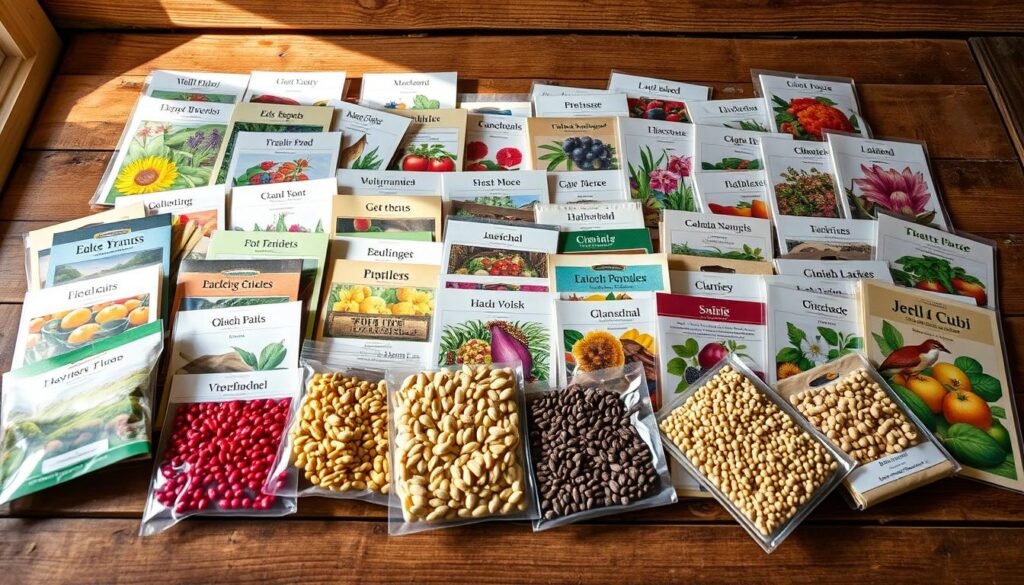
Primary picks and backup substitutes
List clear backups that fill the same role. For example, note an early paste tomato if your top tomato is gone. Add a heat-tolerant green if a favorite bolting variety runs out.
Ask an organizer or an experienced trader a one-sentence question when torn between two similar packs. A quick tip can save precious time and reduce wrong choices.
Choosing resilient, open-pollinated, and heirloom varieties
Target open-pollinated and heirloom lines when possible. They let you save viable seeds and strengthen local selections over years.
- Pick resilient varieties that suit local heat, humidity, or short seasons.
- Take fair amounts and accept similar portions; spreading packs creates more chance for everyone.
- Keep a tally of what you take to follow event rules and plan sowing dates later.
“Prioritize variety over volume; a few well-chosen packs give more growing experiments than many duplicates.”
Rotate crops and track outcomes. Each season your request list sharpens, and you will get better at choosing varieties that truly work for your garden.
i doubled seed collection free by participating
A focused plan and transparent trading helped me double my seed count in one event. Clear labels, fair portions, and ready substitutes kept trades fast and friendly.
A short request card sat on the table and guided trades. I labeled every pack with variety and year and offered popular types in small amounts.
I arrived early, scanned tables for my top three picks, and moved to backups as soon as a pack was gone. That quick pivot saved time and kept momentum.
Example: when a favorite basil was taken, I accepted another purple-leaf type and still hit my flavor goals.
Sharing notes about storage and viability built trust. Other gardeners sought me out to trade once they saw honest tags and a visible wish list page.
| Step | Action | Why it helps |
|---|---|---|
| Prepare | Create a concise request card and label packs | Speeds trades and prevents confusion |
| Arrive early | Scan and claim top three choices | Improves chance at rare varieties |
| Pivot | Use listed substitutes immediately | Keeps pace and expands diversity |
The outcome: more greens, herbs, and flowers and a neat sowing plan for the year ahead. Try one well-run event; you’ll likely get free seeds that excite you and meet gardeners who will trade again next season.
Tip: keep a short log of what you received and how it performed to sharpen future requests and build local networks. For ongoing local programs, check a library seed library page.
Beyond Swaps: Donation-Based Programs for Free Heirloom Seeds
Donation programs let you get heirloom packs faster when you follow their exact format. If you cannot donate, a precise “No Donation” request with substitutes improves your chance at receiving seeds.

With donation requests typically ship within about 72 hours and arrive in the mail within a week. Use the subject line seed request. Put donor name, email, and donation amount on the first line. Then list recipient name and full mailing address on the next three lines. After that, add item codes alphabetically, exactly ten codes per line, single spaces, and press Enter after every ten codes. List substitutes after the primary list.
How to format “No Donation” asks
Use subject No Donation. Start with the full shipping address (envelope format). Then list eight primary item codes alphabetically and eight or more substitutes. Single-pack-only asks and duplicate items are often rejected to keep distribution fair.
Set expectations and help sustain the program
Suggested donations within the U.S. cover postage and time: $10 for 15 packs, $20 for 30, $30 for 45, $40 for 60. Combine small orders; do not send multiple separate $10 requests. Programs limit no-donation requests per year and may not send confirmation emails due to limited staff time.
“Follow the exact format and include several substitutes to give volunteers the best chance of filling your request.”
| Request Type | Subject Line | Key Format Steps | Typical Ship Time |
|---|---|---|---|
| With donation | seed request | Donor line; address (3 lines); codes 10 per line; substitutes | ~72 hours processing + up to 1 week mail |
| No donation | No Donation | Address first; 8 primary codes; 8+ substitutes; no duplicates | As resources allow; may be delayed |
| Fairness rules | — | No multiples; single-pack-only may be rejected; per-year limits | Varies |
Quick tips: list many substitutes, avoid duplicate codes, and combine orders when possible. If you can cover postage or the suggested donation, please help—it keeps heirloom seeds flowing and supports volunteers who mail packs nationwide.
Step-by-Step: Submitting a Donation Email the Right Way
Use the exact format volunteers ask for to speed processing and improve your odds. A clear subject line, tidy address layout, and the 10-per-line code rule make filling requests faster and fairer for everyone.
How to write a donor “seed request” message
Put seed request in the subject line. On the first line include donor name, email, and donation amount. Put recipient name and full mailing address on the next three lines exactly as on an envelope.
Formatting item codes and substitutes
List item codes only, alphabetically. Type 10 codes per line, single spaced, then press Enter. Repeat until your primary list is complete. Add substitute codes after the primary list so the program can fill your order when popular items run out.
How to send a “No Donation” message
Use subject No Donation. Start with your complete mailing address, then list eight primary codes alphabetically and eight or more substitutes. Avoid requesting duplicates; programs often reject multiples or single-pack-only asks.
“Save your sent email. Replying to that thread for corrections keeps your place in the queue and reduces processing time.”
| Case | Subject line | First lines | Code rules |
|---|---|---|---|
| Donor order | seed request | Donor name, email, amount; recipient name + 3 address lines | Codes only, 10 per line, alphabetical, then substitutes |
| No donation | No Donation | Recipient address first (envelope format) | 8 primary codes alphabetical, 8+ substitutes; no duplicates |
| Tips | — | Offer to pay shipping or meet suggested amount | Save sent mail; avoid follow-ups that waste time |
Quick note: paying postage or the suggested donation helps volunteers and can speed mail. If you can please help with the amount, programs sustain service and send heirloom seeds more reliably.
What Free Heirloom Seeds Look Like Right Now
Current lists often spotlight purple basils like Dark Opal, Red Rubin, and the very limited Amethyst Improved. They also include fast greens, reliable brassicas, and a few cut-flowers that support pollinators and the kitchen.

Examples: Dark Opal (#BA10) and Red Rubin (#BA11) show up regularly; Amethyst Improved (#BA21) is scarce and usually limited to about 8–10 seeds per request.
Vegetable entries include arugula (Slow Bolt #AR1; Astro #AR6), broccoli (De Cicco #BR1; Waltham 29 #BR2; Romanesco #BR3), and Asian greens (Tatsoi #AG3; Red Tatsoi #AG4; Komatsuna #AG6). Flowers like bachelor buttons (Blue Boy #BB1; Standard Mix #BB2; Classic Magic #BB5) add color and edible petals.
Quick notes: programs will not fill multiples of the same item. Always list substitutes and refresh the current page before you finalize any request. With a donation, processing is often ~72 hours plus transit; no-donation orders depend on volunteer capacity.
| Item | Code | Availability | Why choose it |
|---|---|---|---|
| Dark Opal Basil | BA10 | Limited | Dark purple foliage, great for salads and pesto |
| Amethyst Improved | BA21 | Very limited (≈8–10 seeds) | Rare, aromatic, useful as a specialty garnish |
| Slow Bolt Arugula | AR1 | Common | Longer harvest window for tender leaves |
| Romanesco Broccoli | BR3 | Occasional | Striking form; good for variety and seed saving |
Plan tip: draft primary codes and alternates side-by-side so you can swap quickly when a limited item disappears. For more ways to get seeds and program details, consider checking a centralized resource such as get seeds.
USDA NPGS: How to Request Rare Seeds for Educational or Breeding Use
The NPGS serves researchers, educators, and breeders—not casual home gardeners. If your work qualifies, set up an account, search accessions, and explain a clear research or breeding plan when you submit a request.
Eligibility and purpose: The program provides accessions for documented projects in education, research, or breeding. Requests framed as routine home gardening are often denied to avoid competing with seed companies.
- How to apply: create an account on the NPGS site, search accessions by crop or trait, add selections to your cart, and complete the “Describe Your Planned Research” field with methods and goals.
- Shipping and payment: no credit card is required; USDA may cover mail costs. You may offer a shipping account to help pay shipping.
- Write a strong case: state objectives, methods, expected outcomes, and how results will be shared or archived.
Example: breeding a regionalized tomato for earlier maturity or testing disease resistance in a teaching garden, with accession numbers and multi-year records.
Respect this resource: use the NPGS for genuine research and lean on seed companies for routine home needs.
Case Study: Heirloom Tomato Requests Including Plum Lemon
Requests for accessions like Plum Lemon can succeed, but results vary and shipping may take weeks. Expect limited descriptions and mixed performance—this is part of research use.

Some gardeners have received rare varieties such as Plum Lemon, Primrose Gage, and Black Cherry after a formal request to the program. Others faced denials when the reason sounded like routine home gardening.
Accession pages often lack photos or full notes. That means traits can be inconsistent and the outcome depends on years of environment and care.
Why timing and framing matter
Once approved, orders may arrive by mail after several weeks. Plan sowing dates to accommodate delays and avoid relying solely on these packets for your main crop.
- Frame requests as research: describe an objective such as selection for early maturity or flavor under regional conditions.
- Document trials: grow Plum Lemon side-by-side with a reliable variety and record vigor, disease tolerance, and fruit quality.
- Keep backups: maintain trusted commercial or swap-sourced varieties to protect your harvest.
Patience and clear communication increase your chance of receiving useful material and help the program fulfill its research mission.
Storing and Testing Your New Seeds to Protect Your Growing Season
Store seeds cool, dry, and dark, and label every pack with the harvest year. Quick viability checks—like a damp-towel germ test or a simple water float—help you set sensible sowing rates.
Treat new lots like small treasures: keep them in airtight containers with a desiccant and steady temperatures. Avoid light and humidity to extend life. For heirloom and rare variety lines, split the amount into two or three small containers so one mishap won’t ruin everything.
How to run two fast checks
For a towel test, place a known amount (for example, 10) between damp paper towels, keep them warm, and count sprouts after the usual germination time for that crop. That gives a quick viability percentage to adjust sowing amounts.
The water float can hint at hollow vs. filled seed. Let seeds sit in water for a few minutes; sinking seeds are often denser. This is not definitive but can screen obviously poor lots.
| Check | What to do | How it helps |
|---|---|---|
| Towel test | 10 seeds on damp towel; warm place; count sprouts | Measures germination percent for sowing adjustments |
| Water float | Soak briefly; discard floating seed | Quick screen for empty or damaged seed |
| Labeling | Year, storage method, viability notes | Guides future requests and trade trust |
Keep a seasonal review page in your garden notebook to track which lots stayed vigorous and which need using first. Simple tests done in time can save a whole season and help you get seeds started with confidence.
Responsible Sharing: Preserve Genetic Diversity Without Competing with Seed Companies
Share and request thoughtfully. Public programs exist to support research and education—not to replace purchases from seed companies that sustain commercial breeding and testing.
Use public germplasm with purpose. The NPGS evaluates each request to prevent competition with commercial enterprises. If you engage the program, state research, breeding, or educational goals clearly.
Support reputable companies when you need consistent quality, disease-tested lots, or guaranteed germination. Those purchases help maintain lines that many gardeners rely on each season.

Swaps and donation programs complement, not replace, commercial sources. Try a practical example: grow a donated heirloom next to a purchased standard to compare vigor and flavor over years. That side-by-side trial sharpens your choices and helps the community learn which variety performs best locally.
- Fair use: do not resell distributed packs; return improved lines or clear notes to the community.
- Record sources: note company, swap, or program in your log so you can credit contributors and track performance.
- Stewardship: isolate when needed, label accurately, and share honest notes so others can continue preservation work.
Ethical requests and clear records today increase the chance that everyone will get seeds they would like to grow tomorrow.
Host Your Own Neighborhood Seed Swap: A Quick Program-in-a-Box
With a small venue, a clear sign-in, and a central labeling station, you can run a smooth neighborhood swap. Simple rules—caps, no duplicates, and code-style lists—keep trades fair and fast.
Plan a compact flow: check-in, labeling, trading rounds, and checkout. Capture a request list on the sign-in page so organizers know how many people and what number of packs to expect.
Venue, sign-in page, and labeling station setup
- Venue: choose a library room or community hall with tables and good light.
- Sign-in: collect names and emails and offer name tags to ease introductions.
- Labeling station: provide envelopes, pens, sample labels showing variety, year, and source.
Rules poster: quantity caps, no duplicates, and code-style lists
- Post a clear rules poster: round limits, no duplicate variety per person, and label every pack.
- Use code-style lists by crop group and color-code tables to speed searches and reduce crowding.
- Announce two to three minute trading rounds so everyone gets a fair chance at popular items.
“Keep rounds short and rules visible; it helps new and seasoned gardeners trade with confidence.”
Tip: collect small donations for supplies, recruit volunteers to guide newcomers, and ask attendees to leave feedback on the sign-out page to improve the program next year.
Conclusion
With a plan, clear etiquette, and smart backups, a single swap can add real variety to your garden. Add donation programs and research requests to round out options without stretching your budget.
A quick method works: label well, portion fairly, and carry a focused request card. Arrive calm, pick three priorities, and carry three substitutes so trades move fast and give others a chance.
Treat heirloom and new lots carefully: test viability, store cool and dry, and track what performs each year. Use formal programs when you need structured orders and support commercial sources for consistent lots.
Example: pick three priority varieties and three backups each season; repeat next year and watch your local library of seeds grow. Choose one action today—find a swap, draft a request, or label packs—and start building momentum. May your next trade lead to a favorite you would like to grow for years to come.