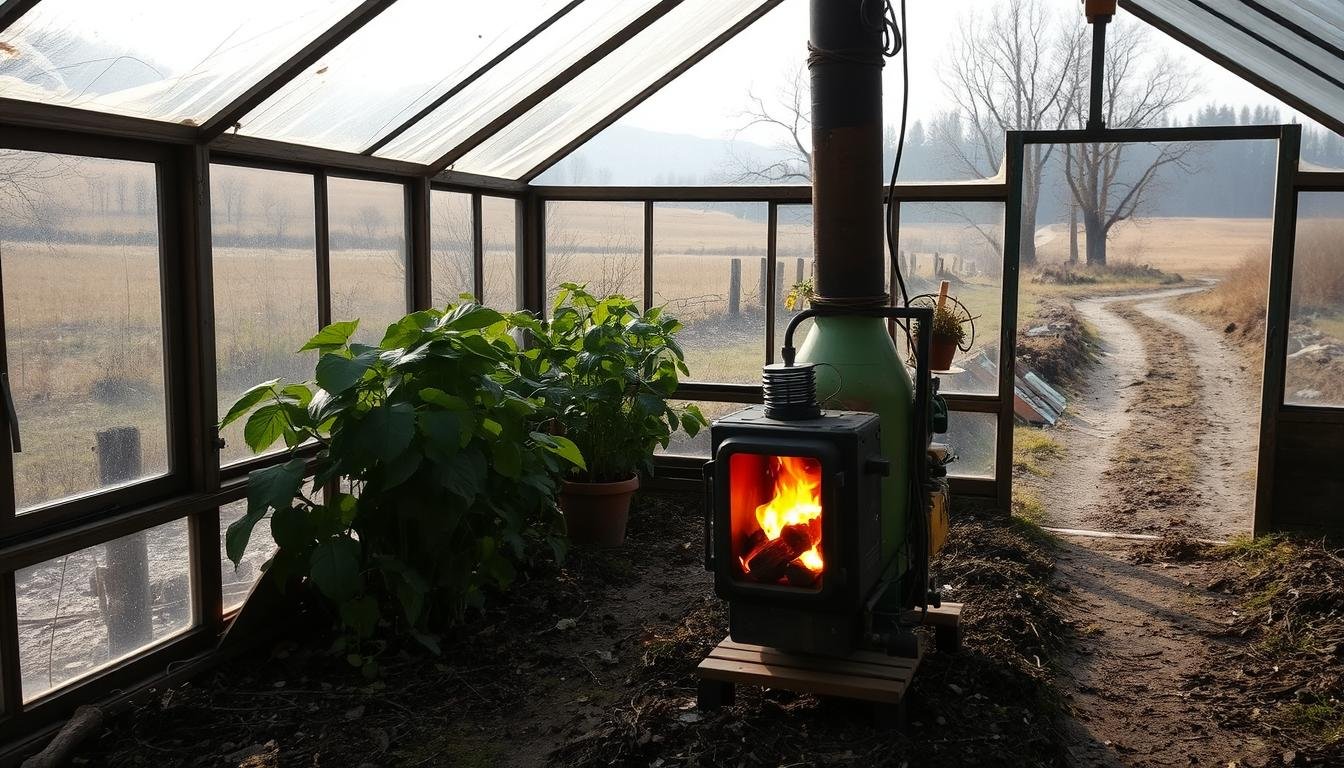
Can a simple mix of sun, stone, and a few safe tricks beat bitter nights without calling the power company?
This short guide distills a real off-grid trial into the clear winners and the failures during brutal U.S. cold. You’ll see what worked, what failed, and a simple plan to upgrade your setup without grid power.
I set a clear goal: keep tender greens and starts alive through subfreezing nights using passive solar, thermal mass, floating row covers, and small fuel options. I tracked bed-level temperatures and frost thresholds to spot hidden cold spots that kill seedlings first.
I’ll preview methods tested: double plastic layers with air gaps, thermal curtains, black water barrels and stone mass, compost benches, and a readiness plan for a rocket mass unit. I followed strict rules: no utility power, fire-safe operation, simple daily routines, and local materials you can source in most U.S. regions.
Key Takeaways
- Clear winners: thermal mass plus covers made predictable microclimates.
- Track bed-level temps to catch cold pockets early.
- Simple passive fixes beat complex systems for low-maintenance setups.
- Safety and venting are non-negotiable when adding heat sources.
- You can copy these wins on a small budget and limited time.
How I Set Up a Future-Proof Off-Grid Greenhouse Test for Extreme Cold in the United States
My approach began with a small, focused test bed designed to hold daytime warmth for cold nights. The layout and choices aimed to show which simple fixes yield steady results in a harsh winter.
Site, Shelter, and Solar Gain: Orienting for Maximum Winter Sun
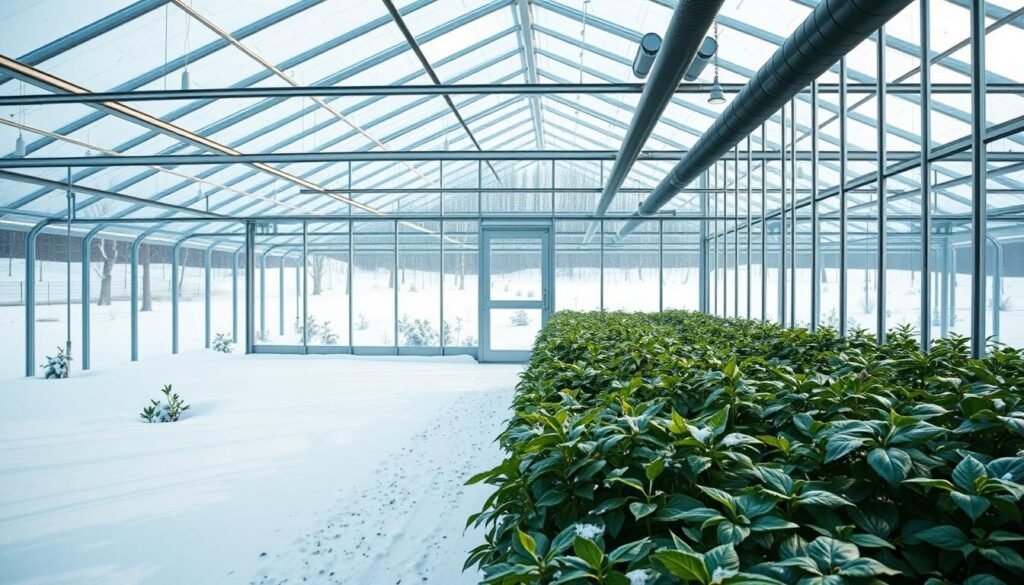
I turned the ridge east–west and gave the broad glazed face to the south. I cleared shade and painted interior surfaces dark to boost solar gain.
Thermal Mass and Insulation Baseline
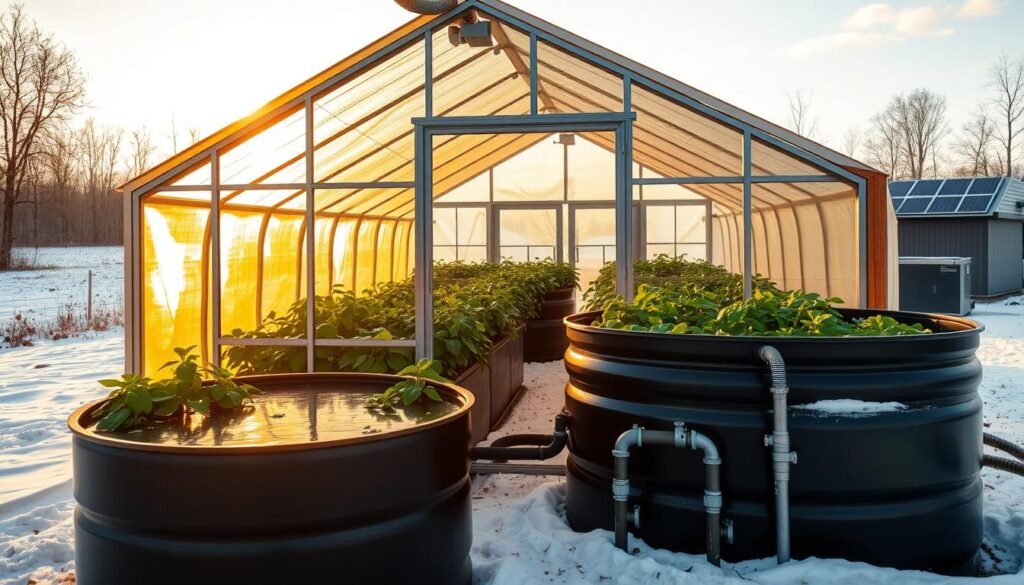
I placed black-painted 55-gallon water barrels along the north wall. Thick soil beds with stone edging add thermal inertia.
Insulated perimeter skirting (rigid foam) cut ground losses and helped keep bed-level air above freezing.
Why Plants Need Heat but Chicken Coops Don’t
A common homesteading note explains that chicken coops tolerate cold if dry and draft-free. Birds generate body heat; tender plants do not.
This distinction guided design priorities and plant protection tactics for frozen-tundra conditions.
Power-Free Monitoring: Simple Logging and Control Beds
I used min/max analog thermometers at plant height and data loggers at doors, glazing, and bed centers. One control bed had no added mass to measure gains.
Frost thresholds were clear: aim for bed-level air above 32°F most nights and watch dew point zones that steal heat after sunset.
Safety and Simplicity First
- Vent high and low to move moisture.
- Keep spark-safe clearances and CO awareness if any fuel device is ever used.
- Routines stayed short: evening curtain pull, morning vent crack, weekly barrel top-off, five-minute logging.
“Design for simplicity and safety first; measure to learn what truly helps.”
For detailed cold-climate designs and university-backed methods, see this deep winter guide. For practical windproof build ideas and field-tested tips, check this windproof build story.
Off-grid greenhouse heating experiment what actually kept plants from freezing
Nighttime losses taught me more than any single tool: stacking passive tactics—double layers, tight curtains, and mass—gave the biggest, most reliable gains. These moves created steady microclimates so tender starts survived where single fixes failed.
How did double layers, curtains, and air gaps perform?
Double layers with a 1–3 inch air gap cut conductive loss and calmed drafts. Pulling a dense thermal curtain at dusk reduced radiant losses and added a few crucial degrees before dawn.
Which thermal mass placements made the difference?
Black water barrels clustered along the north wall were top performers. Grouping barrels and placing stone mass near low-flow zones smoothed swings and buffered sharp drops.
Did compost benches work in cold snaps?
Compost benches warmed well when the pile was large, wet enough, and oxygenated. Small or dry piles cooled fast and raised humidity, so they served best as a supplemental shoulder-season tool.
Are rocket mass heaters practical here?
When built and vented correctly, a rocket mass can give a clean, controllable radiant boost through a thermal bench. It needs daily attention and safe venting, so plan time and chimney routing before committing.
What did row covers do for plant-level temps?
Row covers (0.55–0.9 oz) over hoops inside beds created 2–6°F warmer pockets. Those microclimates frequently protected starts when ambient air brushed freezing.
Where did the plan fail during the cold snap?
Leaky door seals, thin end panels, and uninsulated sills were the main culprits. Condensation on leaves overnight worsened frost damage; sealing and simple fixes returned outsized benefits.
“Stack fixes: seal drafts, add mass, layer films and curtains, and always cover tender beds for forecasted freezes.”
| Strategy | Typical Gain | Best Use |
|---|---|---|
| Double layers + air gap | 2–4°F at dawn | All nights, especially windy ones |
| Black water barrels | 3–8°F stable buffer | North wall cluster behind beds |
| Compost bench | 4–6°F for days | Shoulder season; large, active piles |
| Row covers | 2–6°F at plant level | Critical for tender starts on freeze nights |
| Rocket mass heater | Variable; strong when run | Prolonged cold snaps; requires daily tending |
Practical wrap: Seal the envelope, add mass, use double layers with curtains, and deploy row covers on cold forecasts. Use active systems only as a backup when passive stacks can’t meet a hard freeze.
Turn Results into a How-To Plan: Build Your Off-Grid Greenhouse Heating Strategy
Start with passive steps that run themselves, then add brief, targeted boosts for multi-night freezes. This scales from Zone 3 tundra to mild winters while keeping safety and simple routines first.
Design priorities by climate
Very cold zones: maximize south exposure, double-layer glazing, and heavy thermal mass along the north wall.
Milder regions: prioritize row covers, tight door seals, and a quick night curtain for big, low-effort gains.
Step-by-step weekend upgrades
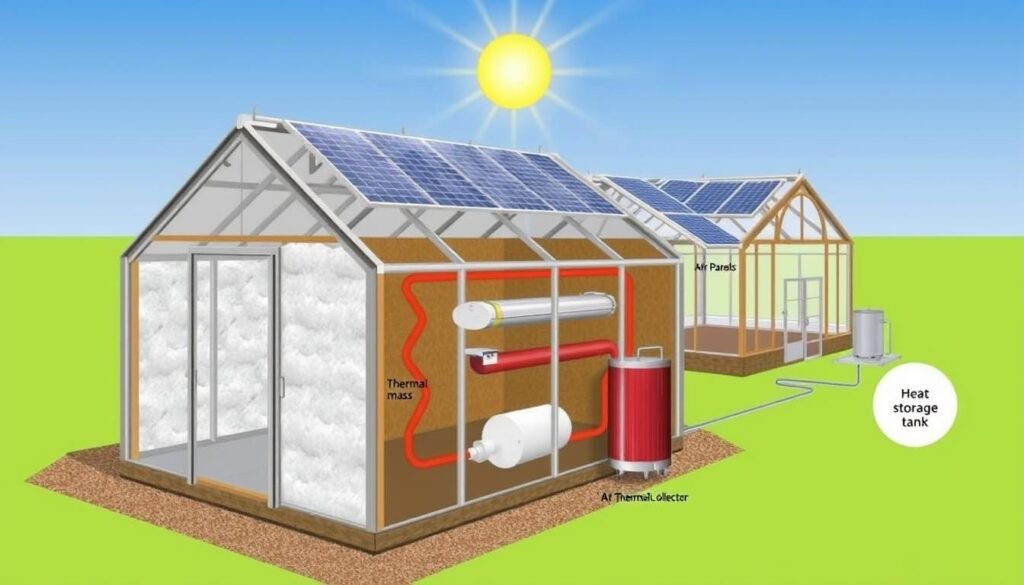
- Install weatherstripping at doors and vents.
- Add rigid foam skirting around the perimeter.
- Cluster black barrels behind beds and hang thermal curtains.
- Set simple data loggers at plant height and near doors.
Troubleshooting frost pockets
Look for cold sinks at low spots and doors. Vent briefly at noon to cut humidity.
Avoid evening overwatering and use passive vents or a small fan to stop cold air pooling near seedlings.
“Start with mass and seals; use data to guide covers and active fuel only when forecasts demand it.”
| Priority | Quick Action | Why it helps |
|---|---|---|
| Seal leaks | Weatherstrip doors | Stops major overnight loss |
| Add mass | Cluster barrels or stone | Smooths temperature swings |
| Layer covers | Double film + row cover | Reduces conduction and protects seedlings |
| Monitor | Min/max loggers | Turns guesses into repeatable action |
For policy clarity and data handling, keep a simple log and a short privacy policy note if you share readings online. Track posts and notes so you build useful information over seasons.
Conclusion
The winners were clear: double layers plus thermal curtains, well-placed thermal mass, and row covers over beds. These moves, paired with sealing leaks and managing moisture, gave the most reliable protection.
If you copy just three moves, make them these: seal drafts at doors and vents, cluster black barrels on the north wall, and deploy row covers on frosty nights. Those steps saved my tender starts more often than any complex add-on.
Keep it safe and simple. Prioritize venting, monitor humidity, and treat any combustion device with strict clearances and CO-safe exhaust. Let your logs set frost thresholds, review weekly, and tweak covers and mass placement until predawn temps hold above 32°F at plant height.
Long-term success comes from plans you can maintain on cold, dark mornings. Use clear notes, share useful posts, and remember to include a short privacy policy if you publish logs or advertising-supported content online. Also limit tracking—if you use cookies or link to reddit rereddit threads, state that in your site policy for readers who follow top posts or 2023 reddit threads for inspiration.
FAQ
How did you orient the structure to capture the most winter sun?
I positioned the long side facing south with a 10–15 degree tilt toward true south and used a slight slope to maximize low-angle winter sunlight. Raised beds and clear glazing on the south wall reduced shading from nearby trees and buildings. This simple orientation boosts passive solar gain without extra energy input.
What kind of thermal mass did you use and where did you place it?
I relied on black water barrels and a few flat stone slabs placed along the south interior wall and near plant beds. The barrels absorb daytime heat and release it at night. Stones near root zones help moderate soil temperature. Position mass where it sees direct sun for best charge and slow release.
Did compost heat benches help keep tender seedlings alive?
In short runs they provided a measurable warm spot, especially for starts and transplants. Success depended on maintaining active microbial activity—turning, moisture, and a steady fuel of green and brown materials. When poorly managed, compost benches lost heat quickly and produced odors, so keep them well insulated and ventilated.
Are rocket mass stoves practical for small hobby structures?
They can be, if built and used carefully. A clean-burning rocket with a masonry or cob mass can supply steady radiant heat. But they need safe chimneying, clearances, and dry fuel. For many home gardeners, a smaller masonry bench or portable catalytic heater paired with thermal mass is simpler and safer.
How effective were double layers, thermal curtains, and air gaps for nighttime warmth?
Double glazing plus a suspended thermal curtain reduced overnight heat loss significantly. Air gaps between layers act like insulation; moving the curtain down over beds traps a warmer microclimate. Use lightweight insulating fabrics for easy handling and secure edges to prevent drafts.
What role did row covers play inside the structure?
Row covers created microclimates around plants, adding 2–6°F or more of protection. Combined with thermal mass and curtains, they saved many tender seedlings during hard freezes. They’re inexpensive, easy to deploy, and reduce radiant heat loss directly from foliage.
Where did heat loss most commonly occur during the cold snap?
Heat escaped through unsealed seams, foundation gaps, single-pane vents, and at the eaves where wind drove convection. Vents and doors without draft strips were the biggest culprits. Sealing perimeters, adding skirting, and insulating corners cut losses dramatically.
How did you monitor temperatures and identify frost thresholds without grid power?
I used battery-powered data loggers and simple max/min thermometers placed at canopy and soil levels. Solar USB chargers kept small electronics running. Recording temps in spreadsheets helped pinpoint frost pockets and informed where to add mass or covers.
What safety measures did you prioritize for moisture and combustion systems?
Ventilation was the top priority—fresh air in, exhaust out. Any combustion device had a Class A chimney, spark arrestors, and carbon monoxide monitoring. For moisture, dehumidifying with passive vents and using hygroscopic mass reduced condensation and mold risk.
How should I adapt these strategies by climate zone?
In colder zones emphasize mass, airtight insulation, and multiple thermal layers. In milder regions focus on ventilation control, shading in summer, and light mass to avoid overheating. Start with small upgrades—barrels, curtain, skirting—and scale based on local freeze patterns.
What weekend upgrades gave the biggest return on effort?
Sealing gaps and adding perimeter skirting, installing a thermal curtain, and placing a few painted black barrels in sun were the fastest, most effective upgrades. Each one is low-cost and delivers clear overnight temperature gains.
How did you troubleshoot persistent frost pockets?
I mapped cold spots with walk-around temperature readings and visual checks at dawn. Solutions included redistributing mass, adjusting vents to break stagnant air, lifting row covers during day for charging, and adding small passive baffles to redirect cold air.
What monitoring data or logs did you keep for later improvement?
I logged hourly temperatures for canopy and soil, noted weather conditions, and recorded which interventions were active. This data showed patterns—when mass retained heat, when compost lost output, and which covers worked best—helping prioritize future upgrades.
Which commercial brands or tools proved reliable during testing?
For sensors, I used ThermoPro and Extech battery loggers and small solar chargers from Anker. For fabrics, Agribon row covers and Reflectix for secondary glazing performed well. Choosing proven, simple gear reduced failures and made troubleshooting straightforward.
How did privacy, data, or community discussions influence your approach?
I followed community threads and top posts on gardening forums for real-world tips, while protecting personal data on platforms by limiting shared location specifics. Community experiments help refine ideas, but always verify performance locally before large investments.