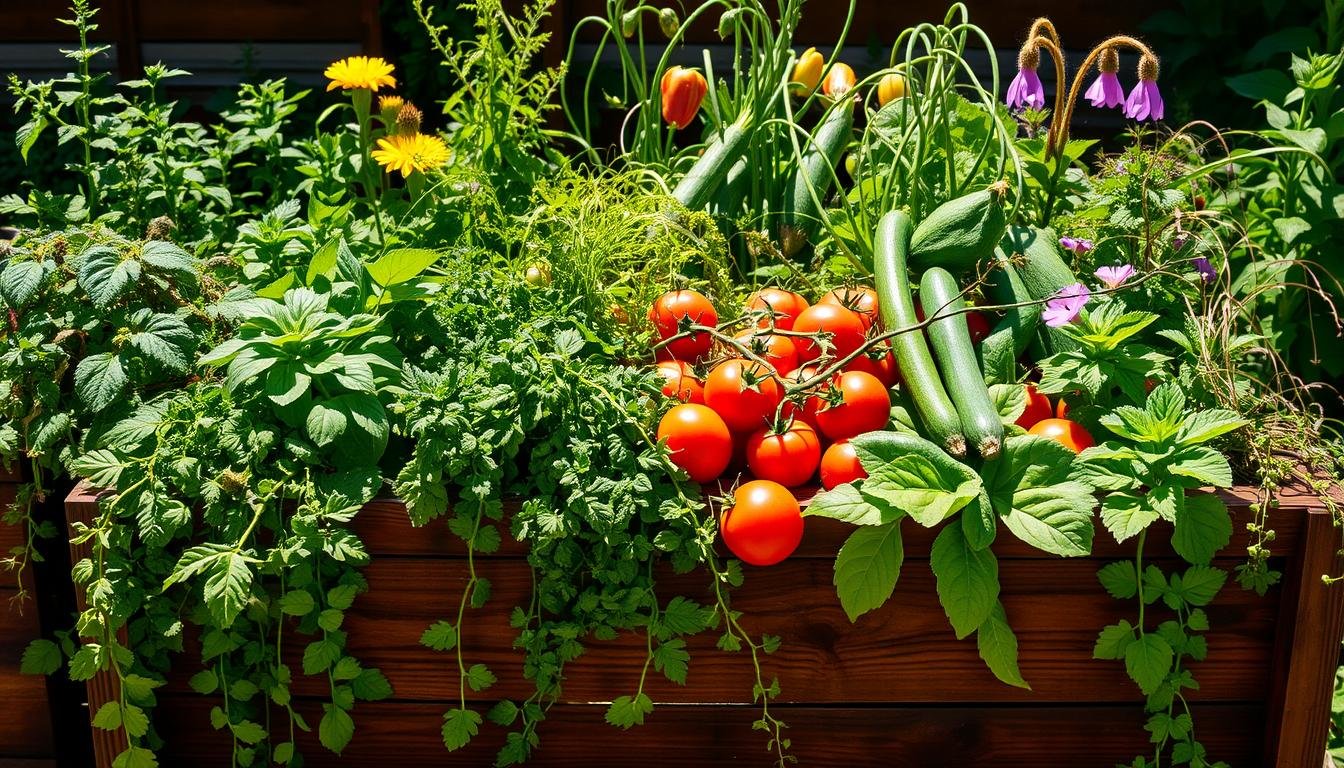
Can a few pots on a porch feed your family and draw pollinators while staying low-effort? This question surprises many, but thoughtful mixes of plants can do exactly that.
First, know food. From food all things are born… That old line reminds us where this starts: soil and water. Make sure you have reliable water and living soil before you plant.
Polyculture means growing complementary plants together so they help each other. These small guilds yield more, resist pests, and need less fuss than single-crop setups.
In this article you will learn step-by-step ideas and practical resources for small-space gardening. We cover what to pick, how to stack functions, and simple soil tips so you can get started with confidence.
Key Takeaways
- Start with soil and water: they matter most.
- Use plant guilds: complementary plants boost yield and resilience.
- Small spaces work: patios and balconies can host rich mini-ecosystems.
- Lower maintenance: diversity cuts pest and disease risk.
- Practical tools ahead: checklists and layouts help you act on day one.
Why Polyculture Shines in Small Spaces
Polyculture in a pot boosts yield, resilience, and visual appeal by copying how plants mix in nature. Small mixes cut pest pressure and give you more harvest windows through the year.
Layering a few species in one pot turns a balcony into a resilient mini-ecosystem. Mixed plantings create checks and balances that stop pests and disease from gaining a foothold.
History reminds us why diversity matters. The Irish Potato Famine came from relying on a couple of varieties. That loss shows how genetic sameness risks food supplies over time.

How guilds differ from monocultures
A guild is a small team of mutually helpful plants. Roots, foliage, and bloom times layer like natural communities. In contrast, monocultures concentrate risk and need more intervention.
Practical wins for small patios
Mix flowers like cleome or sweet alyssum with tomatoes and peppers. These pollinators and beneficial insects improve fruit set and help your pots recover faster after weather swings.
| Feature | Monoculture | Guild/Polyculture |
|---|---|---|
| Pest Risk | High | Lower due to checks and balances |
| Maintenance | More inputs and care | Less fuss once established |
| Yield over a year | Single harvest periods | Staggered harvests, more continuous returns |
| Visual impact | Uniform look | Textured, lively layers |
Get Started: Containers, Soil, Water, and Sun
Before you plant, sort containers, build fertile soil, and lock in reliable water. These three moves cut work and boost success. They make sure your pots and plants thrive in tight spaces.

Which pots and layout fit your space?
Match pot size to root depth. Tall crops like dwarf corn and tomatoes want 15–20+ gallon planters. Herbs and salad greens do well in 8–10 inch troughs.
Group large pots to create microclimates. Place trellised pots on the north side so they don’t shade smaller plants and save room.
How do you build living soil in pots?
Use a no-dig, living approach. Blend high-quality compost with a peat-free base and add worm castings. Top with 1–2 inches of mulch to cut evaporation and weeds.
What keeps water steady and roots safe?
- Make sure drainage is solid: add holes and elevate pots.
- Use a drip line or olla for even moisture—this helps veggies and reduces blossom-end rot.
- Check moisture two inches down and water early in the day.
| Need | Small Pots | Large Planters |
|---|---|---|
| Best for | Herbs, greens | Tomatoes, dwarf corn, mixed guilds |
| Depth | 8–10 in | 15–20+ gal / deep root space |
| Care | Frequent watering | Better moisture buffer, supports layered plants |
Design Principles: Stacking Functions, Space, and Time
Stacking roles—who feeds, shades, and shelters—turns limited space into steady harvests. Think in jobs, not just species: list needs, assign helpers, and plan what occupies each niche through the season.

What should your main crop need?
Start with the primary crop you most want to eat. Note its needs: steady moisture, extra nitrogen, pollinators, or living mulch.
Which support plants fill those jobs?
Assign helpers by role. Beans fix nitrogen. Sweet alyssum draws beneficial insects. Low groundcovers like thyme hold moisture and shade soil.
How do you layer space in one pot?
Use vertical climbers on a trellis, midlayer producers like peppers, and shallow groundcovers at the soil surface.
- Stack time: sow quick greens beneath slower crops to harvest early and refill gaps.
- Map roles: write each plant on a sticky and arrange until needs match support.
- Keep soil alive: add compost monthly and re-mulch lightly to feed the mini-ecosystem.
| Layer | Example | Function |
|---|---|---|
| Vertical | Peas or small trellised beans | Support, shade, harvest height |
| Mid | Tomato or pepper | Main yield, pollination focus |
| Ground | Thyme or squash | Mulch, weed suppression, moisture |
Use seed diversity where space allows. Seed balls or mixed sowings help establish a tapestry of supportive species and protect seeds until rain. Revisit designs each season to learn which combinations help your plants grow with fewer inputs.
Plant Guilds for Containers: What to Grow Together
Pairing the right plants turns a single planter into a multi-tasking food and pollinator patch. Below are compact guild ideas with timing and simple steps so you can match scale and needs.
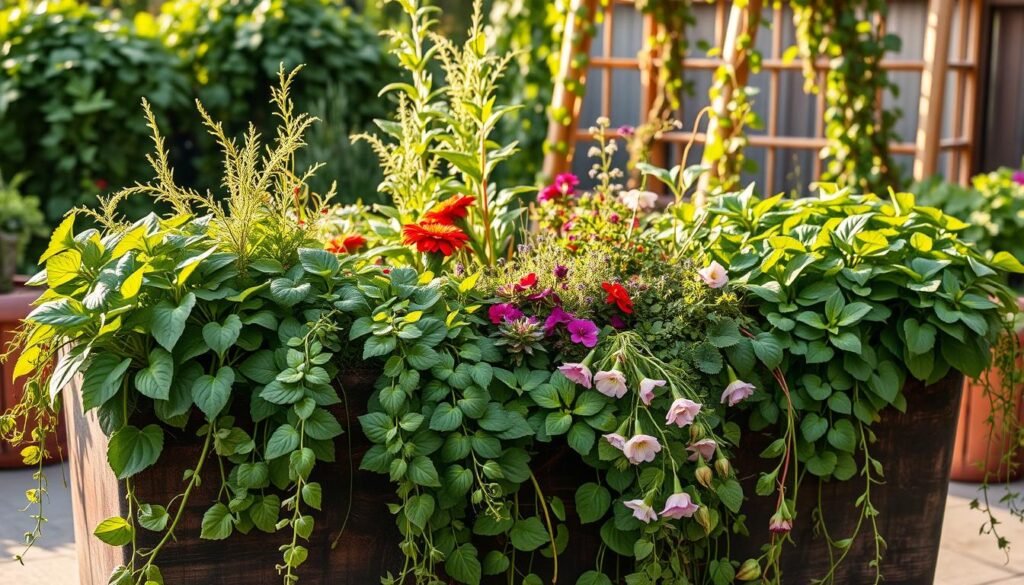
Mini Four Sisters for big pots
What to plant: dwarf corn or sorghum, pole beans, a compact squash, and cleome to attract pollinators and deter pests.
- Sow corn first in small mounds for warmth and drainage.
- Plant beans two weeks later with a legume inoculant; thin to the strongest three stalks.
- Choose bush squash if you plan an early sweet corn or sorghum harvest so vines won’t topple stalks.
Italian-inspired mix for flavor and structure
Use Roma tomatoes on a trellis, cannellini beans to feed soil, eggplant as a midlayer, and underplant with basil, oregano, and parsley for kitchen use.
Companion planting tip: basil near tomatoes can boost airflow and flavor at harvest.
Salad-and-herb bowl
A shallow wide planter works well for lettuce, chives, dill, cilantro, and calendula. This is perfect for cut-and-come-again greens and edible blooms.
Edge plants that lure beneficial insects
Plants like sweet alyssum, yarrow, buckwheat, and marigolds bring hoverflies and ladybugs to help control soft-bodied pests.
Quick scale note: pick compact varieties and prune to keep airflow and balance among guild members.
- Pro tip: thyme or other low herbs serve as living mulch to cool soil and save moisture.
- Fruit accent: you could plant a compact cherry tomato in the center of a large guild, ringed with beans and herbs for support.
Step-by-Step: A Practical Guide Creating Beautiful Edible “Polyculture” Container Garden
Follow a weekly rhythm: sow fast greens at last frost, transplant into freed spaces, add warm-season crops when soil hits 60°F, and use light covers to stretch harvest months.

What to plant each week?
- Week 0 (final frost): sow radish, lettuce, dill, and calendula. Thin as you harvest baby salads to free space for later transplants.
- Week 4–6: transplant cabbage or peppers into gaps left by pulled radishes. Keep 18 inches around larger plants for airflow.
- Early summer: when soil reaches about 60°F, add bush beans and scatter buckwheat to cover bare soil and attract pollinators.
- Mid to late season: resow lettuce in shade beneath taller plants for succession. Plant cool-season seeds late summer for fall harvests.
How to adapt square foot ideas to pots?
Treat a 24–30 inch planter as a 2×2 grid. Reserve one square for a trellis crop, one for a midlayer, and halves for herbs or quick greens.
Use spacing rules: one trellised tomato per large pot, 2–4 bush beans around it, and an herb ring to boost flavor and insect habitat.
How to extend the season?
Low hoops, row cover, or a small cloche add 2–4°F and keep plants growing longer. Vent on warm days to avoid overheating.
| Stage | Actions | Benefits |
|---|---|---|
| Spring (Week 0) | Sow radish, lettuce, dill, calendula | Fast harvests, thins for transplants |
| Early Summer | Transplant brassicas, add bush beans, sow buckwheat | Nitrogen, pollinator nectar, fuller pots |
| Fall Prep | Succession sowings, use row cover/cold frame | Extended months of harvest, frost protection |
Companion Planting, Beneficial Insects, and Natural Pest Control
Mixing nectar-rich blooms with useful edibles builds a living defense against pests. Use simple pairings to feed predators, steady soil health, and reduce spray-based pest control.
Which pairings give the biggest payoff?
Use companion planting basics in pots. Beans fix nitrogen for hungry veggies. Low herbs like thyme or squash act as living mulch to cool and protect soil.
Aromatic herbs such as basil and chives can confuse pests and improve airflow around a main plant.
How do you invite helpful insects?
- Plant sweet alyssum, dill, and yarrow to attract hoverflies and ladybugs—top beneficial insects for aphid control.
- Mix flowers across pots so pollinators and predators always find nectar.
- Group flower-rich pots into small hedgerows on a balcony to create continuous habitat.
What are gentle, natural pest steps?
Rinse small outbreaks with water and remove badly infested leaves. Replace gaps with fast flowers to rebuild predators quickly.
Keep soil steady: regular mulch and even watering cut plant stress and reduce pest pressure in a polyculture approach.
Care, Water, and Maintenance Through the Season
A few focused chores each week prevent small problems from becoming big losses in pots. Keep tasks simple and repeatable to protect soil and help plants grow over months.
A reliable watering routine matters most. Water deeply and consistently: group thirsty pots, check moisture two inches down, and aim for steady hydration so roots stay healthy.

How should you mulch, prune, and trellis?
Mulch 1–2 inches with straw or shredded leaves to cool soil, cut evaporation, and suppress weeds. No-dig mulching reduces both watering and weeding.
Install trellises at planting and train vines early. Prune side shoots on vigorous vines to keep airflow and to help plants grow without crowding in limited space.
When do you thin, chop-and-drop, and refresh soil?
Thin crowded seedlings to ease stress and boost yields. If roots remain intact, transplant thinnings to open spots.
Use chop-and-drop: cut finished greens or bean vines and lay them on the surface as mulch. This returns fertility and feeds soil life.
Refresh midseason by top-dressing with 1 inch of compost and re-mulching. If disease like blight appeared, remove infected debris and compost offsite instead of leaving it on the pot.
| Task | When | Why | Quick Tip |
|---|---|---|---|
| Deep watering | Weekly / hotter months | Keeps roots hydrated and reduces stress | Check 2″ down before watering |
| Mulch refresh | Every 4–8 weeks | Retains moisture and suppresses weeds | Use shredded leaves or straw |
| Prune & trellis | At planting and monthly | Improves airflow and fruit set | Tie vines loosely; prune early |
| Soil top-dress | Midseason | Replenishes nutrients for continuous production | Add 1″ compost, light organic feed |
Small log by month helps. Track watering, feeding, pruning, and any pest control so you refine care next year. For compact herb ideas that pair well with this care routine, see best herbs to plant.
Harvest, Kitchen Ideas, and Year-Round Inspiration
Keep harvests steady with small picks and planned sowings. Pair quick greens with slower crops and use simple covers to stretch the season into colder months.
Harvest little and often. Cut lettuce and herbs above the crown so they regrow. Rotate where you pick to give plants a chance to recover and keep fresh bowls all week.
Stagger sowings. Re-seed fast crops every 2–3 weeks in small patches. This supplies a steady stream of veggies and reduces the scramble for food in any one month.
- Use partial shade under trellised tomatoes to stop bitter leaves in midsummer.
- Snip basil, parsley, and dill right before meals for peak aroma and flavor.
- Keep soil fed: lay soft trimmings as light mulch or top-dress with compost after harvest.
From pot to plate: try Vera Greutink’s stuffed zucchini — quinoa, sweet corn, cherry tomatoes, basil, and Parmesan baked at 360°F until tender. Finish with basil and a shower of cheese.
“Row covers and cold frames let winter purslane, spinach, mustard greens, chervil, and parsley keep producing.”

Plan months of harvest by mixing quick greens, herbs like thyme, and slower fruiting plants. With small hoops or a cold frame, your pots can supply salad bowls and sides most of the year.
Conclusion
Begin with a single, well-chosen pot and stack a tall crop, a midlayer, and low herbs to learn fast. This simple test shows how small-scale mixes copy nature to form a resilient mini-ecosystem that rewards steady care.
Pick one roomy spot and try a basic trio: trellised tomato, bush beans, plus basil and calendula at the edge. Watch how plants share light, water, and pests, then make small course corrections each week.
Keep soil alive with no-dig top dressing and mulch. Use practical tips like steady watering and monthly compost. Note what worked and what did not; those things shape stronger plans next season.
Whether you are a new or practiced grower, treat every pot as a learning room. Tap local extension resources and seed suppliers for compact varieties. Celebrate small wins—those ones make better gardens and keep momentum.