
I still remember the first season my favorite corner of the garden looked split in two: one side soft and heavy, the other dusty and crumbly. That moment nudged me to learn simple checks that reveal what soil, water, and plants are quietly telling you.
Uneven moisture often comes from mixed soils, compaction, and how rain or a hose soaks the bed. One patch can hold too much water while another sheds it fast. That imbalance stifles roots in soggy zones and slows growth in the dry ones.
Start with a hand test or a small hole to feel soil layers. Look for dense pockets, old wood chips that are still breaking down, or slopes that funnel water. You don’t need lab gear—just a trowel and the habit of observing.
Key Takeaways
- Uneven moisture links to soil texture, compaction, and irregular water coverage.
- “Wet” often means too moist—not always standing water.
- A quick hole test reveals drainage and organic matter stages.
- Fixes focus on soil balance, aeration, and routing water more evenly.
- Raised beds can shift over time; routine checks keep plants healthy.
What Wet Spots and Dry Spots in Raised Beds Are Telling You About Soil, Water, and Roots
Uneven moisture reveals texture, structure, and how water moves through a bed. Reading those signals helps you match repairs to the real cause.
A quick squeeze of slightly damp soil tells the tale of its drainage and structure.
Uneven moisture signs in the bed and plants
Look for darker patches, algae or moss, fungus gnats near soggy corners, and cracked crust where the surface dries hard. Plants in wet areas may yellow or wilt from oxygen stress, while plants in dry zones show crispy edges or bolting.
How rain and watering shape patchy zones
Hose or sprinkler patterns often favor one side. After heavy rain, fine mixes or compacted pockets hold water and pool, while shaded or sheltered edges stay parched.
Texture, structure, and compaction made simple
Sand drains quickly; clay packs and holds water; silt feels smooth. Loam blends all three and behaves most evenly. If a damp handful forms a tight clump, the structure is too compact; if it falls apart, the mix may be too loose.
Organic matter, compost stages, and soil life
Fresh compost changes how the bed holds water as it breaks down. Over months that input turns into stable humus that evens moisture and supports crumb structure. Active biology—worms and microbes—keeps that crumb healthy for roots.
| Issue | Look For | Likely Cause | Quick Action |
|---|---|---|---|
| Darker, soggy patch | Algae, gnats, soft soil | Clay pocket or poor drainage | Loosen soil; add compost |
| Cracked, hard surface | Dusty, crumbly top | Too sandy or compacted crust | Lightly fork; add organic matter |
| Mixed wet and dry | Uneven plant growth | Watering pattern or grade runoff | Adjust irrigation; map moisture |

Note which side gets sun, runoff, and the most frequent watering passes. For a deeper walk-through on repairs, see revive a raised garden bed.
why do raised beds get wet spots and dry spots [troubleshooting]: Quick Checks to Find the Real Cause
Use simple, hands-on tests to map moisture and uncover the real soil limits. These checks use few tools but give clear answers about structure, water flow, and fill material.
Hand-squeeze structure test
Grab slightly damp soil from the soggy area, the dry patch, and the center. Squeeze each sample.
If it forms a tight clod, suspect compaction or clay. If it crumbles into a workable crumb, structure is balanced. If it falls apart like dust, the mix may be too coarse or sandy.
Dig-and-check moisture mapping
Dig 6–8 inches at three points: wet, dry, middle. Feel the root zone — the surface can lie.
Compare moisture by touch and note where plants show stress. This simple map guides targeted fixes.
Infiltration and overnight hole test
Pour a measured cup of water into a small basin in a test spot to watch infiltration. For serious pooling, dig a 12–24 inch hole and check it after rain or overnight.
Water that lingers suggests poor drainage from a clay layer, high water table, or collected runoff in that area. If moisture stays high long after you stop watering, drainage is likely the issue.
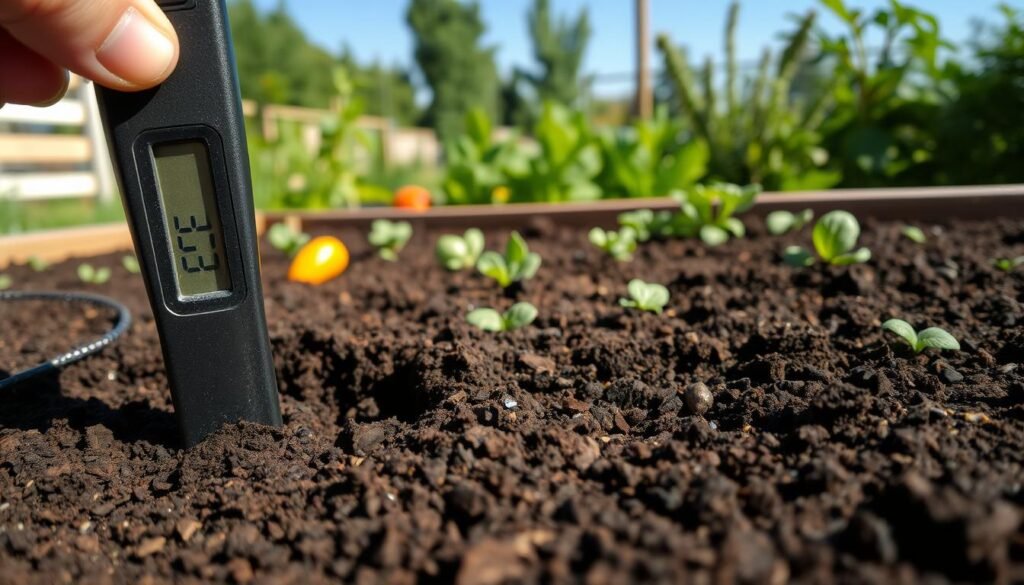
Texture, fill clues, and soil life
Ribboning between fingers points to clay; gritty bits point to sand; visible bark means a bark-heavy mix that may drain too fast.
Check fill history: local fill often compacts, while potting blends can dry unevenly and tie up nitrogen as they break down. Also note pH near 6.0–7.0 for best uptake — imbalanced conditions can mimic watering problems.
For runoff and standing-water diagnostics, see a practical guide on redirecting excess flow garden keeps flooding.
To learn how organic matter helps even moisture over time, visit building healthy soil.
Targeted Fixes for Wet Spots, Dry Spots, and Poor Drainage in Raised Beds
Match the fix to the fault: identify whether soil texture, compaction, or runoff is the real cause before you add anything.
Rebalance texture and structure. Top-dress sandy, fast-draining areas with a mix of compost and fine organic matter. Work it lightly into the top few inches so the soil holds moisture longer without turning heavy.
Break up compacted zones. Use a digging fork to lift the soil—avoid churning it into a muddy paste. Add steady doses of organic matter over time so the soil gains stable humus that acts like glue for crumb structure.

“Improve pathways for excess water to leave the bed; mixed textures beat layered soil that creates perched water.”
Reduce saturation risk. Make sure the bed has a clear route for extra water to exit. If grading or a high water table causes pooling, consider regrading, swales, or carefully planned buried drains only if you can discharge water responsibly.
Pause watering when soil is too moist. After heavy rain or if root zones feel soggy, stop irrigation and let air and sun dry the surface—this simple step protects new transplants.
- Dry, fast-draining patches: top-dress with compost and water slowly so moisture spreads.
- Compacted, soggy pockets: loosen gently, remove foot traffic, and add organic matter.
- Clay zones: blend localized clay with compost over multiple seasons to move toward loam-like texture.
When the site is the problem: if the surrounding area funnels water in, relocation or taller beds can be the best long-term way to protect plants. For persistent wet conditions, choose moisture-tolerant plants such as astilbe, cardinal flower, bee balm, and Japanese iris.
For practical drainage retrofit ideas, see this garden drainage guide, and for improving fill mixes consider a visual method like the filler-spiller approach.
Conclusion
Uneven patches signal clear messages about soil texture, structure, and how water moves through the bed. Read those signs and act in small steps so changes stack up over time.
Look for subtle clues in the soil surface and under its top layer to read what’s really happening. Observe first, test next, fix where needed, then recheck—repeat each season.
Most improvements happen part-by-part: add organic matter a little at a time, adjust watering, and pause after heavy rain so roots can breathe.
Pick one simple test today, and make one small change this week. Focus on one or two targeted fixes rather than ten things at once.
Treat each of your beds like a tiny ecosystem. When balance returns, your garden will reward you with steadier growth and more predictable results. For ideas on a compact herb layout, see this best raised herb garden.