
What small change could bring bees back to a turf-only yard within weeks? That question pushed a simple experiment: add low-growing blooms that tolerate mowing and foot traffic, then watch pollinators return.
A tidy lawn still feels like turf, but now it feeds wildlife. I added clover, creeping thyme, and self-heal to create steady bloom from spring through fall. Each species offers different shapes, scents, and nectar to guide bees across the season.
This approach keeps curb appeal and boosts habitat value. The goal was practical: keep a neat green carpet while weaving in hardy flowers that handle U.S. weather swings. A little variety greatly improves lawn beauty and gives bees reliable forage.
Key Takeaways
- Adding low-mow blooms can draw pollinators back in weeks without a full lawn overhaul.
- Clover, thyme, and self-heal provide staggered bloom and varied nectar sources.
- These plants tolerate mowing and foot traffic, keeping the yard practical.
- Angiosperms evolved flowers to attract pollinators, so this fits natural ecology.
- Start small with overseeding or plugs for a budget-friendly habitat boost.
Why I Turned My Lawn into a Bee-Friendly Patch
The yard had fewer bees each year, so I searched for small, practical changes that help wildlife and fit normal upkeep.
Adding low-profile blooms kept curb appeal while creating steady food for pollinators through the season.
Fewer bee visits on sunny days made me rethink what a lawn must provide. A turf-only yard gives almost no nectar, especially in early spring, when many insects need food most.
The mission was simple: add resilient flowering plants that tolerate mowing and foot traffic. Small patches of bloom make a visible map of color, scent, and nectar that guides foraging insects across the yard.
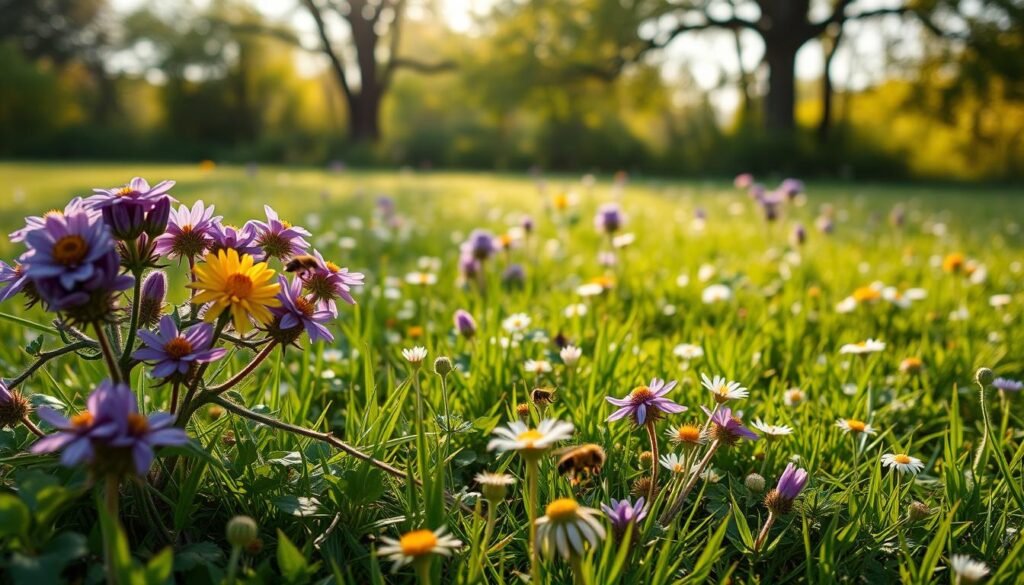
I kept a personal benchmark by counting bee visits on warm afternoons. Quick feedback kept motivation high and showed results within weeks.
Benefits spread beyond the blooms: nearby fruit and veggies set more reliably and natural predators increased, helping pest control. Neighbors still see a neat lawn with seasonal beauty, not overgrowth.
- Selected plants stay compact and handle normal mowing.
- Small changes bridge local nectar gaps before summer perennials arrive.
- Choices support honey bees, native solitary bees, and small butterflies—more life and local species diversity.
This is an approachable first step that boosts habitat without sacrificing usability.
Understanding Pollinators and Flowering Plants
Small clusters of color and scent guide pollinators across turf and make a yard far more useful to wildlife. Flowers use visual signals and scent to lead bees to nectar, which rewards repeat visits and boosts pollen transfer.
How color, scent, and nectar attract pollinators
Petals create contrast and shapes that act like landing strips. Scents carry over distance and hint at nectar inside.
Nectar provides an energy reward while pollen offers protein. Together they encourage repeat visits and better pollen placement on anthers and stigmas.
What makes angiosperms unique: seeds enclosed within fruit
Angiosperms are true flowering plants whose seeds form inside a protective fruit. This trait sets them apart from gymnosperms, which bear unenclosed seeds.
Many flowers house both male and female reproductive organs, easing reproduction while using timing and form to reduce self-pollination and keep genetic diversity high.
- Flowers and fruits: flowers host reproduction; fruits develop from carpels and shield seeds as they mature and disperse.
- Angiosperm diversity lets species thrive across wetlands, prairies, and home lawns, strengthening relationships with local pollinators.
- Practical tip: pair varied colors and shapes and mix nectar-rich with pollen-rich blooms to attract pollinators reliably.
How Bees Interact with Flowers: From Pollen Grains to Pollen Tubes
On warm mornings, bees wear pollen like dust and turn each bloom into a tiny delivery hub. This simple contact starts a precise chain that leads to new life in lawns and gardens.
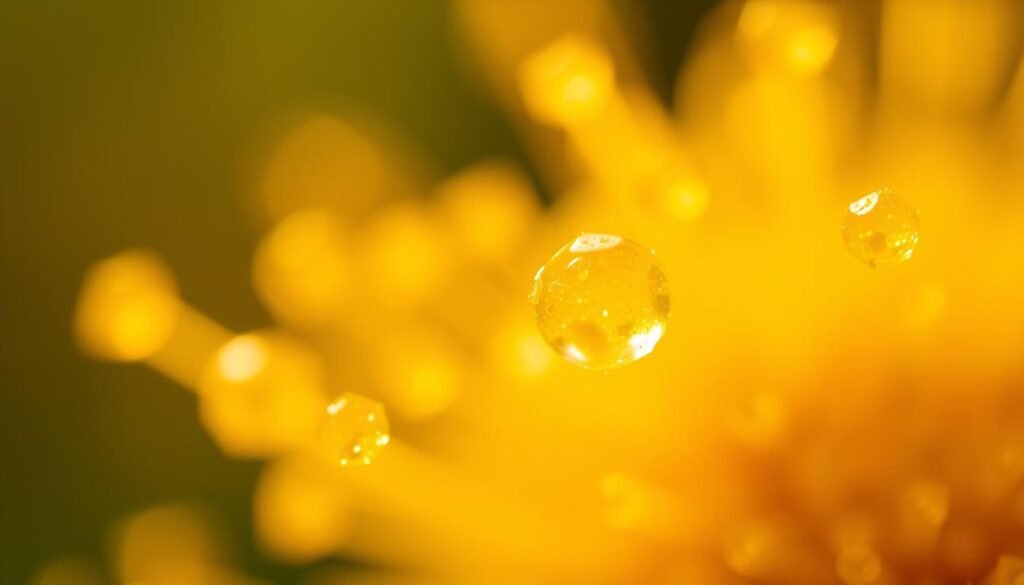
Stigma, style, ovary, and ovules: the reproductive path
As a bee forages, pollen grains stick to body hairs. When the insect visits another bloom, it rubs some of that pollen onto the sticky stigma, which is the flower part built to catch it.
Once captured, a pollen grain germinates and sends a pollen tube down the style toward the ovary. Inside the ovary, ovules wait for fertilization.
Two sperm cells travel through the tube. One fuses with the egg to form an embryo inside a future seed. The other joins central nuclei to form endosperm, the food that feeds the young seed.
| Part | Primary role | Why it matters |
|---|---|---|
| Stigma | Capture pollen | Sticky surface increases cross-pollination |
| Style | Path for pollen tube | Guides sperm to ovary safely |
| Ovary & Ovules | House developing seeds | Site of double fertilization in angiosperms |
Why it matters for lawns: even small lawn blooms follow this process. Repeated bee visits increase cross-pollination and genetic vigor in local angiosperms. Let flowers open before mowing and you help nature finish reproduction and produce more seeds for future growth.
Selection Criteria: Choosing Flowering Plants That Thrive in U.S. Lawns
Begin by noting sun, soil drainage, and how people walk across the yard. Pick low-growing options that tolerate mowing at 3–4 inches and give steady nectar from spring through fall.
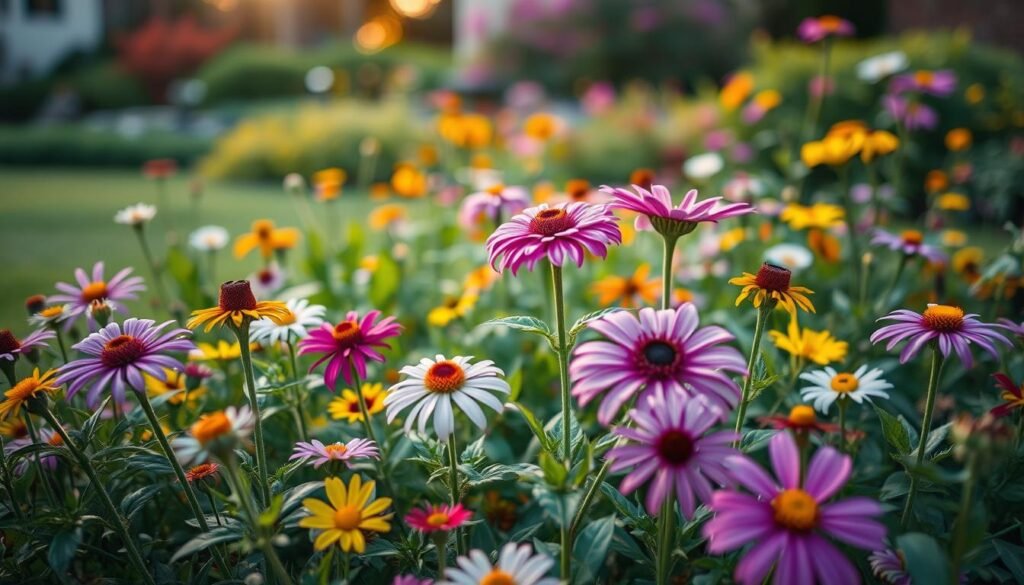
Assess sun exposure honestly: most lawn-friendly species prefer full sun to part shade. Mark high-traffic routes and reserve the toughest groundcovers for those paths.
Annuals vs. perennials and bloom windows
Blend perennials for long-term returns with a few annuals for quick color. Stagger bloom windows so bees find nectar from early spring through fall.
Sun, water, and soil drainage for mixed turf
Good drainage prevents crown and root rot. For compacted soil, use core aeration and topdress with screened compost. Once settled, most choices need modest water.
- Low growth: keeps a lawn look and tolerates mowing.
- Staggered bloom: spring clover, summer thyme, extended-bloom self-heal.
- Establishment: overseed thin patches; use plugs where seed contact is poor.
| Criteria | Why it matters | Action |
|---|---|---|
| Growth habit | Maintains lawn aesthetics | Choose low, mat-forming species |
| Drainage | Prevents rot and crown loss | Amend soil; improve grading where needed |
| Traffic tolerance | Keeps blooms where people walk | Reserve hardy covers for paths; bloom nearby |
Start with a small test patch and observe leaf textures and color to keep curb appeal. For more context on one low-mow option and its local benefits, read about clover lawn benefits.
The Three Flowering Plants I Chose and Why They Work for Bees
Choosing the right trio meant balancing bloom timing, flower shape, and turf tolerance. Each selection supplies nectar at different times and attracts a range of visitors with varied mouthparts.
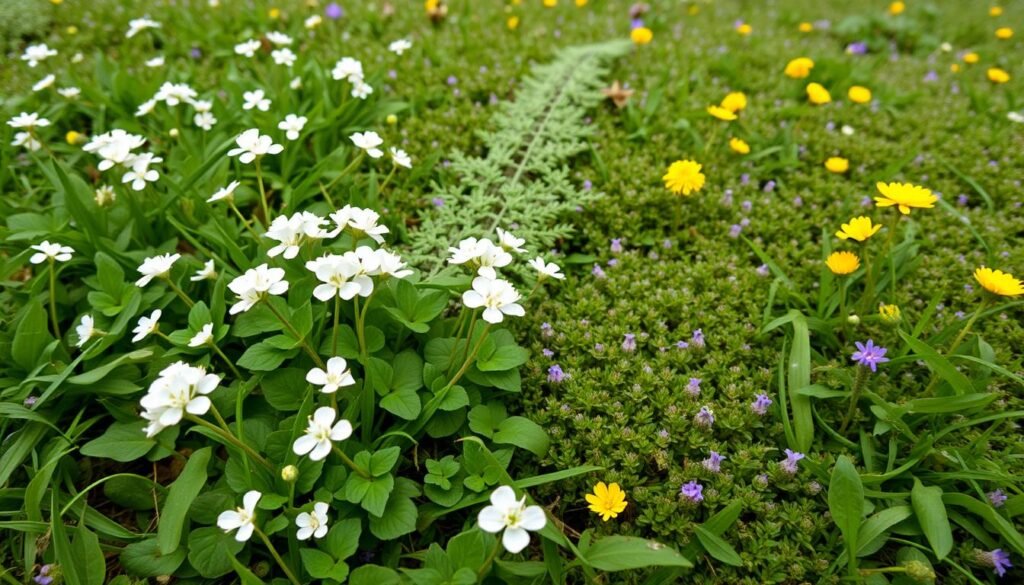
The trio I used: white clover, creeping thyme, and self-heal. White clover starts early. Creeping thyme peaks in summer. Self-heal stretches bloom into fall in cool-season yards.
Guiding principles: overlapping bloom, varied form, steady nectar
Overlap bloom windows so forage never gaps. Mix floral forms to serve short- and long-tongued bees. Let scent and color help pollinators find forage from distance.
- Durable: each species tolerates mowing and moderate foot traffic.
- Planting order: overseed clover in thin turf, plug thyme in sunny spots, add self-heal to cool, moist pockets.
- Low care: light watering and routine lawn mowing are usually enough once established.
Tip: track bee visits per square foot to measure success and tweak proportions by region. For more on what draws honey bees, see what honey bees like.
Plant One: White Clover for Low-Mow Nectar
White clover fits neatly inside a lawn and offers abundant nectar in early spring and early summer. It helps grass by fixing nitrogen and blends with cool-season turf leaves for a tidy look.
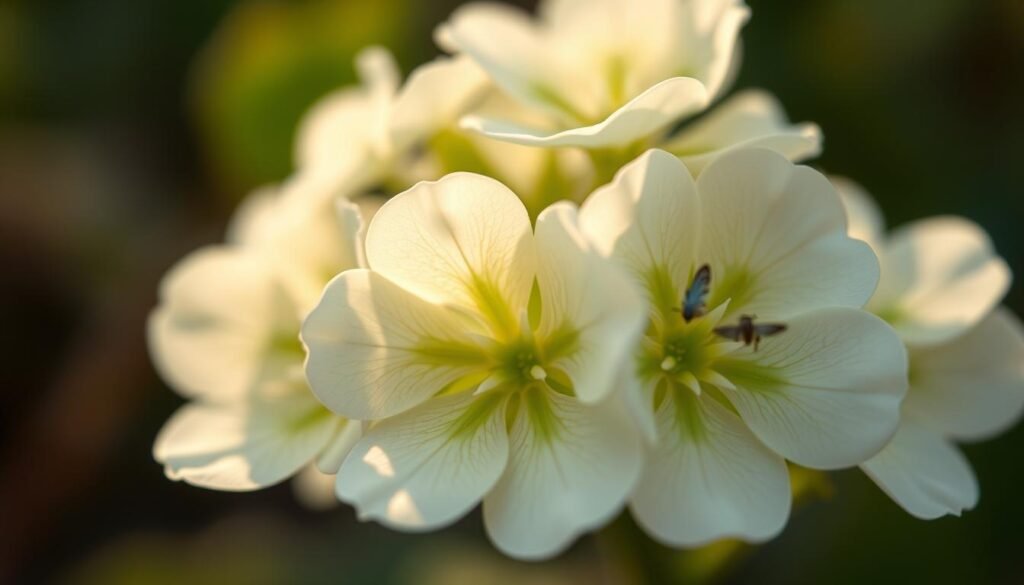
A low mat of white clover can feed pollinators while keeping a neat lawn look.
Benefits to pollinators and turf coexistence
Why add clover: low-growing white flowers supply nectar when bees need it most and rarely outcompete grass for space.
“Clover’s small leaves and short stems keep the lawn cohesive while boosting forage for local bees.”
Overseeding steps and watering schedule
Rake thin areas to improve seed-to-soil contact. Broadcast clover seed over bare patches and press seeds down by rolling or stepping lightly.
Keep the top 0.5 inch of soil consistently moist for 10–14 days until seedlings appear. Then switch to deeper, less frequent watering to encourage roots.
Mowing height, bloom management, and reseeding tips
Mow at 3–4 inches so flowers sit just above turf. Alternate mowing cycles so some blooms remain open for pollinators.
Spot reseed in late spring or early fall to keep a balanced clover-to-grass ratio. Avoid broadleaf herbicides where clover is desired.
- Nitrogen benefit: clover fixes atmospheric nitrogen and can reduce fertilizer needs.
- Appearance: small leaves blend well with common cool-season grasses.
- Framing: use edging or hardscape borders to keep mixed turf intentional and tidy.
- Watch: observe bee activity mid-morning on sunny days and time mowing so flowers are available when pollinators forage.
| Task | Timing | Why it matters |
|---|---|---|
| Overseed | Late spring or early fall | Best soil contact and mild temps for germination |
| Watering | 0.5″ moist for 10–14 days, then deep less often | Ensures seedlings establish strong roots |
| Mow height | 3–4 inches | Keeps blooms accessible and lawn neat |
| Reseed spots | Annually as needed | Prevents clover takeover and maintains balance |
For extra context on pollinator-friendly choices, see top plants for pollinators.
Plant Two: Creeping Thyme for Summer Forage and Fragrance
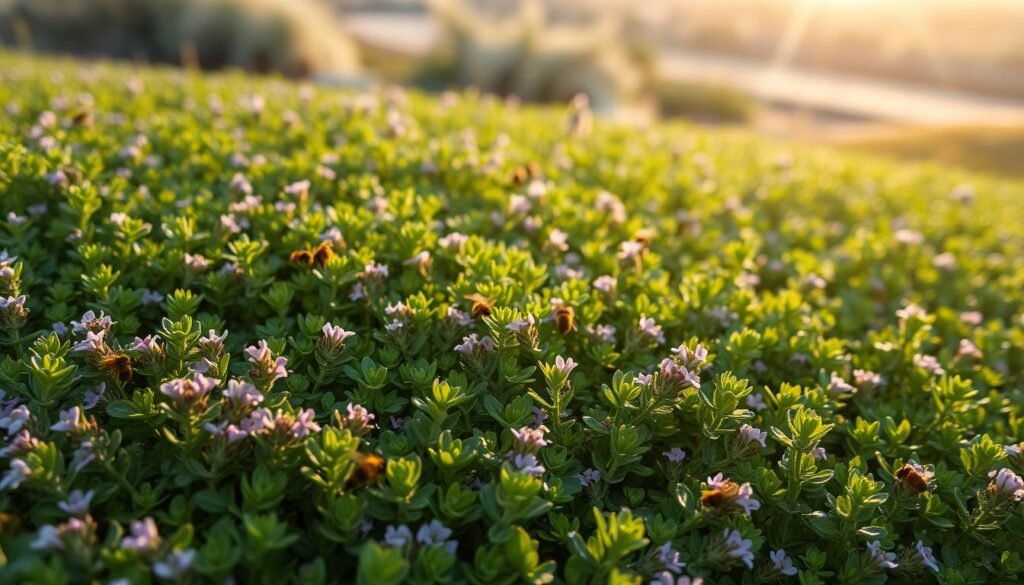
When heat peaks and other blooms fade, thyme offers steady nectar and a pleasant scent for pollinators. This low mat thrives in full sun and sharp drainage, filling gaps on hot days when bees need forage most.
How to prepare the site and choose plugs or seed
Pick a sunny spot with well-drained soil. If clay is heavy, amend with grit or coarse sand to improve drainage.
Plugs establish fast and outcompete weeds. Seed saves money but needs a clean, lightly scuffed surface and patient care.
Weed control, drought tolerance, and foot traffic
Thyme forms dense mats that shade soil and limit weed germination. That lowers maintenance over time.
Water evenly during the first weeks, then switch to deep, infrequent soaking. Once roots spread, thyme shows strong drought tolerance.
For heavier routes, add stepping stones and let thyme fill joints nearby so blooms stay intact.
Mowing, visual pairing, and trial patches
Skip mowing during peak bloom to protect nectar. After flowering, shear lightly above foliage to thicken the mat without removing buds.
The low purple-pink flowers pair nicely with turf green and border perennials at lawn edges.
Start with a small pilot patch in late spring, then expand by division or more plugs once growth proves reliable.
| Factor | Recommendation | Benefit |
|---|---|---|
| Sun | Full sun | Maximizes bloom and fragrance |
| Soil | Well-drained; amend clay with grit | Prevents rot and aids root spread |
| Establishment | Plugs for speed; seed for economy | Faster coverage vs. lower cost |
| Water | Evenly moist at first; deep, infrequent later | Supports roots, enables drought tolerance |
| Traffic | Light traffic; use stepping stones for heavy paths | Protects blooms and maintains cover |
Plant Three: Self-Heal (Prunella vulgaris) for Extended Bloom
Self-heal is a hardy, low-profile perennial with clustered purple spikes that feed bees from late spring into summer. It spreads modestly by stolons and fits cool-season turf when mowed at the right height.
A low, tough groundcover with purple spikes quietly fills gaps and keeps bees fed from late spring through summer. Its small leaves blend with cool-season grass, so patches read as a natural lawn element rather than an obvious garden insert.
Establishment in cool-season lawns
Sow seed into thin turf or plant small plugs where soil contact is good. Press seed lightly or tuck plugs between grass clumps to help roots meet soil.
Deadheading, spreading, and balancing with grass
Mow at 3–4 inches so spikes can open and stolons spread. A quick shear after peak bloom often encourages a second flush and keeps the patch tidy.
- Manage vigor: cut back irrigation and nitrogen slightly if self-heal starts to outpace grass.
- Soil care: a light compost topdressing in early spring supports steady bloom without excess height.
- Observe: check bee activity mid-day and adjust mowing to leave open spikes for foragers.
“Self-heal smooths gaps between clover and thyme, extending nectar when other species relax their blooms.”
Design Combos That Boost Bee Traffic and Curb Appeal
A deliberate edge of mixed color and form turns a neat lawn into a steady food corridor for pollinators. Repeat two or three favored combos around the yard to create unity and guide foragers from turf to beds.
Border pairings that work
Daylily + penstemon: plant ‘Stella d’Oro’ daylily with ‘Husker Red’ penstemon along walkways. The contrasting flower shapes and staggered bloom draw visits and look intentional.
Textural and seasonal partners
Roses + Siberian iris: pair shrub roses with Siberian iris for layered color from spring into early summer. This combo complements lawn softness while adding structure.
Pollinator magnets for edges
Black-eyed Susan + ageratum: line borders with black-eyed Susan and purple ageratum to echo lawn nectar and extend feeding stations where bees forage most.
Shade-side allies near trees
Hosta + astilbe: in part shade where turf thins, combine hosta foliage and astilbe bloom to keep continuity between lawn and beds. Add bulbs like daffodils and Chionodoxa for early spring color.
“Use repetition and timed peaks so border beds feed pollinators as lawn blooms pause.”
- Keep maintenance simple: mulch borders, edge cleanly, and mow with a clear line so turf reads crisp against richer beds.
- Align bloom timing: choose species that peak when lawn flowers rest, ensuring bees always find nectar within a few steps.
- Take monthly photos: track gaps and refine placements season by season.
| Combo | Sun | Bloom window | Benefit |
|---|---|---|---|
| Stella d’Oro + Husker Red penstemon | Full sun | Late spring–summer | Contrasting forms; strong pollinator draw |
| Shrub roses + Siberian iris | Full sun–part shade | Spring–early summer | Textural contrast; extended color |
| Black-eyed Susan + ageratum | Full sun | Summer–fall | Pollinator magnets; edge continuity |
| Hosta + astilbe (+ daffodils, Chionodoxa) | Part shade | Early spring–summer | Shade blooms; early-season nectar and color |
- Example layout: front walk—daylily + penstemon; sunny side yard—roses + iris; shaded corner—hosta + astilbe.
- Repeat combos around the yard and adjust by photo review each month.
Seasonal Care Plan: Spring to Winter
A seasonal plan keeps blooms available from thaw to frost and helps pollinators rely on the yard. Follow a simple cycle of spring seeding, summer care, fall extensions, and winter structure to support nectar across months.
Spring overseeding and bulb pairings
Core aerate compacted zones and topdress lightly with compost. Overseed clover or self-heal into thin turf for rapid cover and forage.
Plant daffodils and Chionodoxa in fall so bulbs reward early spring pollinators. Bulb clusters near lawn edges give synchronized early blooms that guide bees into the yard.
Summer mowing, watering, and supplemental blooms
Mow at 3–4 inches, and skip passes over peak-bloom patches to protect nectar. Water deeply and less often to build heat resilience.
Add easy annuals like petunia and pentas in pots or border pockets to boost nectar when lawn flowers ebb during hot spells.
Fall color and nectar continuity, then winter structure
Introduce asters and sedum at lawn edges to extend color and food late in the season. Sedum and fountain grass hold form through winter, offering seeds and shelter for beneficial insects and birds.
Leave sturdy seed heads standing; clean up in early spring before fresh growth resumes.
- Pace fertilizer: rely on clover’s nitrogen and use minimal slow-release lawn food only if color fades.
- Irrigation rhythm: keep soil moist while establishing, then taper to weather-driven watering that avoids soggy soil.
- Maintenance: reseed or plug small areas each season and run a quarterly audit weekend to edge, weed-spot, and check mower height.
- Track blooms: note bloom timing in a notebook or app to refine overlap for your microclimate.
| Season | Key tasks | Example species | Benefit |
|---|---|---|---|
| Spring | Core aerate, topdress, overseed | Daffodil, Chionodoxa, clover | Early nectar; synchronized bloom |
| Summer | Mow higher, deep water, add annuals | Petunia, Pentas | Heat-time forage; continuous nectar |
| Fall | Plant asters/sedum, taper irrigation | Aster, Sedum | Late-season food; color into frost |
| Winter | Leave seed heads, minimal cleanup | Sedum, fountain grass | Structure, shelter, visual interest |
The Science Corner: Flowering Plant Structure and Pollination
Understand how tiny lawn blooms work and you can time mowing and choose species that truly support pollinators. This short guide explains how angiosperms build seeds and use flower parts to recruit bees, butterflies, and other visitors.
Angiosperms explained: flowers, fruits, and enclosed seeds
Angiosperms are flowering plants whose seeds form enclosed within carpels that later become fruits. That enclosure—seeds enclosed within a carpel—is the trait that separates them from gymnosperms, which bear unenclosed seeds.
The word angiosperm comes from Greek words meaning “vessel” and “seed,” a nod to how carpels protect developing seed. Fruits that follow help disperse seeds by wind, water, or animals.
Male and female parts: anther, filament, stigma, style, ovary, ovules
Classic flower structure includes sepals, petals, stamens (anther plus filament), and pistils or carpels (stigma, style, ovary, ovules). Petals attract pollinators; sepals shield buds.
Male parts produce pollen in the anther and present it on a filament. Female parts receive pollen on the stigma and guide it down the style to the ovary, where ovules wait.
Pollen grains land on the stigma, germinate, and grow a pollen tube down the style. Two sperm cells travel through the tube; one fertilizes the egg to form the embryo, the other helps create endosperm. That double fertilization yields a seed with stored food, and the ovary matures into fruit.
“Spotting anthers dusted with pollen and sticky stigmas in the yard makes reproduction feel immediate and visible.”
| Part | Role | Why it matters |
|---|---|---|
| Petals / Sepals | Attract and protect | Help attract pollinators and protect buds |
| Anther / Filament | Produce and display pollen | Supplies pollen that pollinators carry |
| Stigma / Style | Catch and guide pollen | Directs pollen tube to ovary for fertilization |
| Ovary / Ovules | House eggs and form seeds | Site of double fertilization; ovary becomes fruit |
Compared with gymnosperms, angiosperms use showy flowers and scent to attract pollinators rather than relying mainly on wind. That strategy helps many species reproduce more efficiently and increases local seed set.
Quick action: watch a bloom before mowing. If anthers and stigmas are active, delay the cut a few days to let pollination finish and seeds set.
i integrated these 3 flowering plants into My Lawn: Step-by-Step Guide
Start with a clear site plan and simple soil prep to give new seed and plugs the best chance. Small changes—tested in a few zones—make the task manageable and let pollinators respond quickly.
Soil test, weed reduction, and light assessment
Begin with a basic soil test for pH and organic matter. Topdress with compost and correct imbalances so roots and flowers develop strongly.
Map sun exposure across the day. Reserve the sunniest patches for creeping thyme, use broad sun to part shade for clover, and tuck self-heal in cooler, moist spots.
Reduce weeds before seeding: mow low once, rake to expose soil, then hand-pull or spot-mulch stubborn patches to improve seed-to-soil contact.
Seed mix ratios, timing, and first-season maintenance
Choose seed ratios that match your look. For subtle bloom, blend 5–10% flowering seed with turfgrass. For obvious color, boost to 15–25% in selected zones.
Time seeding for early spring or early fall when soil stays moist and temperatures suit germination. Water lightly and often at first to keep the top layer damp, then shift to deeper, less frequent waterings as roots take hold.
Set mower height at 3–4 inches and skip spot-mowing during peak bloom so pollinators can feed. In season one, focus on weed patrol and light feeding. Avoid broadleaf herbicides that kill desired flowers and reduce pollen sources.
“Start small, track bee visits on warm days, and adjust seed mixes next season to boost forage where it counts.”
| Task | Timing | Why it matters |
|---|---|---|
| Soil test & topdress | Before seeding | Corrects pH, adds organic matter for strong roots |
| Weed reduction | 1–2 weeks before | Improves seed contact and reduces competition |
| Seed mix ratio | At seeding | Controls bloom intensity and turf look |
| Watering | Daily light then deep weekly | Supports germination then root depth |
- Add annuals in pots or borders as an insurance policy for color while perennials establish.
- Track progress with photos and simple bee counts to refine seed ratios next season.
Conclusion
A small shift in lawn choices can turn a tidy turf into a steady pollinator corridor. Pick low-mow flowers with overlapping bloom, protect nectar by smart mowing, and water wisely while new growth establishes.
Angiosperms make this possible: their flowers and fruit enclose seeds within the ovary, and parts like petals, stigma, and anthers coordinate pollination and double fertilization. Watching pollen move and seeds form shows how lawn-level choices support real reproduction.
The result is clear: a more resilient yard, better pollination for edibles, richer seasonal color, and winter structure that still looks intentional. Start with one zone this year, take notes and photos, and expand as confidence grows.
Choose a single low-mow flowering plant today, give it light care, and enjoy the return of bees as proof your lawn now supports life.